
Your favorite song comes on the radio and suddenly your dog begins howling. You scratch your head and wonder why your dog howls when you play music. Trust me—I’ve been there! It’s hilarious one minute but confusing the next. You’re just trying to relax and listen to your music, but now your dog is “crooning” away and sounding like your backup singer.
Dog howling seems crazy to us humans, but there are several reasons why your dog communicates this way. Dogs yelp, bark, whine, and howl for various reasons based on instinct, hearing capabilities, and emotion.

Communication Is in Your Dog’s Nature
Before we get into detail about why dogs howl, let’s look at where your pup comes from. Dogs are descendants of wolves. One way wolves communicate with pack members is by howling.
A howl can carry farther than a bark or regular tone. Wolves instinctively howl to help other pack members hear them if they are far away.
While your pup doesn’t need to find you in the woods, communication is still in their nature.
When they hear one long sound after another—whether it’s music, sirens, instruments, or something else—your dog may want to communicate.
Your dog isn’t necessarily reacting to the music itself. They’re more likely responding to a sound similar to a howl or another long, high-pitched noise.
Your dog may be trying to say:
“I hear you!”
“I hear you too!”
“Let’s howl together!”
Understanding Why Dogs Howl When Music Plays
Dogs Have Extremely Sensitive Hearing
Your dog’s hearing is another reason they react to certain music.
Dogs have an extraordinary hearing range. The average human hears sounds between 20 Hz and 20,000 Hz, while dogs can hear between 20 Hz and 45,000 Hz.
Because of their sensitive ears, some music will sound very different to them than it does to you.
Common triggers for music-related howling include:
-
High-pitched singers
-
Violins
-
Flutes
-
Songs with sirens
-
Long, sustained notes
Your dog might also howl when you play certain artists or instruments because the sound resembles howling.

Your Dog Wants to Sing With the “Pack”
Dogs consider their human family their pack. When you sing or listen to music, they may want to join in.
Playing music while your dog is staring at you might look like this from their perspective:
You’re making long noises with your mouth.
Music is playing with long sounds.
Your dog thinks you’re howling too.
So your dog decides to join in and howl with you.
When dogs howl together, they are bonding and connecting as a social pack. Your dog may believe that you and them singing together is part of a group activity.
Instead of being annoyed by your music, your dog may be trying to be social with you by singing along.
Some Dogs Actually Enjoy Music
This may sound weird, but dogs can actually like music.
Studies have shown that animals respond emotionally to different sounds. Some dogs respond better to slower classical music, while loud or chaotic music can make other dogs seem agitated.
Research observations include:
-
Classical music relaxed many dogs.
-
Soft acoustic music helped with anxiety.
-
Loud rock-type music triggered more barking and howling.
Every dog has their own personality and sense of music. Some dogs love music, while others couldn’t care less.
If your dog seems to howl at certain songs but not others, they may simply be responding to specific sounds they enjoy.
Attention-Seeking Howling
Let’s face it—dogs are clever.
If your dog learns that howling along to music gets you to pay attention to them (whether you laugh, yell, or pet them), chances are they will continue to howl.
It can become a learned behavior if you regularly respond to their howling.
For example:
Music begins playing.
Dog howls.
You react by laughing or yelling.
Dog thinks they did something exciting.
This creates a pattern that your dog will remember.
In some cases, your dog may howl when you play music simply because they want your attention.
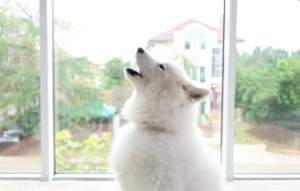
Don’t Sing in Front of Your Dog
If your pup doesn’t howl along with music, they may howl at you when you sing.
Howling can be your dog’s way of responding to your voice.
Many people have noticed their dogs howling right after they finish singing.
Does Your Dog Have the Howling Gene?
Some dogs don’t howl at all.
Howling tends to happen more frequently in certain breeds.
Breeds known for howling include:
-
Siberian Husky
-
Alaskan Malamute
-
Beagle
-
Bloodhound
-
Basset Hound
These dogs were historically used to communicate while hunting or working closely with humans.
If you have one of these breeds and your dog howls at music, it may simply be part of their natural behavior.
Other dogs may bark more when they hear music.
Emotional Reactions
Sometimes dogs howl as an emotional reaction.
Music can cause emotional responses in animals just as it does in humans.
Your dog may howl at music because they are:
-
Excited
-
Curious
-
Lonely
-
Stimulated by the sound
Some dogs even howl when their owners leave because they feel alone.
However, if your dog only howls when you’re home and music is playing, it’s typically not a problem. They’re probably just having fun.
Certain Notes Trigger Dog Responses
Songs with certain notes or tones can trigger reactions from your dog.
As mentioned earlier, long tones are the biggest trigger. Think about it:
Howls are typically longer than regular dog sounds.
Examples of music with long tones include:
-
Long violin notes
-
Opera music
-
Harmonica sounds
-
High-pitched singers
Your dog may associate these tones with another dog howling nearby. Instinctively, they feel the need to respond with a howl of their own.
That’s why some songs trigger howling while others do not.
Should I Stop My Dog From Howling?
Unless your dog is howling non-stop or it’s late at night and you want to sleep, there’s usually no need to stop your dog from howling.
Howling at music is natural and often playful behavior.
You may want to stop it if:
-
The howling is constant
-
Neighbors might complain
-
It happens late at night
-
It triggers loud barking
You can distract your dog with a toy or treat, turn down the volume, or play calmer music. You can also train your dog to be quiet on command.
If your dog only howls occasionally, it’s fine to let them enjoy it.

Signs to Watch For
Howling at music is usually normal, but sometimes dogs howl because they are stressed.
Watch for signs that your dog is anxious when music plays, including:
-
Pacing
-
Destroying furniture
-
Whining
-
Heavy panting
-
Other anxious behaviors
If your dog shows these signs, your music may be too loud or irritating for their sensitive ears. Try lowering the volume or switching to a calmer genre.
Conclusion
Dogs experience life differently than we do. Because their hearing is much more sensitive than ours, they process sounds differently.
So the next time your favorite song comes on and your dog starts howling, don’t worry. There’s a good chance they think they sound pretty good too.
Some reasons why your dog howls when you play music include:
-
Pack connection
-
Communication instinct
-
Sensitive hearing
-
Long, howl-like tones
-
Attention seeking
-
Desire to be part of the pack
-
Enjoyment of music
-
Emotional expression
-
Breed tendencies
Save pin for later


- Dog Nutrition Guide for Better Health and Energy - May 23, 2026
- How to Keep Your Cat Healthy and Active at Home - May 17, 2026
- Dog Health Tips for Indoor and Apartment Living - May 17, 2026