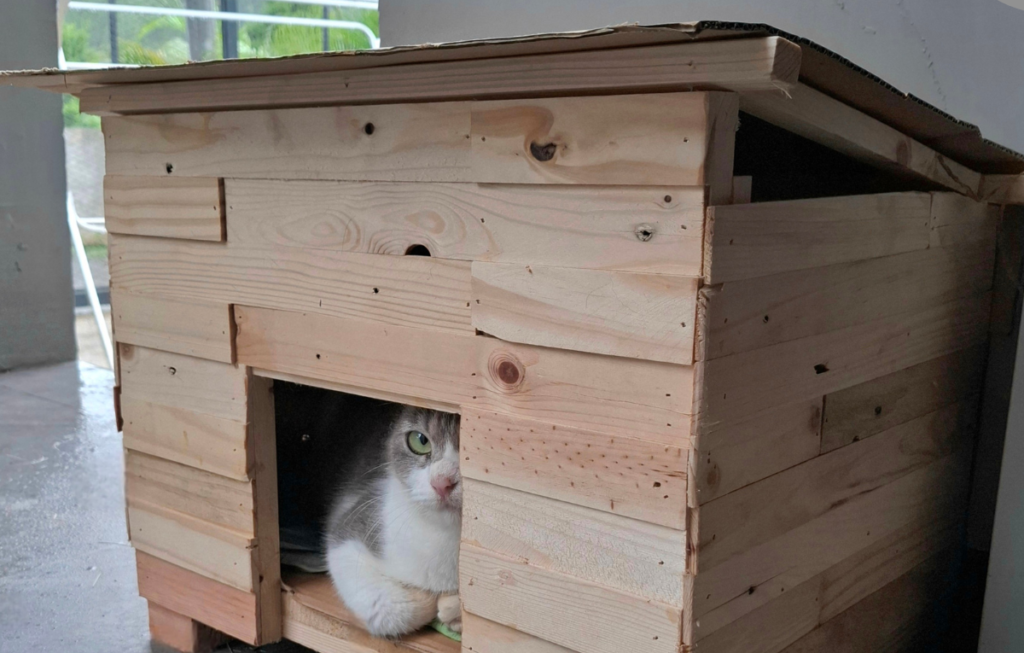
When most people think about outdoor cat houses, they imagine bulky, purely functional shelters that stick out awkwardly in an otherwise beautiful backyard. But it doesn’t have to be that way.
There are outdoor cat house ideas that blend seamlessly into your garden and landscape design—and when done right, they can actually enhance your outdoor space instead of ruining it.
Your cat deserves a safe, comfortable place to relax outside. And you deserve a yard that still looks amazing.
I’ll walk you through design strategies and creative ideas that:
- Blend naturally into your yard
- Complement your existing landscape
- Look intentional—not like an afterthought
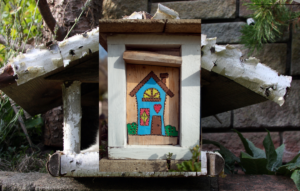
Design It the Right Way
Before jumping into ideas, let’s get one thing straight:
A cat house that blends in is designed—not hidden.
Ask yourself:
- Does this match my garden style?
- Does it complement my home’s colours and materials?
- Does it look like it belongs here?
If the answer is no, it will stick out. Every time.
Blending In (Not Hiding It)
A common mistake? Trying too hard to hide the cat house.
Instead of:
- Shoving it in a corner
- Covering it with random materials
- Camouflaging it poorly
Do this instead:
- Place it intentionally
- Match it to your surroundings
- Design around it
Treat it like part of your landscape—not something to conceal.
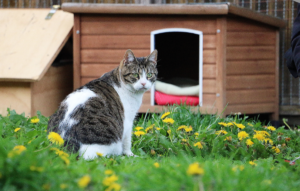
16 Outdoor Cat House Ideas That Actually Work
1. Mini Cottage Design
Perfect for natural or cottage-style gardens.
How to make it blend:
- Match your fence or home color
- Surround it with plants or shrubs
- Place it near trees or foliage
2. Planter-Top Design
A cat house + planter combo = instant camouflage.
Best for:
- Flower gardens
- Herb lovers
- Small spaces
Use low-maintenance, cat-safe plants to complete the look.
3. Rock / Stone Design
Ideal for earthy, natural landscapes.
Blend it by:
- Placing it among real rocks
- Positioning it along pathways
- Using neutral tones (gray, brown, beige)
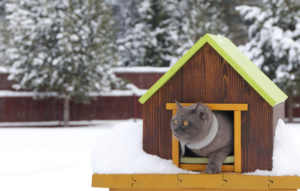
4. Under-Deck Hideaway
Simple and effective.
If you already have a raised deck or patio, just place a shelter underneath it. It instantly disappears into the structure.
5. Garden Shed Style
Think “mini cabin” vibes.
Make it work by:
- Matching your existing shed or fence
- Adding small decorative details
- Placing it along garden edges
6. Green Roof Design
One of the BEST blending techniques.
Add grass or plants to the roof so it literally becomes part of your garden.
Pro tip: Imperfections actually make it look more natural.
7. Wicker / Natural Material Design
Perfect for relaxed, boho, or tropical spaces.
Look for:
- Wicker
- Rattan
- Bamboo-style materials
These naturally blend without much effort.
8. Fence Integration
This one’s advanced but powerful.
Install the shelter directly into your fence so it becomes part of the structure.
9. Raised Garden Bed Integration
Build the cat house into a raised bed.
It doubles as:
- A plant feature
- A hidden shelter
10. Camouflaged Bush Shelter
Place a simple shelter inside dense shrubs.
It stays:
- Shaded
- Hidden (naturally)
- Weather-protected
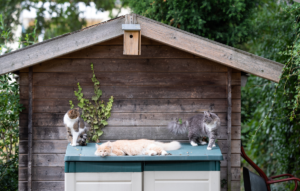
11. Modern Minimalist Box
For contemporary homes.
Use:
- Clean lines
- Neutral colors
- Simple shapes
Sometimes blending in means matching style, not hiding.
12. Wooden Crate Style
A rustic, DIY-friendly option.
Stain the wood to match your outdoor furniture or fencing.
13. Pergola-Style Shelter
A small open-frame structure with climbing plants.
Over time, vines will grow over it—perfect natural blending.
14. Pathway Accent House
Turn the shelter into a decorative feature along a garden path.
It looks intentional instead of random.
15. Clay / Terracotta Style
Great for warm-toned gardens.
These blend especially well with the following:
- Mediterranean-style spaces
- Earth-toned landscapes
16. Multi-Level Cat Condo (Outdoor Style)
If you want something functional and stylish.
Use:
- Wood tones
- Strategic placement near plants
- Natural textures
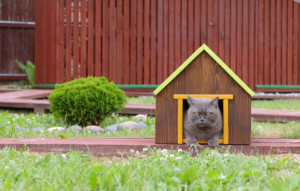
Best Materials to Use
Not all materials blend well outdoors.
Wood
- Natural look
- Easy to customize
- Works in most gardens
Stone / Faux Stone
- Extremely durable
- Perfect for earthy landscapes
Best Colors for Blending In
Stick to natural tones:
- Green
- Brown
- Gray
Avoid bright or mismatched colors—they’ll instantly ruin the look.
Where You Place It Matters
Even the best design can fail with poor placement.
Good placement:
- Near trees or bushes
- Slightly elevated
- In dry areas
Avoid:
- Direct sunlight all day
- Flood-prone spots
- High-traffic areas
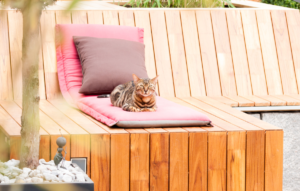
Keep Your Cat Comfortable First
Design matters—but your cat matters more.
Always:
- Add soft bedding
- Keep it dry
- Insulate for the weather
A beautiful shelter means nothing if your cat won’t use it.
Common Mistakes to Avoid
1. Making It Too “Pretty.”
Function comes first. Always.
2. Poor Color Matching
If it clashes, it stands out.
3. Bad Placement
Blending is about location as much as design.
4. Ignoring Maintenance
Outdoor structures need upkeep:
- Wood can warp
- Metal can rust
- Water can damage materials
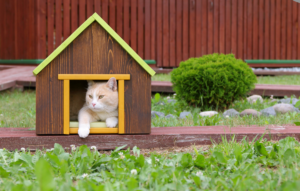
Final Thoughts
No one wants an eyesore ruining their backyard.
The good news? You don’t have to choose between function and aesthetics.
With the right approach, your outdoor cat house can:
- Blend beautifully into your space
- Complement your landscape
- Keep your cat safe and comfortable
Start with your environment. Design with intention. And always prioritise your cat’s comfort.
That’s how you get the best of both worlds.
Save pin for later.

- Dog Nutrition Guide for Better Health and Energy - May 23, 2026
- How to Keep Your Cat Healthy and Active at Home - May 17, 2026
- Dog Health Tips for Indoor and Apartment Living - May 17, 2026