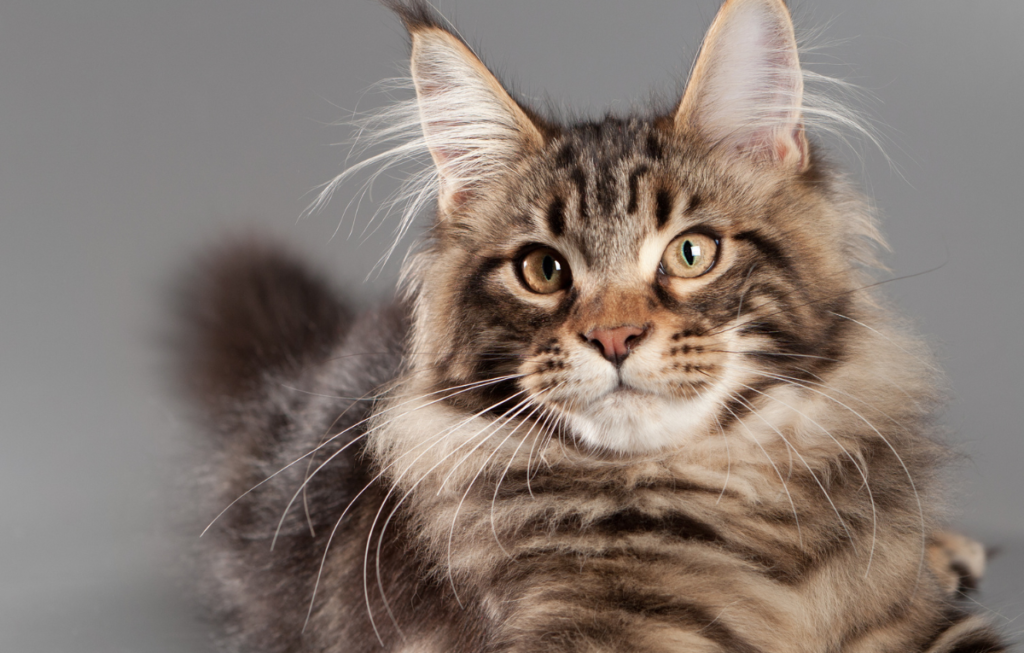
Congratulations!
Whether you’ve just brought home your new baby Maine Coon or you’re still in the research phase trying to decide if this breed is right for you, you’ve found the ultimate Maine Coon kitten growing-up guide. And honestly? You’re going to need it.
Maine Coons are not your average cats. They don’t grow at the same pace, they don’t behave like typical felines, and they definitely don’t follow the “standard kitten handbook” most people expect. Instead, they develop slowly, bond deeply, and grow into massive, intelligent, affectionate companions that often feel more like dogs in fur coats than independent cats. They are playful, social, curious, and often hilariously clumsy well into adulthood.
But here’s the important part:
If you don’t understand how they grow, you might misread their development completely.
So let’s walk through everything step by step.
Maine Coon Growth Timeline Explained
Before we break down the stages, there’s one critical fact you need to understand:
Maine Coons grow slowly. Very slowly.
Most domestic cats reach full size in about 12–18 months.
Maine Coons? They take their time—sometimes 3 to 5 years before they are fully grown.
That means your “kitten” might still act like a baby at 2 years old—and that’s completely normal.
Here’s a simple breakdown:
- 0–3 months: newborn kitten stage
- 3–6 months: rapid growth phase
- 6–12 months: teenage kitten stage
- 1–3 years: young adult phase
- 3–5 years: full maturity
This timeline is important because it affects everything—feeding, behaviour expectations, training, grooming, and even emotional bonding.
If you expect them to grow fast like other cats, you’ll constantly feel like something is “off”. But once you understand their natural rhythm, everything makes sense.
Stage 1: 0–3 Months (Newborn Kitten Stage)
This is the fragile beginning of your Maine Coon’s life.
At this stage, your kitten is tiny, dependent, and still developing basic coordination. But don’t underestimate them—personality already starts to peek through.
What you’ll notice:
- Sleeping most of the day
- Wobbly walking and poor balance
- Learning how to play gently
- Curious reactions to sounds and movement
- Early personality traits are beginning to form
Even though they are small, Maine Coon kittens often show early signs of their future personality. Some will already be bold explorers, while others will be shy observers.
You might notice them:
- Following you slowly from room to room
- Reacting quickly to voices or noises
- Lightly pawing at objects or your fingers
Feeding:
At this stage, nutrition is critical.
- Kitten milk or high-quality kitten formula
- Around 4+ small meals daily
- Always ensure proper hydration
Socialisation:
This is where bonding begins.
- Handle gently and frequently
- Speak softly and consistently
- Allow safe exploration
- Build trust through calm interaction
This stage sets the foundation for your entire relationship.
Stage 2: 3–6 Months (Rapid Growth Phase)
Now things speed up dramatically.
Your kitten begins growing rapidly—both physically and mentally. This is when you’ll really start noticing they are not just “regular cats.”
Physical changes:
- Noticeably longer body
- Oversized paws (they look almost too big for their frame)
- Thickening tail
- Improved coordination and movement
- Faster reflexes and agility
Behavioural changes:
- Increased playfulness
- Bold exploration of the home
- More confidence in movement
- Occasional mischief or boundary testing
This is often the stage where owners say:
“My sweet kitten turned into a tiny tornado overnight.”And they’re not wrong.
Training focus:
This is the best time to introduce structure:
- Redirect scratching to appropriate posts
- Reinforce litter box consistency
- Introduce interactive toys
- Begin short training sessions (yes, cats can learn!)
Consistency matters more than intensity. Keep things simple and repeatable.
Stage 3: 6–12 Months (Teenage Kitten Phase)
Welcome to adolescence.
This stage is full of energy, curiosity, and occasional stubbornness. Your Maine Coon is growing fast but mentally still figuring things out.
Physical development:
- Rapid weight and size increase
- Muscle development becomes visible
- Ear tufts start becoming more prominent
- The coat becomes thicker and fuller
Behaviour:
- Frequent zoomies (sudden energy bursts)
- Testing limits and boundaries
- Increased independence
- Moments of selective listening
They may suddenly act like they “don’t hear you” when called but respond instantly when food is mentioned.
Care tips:
- Increase daily playtime sessions
- Provide tall climbing structures (cat trees are essential)
- Stick to a consistent feeding schedule
- Avoid boredom at all costs
A bored Maine Coon is a creative Maine Coon—and not always in a good way.
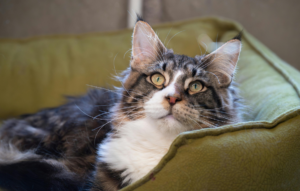
Stage 4: 1–3 Years (Young Adult Phase)
This is where things start to stabilise.
Your Maine Coon is no longer a chaotic teenager, but they are still growing—just more slowly now.
Physical changes:
- Noticeable increase in weight and muscle mass
- Full coat development begins
- Stronger facial structure and jawline
- Larger, more majestic appearance
At this stage, you really start seeing what your cat will become as an adult.
Behaviour:
- Calmer and more emotionally balanced
- Strong attachment to their human
- More predictable routines
- Increased affection and bonding
This is often when Maine Coons start acting more “dog-like” in their loyalty and behavior. They may follow you from room to room or sit nearby just to be close.
Stage 5: 3–5 Years (Fully Grown Adult)
Finally, the full-grown Maine Coon.
At this point, your kitten has transformed into a massive, elegant, and confident adult cat.
Physical traits:
- Fully developed size (often 8–18 kg depending on gender)
- Thick, luxurious coat
- Fully developed tufted ears and paws
- Strong but graceful movement
They are powerful but surprisingly gentle in motion.
Personality:
- Calm but still playful
- Deeply bonded with their owner
- Emotionally stable and confident
- Occasionally bursts into kitten-like behavior
And yes—they never fully lose their playful side.
That’s part of what makes them special.
Feeding Guide Through Growth
Nutrition directly impacts growth, health, and behaviour.
Kitten stage:
- High-protein kitten food
- Frequent meals (4+ daily)
- Focus on growth and energy
Teen stage:
- Controlled portions
- Balanced growth formulas
- Prevent overfeeding during rapid growth
Adult stage:
- High-quality protein-rich diet
- Maintenance-focused nutrition
- Avoid unnecessary weight gain
Large cats still need portion control.
Grooming Your Maine Coon
That beautiful coat requires commitment.
Kitten stage:
- Start brushing early
- Keep sessions short and positive
- Build trust through routine
Teen stage:
- Brush 2–3 times weekly
- Introduce full grooming habits
- Check for early matting
Adult stage:
- Weekly brushing minimum
- More during shedding seasons
- Focus on undercoat maintenance
Neglect leads to mats, especially under the belly and behind the legs.
Health Considerations
Maine Coons are generally strong, but like all breeds, they have risks:
- Hip dysplasia
- Hypertrophic cardiomyopathy (HCM)
- Obesity
- Dental disease
Routine vet visits are essential throughout their life.
Early detection makes a huge difference.
Exercise & Mental Stimulation
These cats are NOT lazy.
They are intelligent, active, and curious creatures.
They need:
- Climbing spaces
- Daily interactive play
- Puzzle feeders
- Human engagement
Without stimulation, they will create their own entertainment—and your furniture may suffer.
Common Mistakes to Avoid
1. Expecting fast growth
They take years to mature. Patience is required.
2. Overfeeding
Large size does not equal unlimited food.
3. Skipping grooming early
Start young or face long-term matting issues.
4. Ignoring mental stimulation
Bored Maine Coons become destructive Maine Coons.
Final Thoughts
Raising a Maine Coon is not a quick experience—it’s a long-term journey.
You don’t just watch them grow… You grow with them.
They start as fragile, clumsy kittens and slowly evolve into intelligent, affectionate giants who form deep emotional bonds with their humans.
If there’s one way to summarise everything in this Maine Coon kitten growing-up guide, it’s this:
Your Maine Coon doesn’t just grow up beside you… They grow up with you.
And that’s what makes them unforgettable.
Save Pin for later.

- Dog Nutrition Guide for Better Health and Energy - May 23, 2026
- How to Keep Your Cat Healthy and Active at Home - May 17, 2026
- Dog Health Tips for Indoor and Apartment Living - May 17, 2026