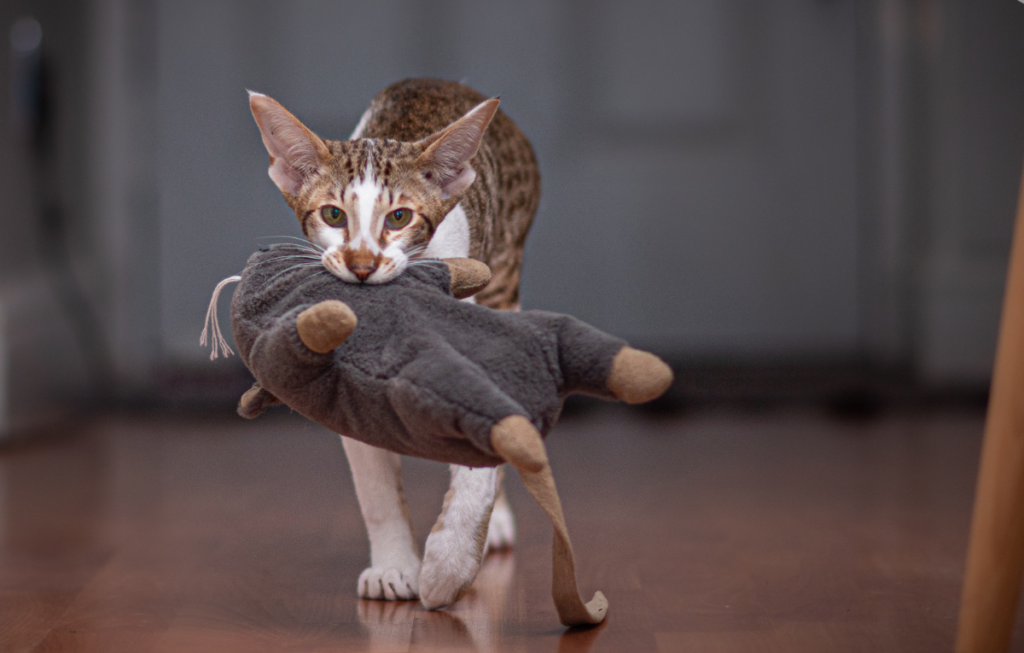
Do you have cats in your home? Because let me tell you something: cats are not pets. Cats are roommates.
Full stop.
My cats inform every decision I make about my home. From what I hang on the walls to where I put furniture, they have opinions. And while I can’t say that they approve of everything I do, I will say that trying to make my space more cat-friendly has made my home a happier place in more ways than one.
Living in a home that accommodates your cat means your cat feels secure, entertained, and comfortable. And when your cat feels good, they act good, stress less, and love you even more. Ready to make some tweaks to your space? Read on for seven easy ways to make your home more cat-friendly.

Wait… What Does Cat-Friendly Actually Mean?
Before we get into all the tips, I think it’s important to talk about what being cat-friendly really means. Think about how you like to spend your time when you’re home. Chances are, you want to be around your people but also kind of do your own thing. You like to have control over your environment and feel safe.
Cats want the same thing — but with a few extras. Cats like to climb things, scratch things, hide under things, watch things, and patrol things. They love high perches, scratchable surfaces, cozy cubbies, and lots of toys. When you don’t provide these things for your cat, they will provide them for themselves by scratching your couch, knocking objects off counters, and refusing to come out from under the bed.
Trying to make your home more cat-friendly is all about meeting your cat halfway. It’s about learning what your cat needs to feel comfortable in your shared space and helping them get those needs met in a way that works for you and your home. The best part is, most of these changes don’t cost much at all and actually end up making your home feel cozier for you too.
1. Provide Places to Climb and Perch
Cats love height. Having vertical space to climb gives your cat a sense of security because they can see what’s going on around them. It also just feels good to be up high! Climbing and stretching allow your cat to release some extra energy.
If your cat does not have proper places to climb around your home, they will attempt to use your bookshelf, your kitchen counters, and the back of the refrigerator.
Buy your cat a sturdy cat tree and place it near a window. Cats love to watch the world go by from elevated quarters. You can also install wall-mounted cat shelves to create a mini climbing trail for your cat to patrol back and forth.
Even if you’re short on space or aren’t able to invest in a cat tree right now, spend some time mounting a simple window perch for your cat. Cats can entertain themselves for hours just sitting in the window watching birds, squirrels, dogs, and people walk by.
Bonus points if you live near a busy street and your cat enjoys watching cars!
2. Have Dedicated Scratching Areas
Scratching is not your cat telling you they hate you. Cats scratch to keep their claws trimmed and toned, stretch their bodies, and mark their territory.
Like I mentioned before, if you don’t give your cat somewhere suitable to scratch, they will make do with your sofa arm or your favorite curtains.
Invest in some sturdy scratching posts and place them near where your cat likes to scratch or near their bed. Cats often scratch as soon as they wake up because scratching is a way to stretch after a nap.
If your cat has already started scratching the wrong places, place a scratching post right in front of that spot. Eventually, you can move the scratching post to a more ideal location a few inches each day until your cat — and you — forget where the undesirable scratching area was.
Remember that cats want their scratching posts to be tall enough to fully stretch against and stable enough that they don’t tip over. Cardboard scratchers may work for some cats but they will likely not cut it for most. Sisal rope scratching posts are usually the most popular with our feline friends.

3. Hideaways for Every Occasion
While cats love to sit up high and survey their domain, they also need places to hide where they feel fully enclosed. This is particularly important for anxious cats, new cats, or shy cats. But every cat needs a hiding spot every now and then.
Whether there’s a party going on that they want to avoid or they just don’t feel like being social, your cat should have a sanctuary they can escape to.
This can be as simple as placing a cardboard box with a hole cut into the side in a quiet corner of the room. Cats love enclosed beds and cubbies because it feels like they’re hiding in a den.
Don’t disturb their space when they’re using it! Let your cat come out on their own time. Respecting your cat’s hiding spot will help build trust between the two of you.
4. Consider Your Litter Box Situation
Ah, the poor litter box. If you don’t place it somewhere your cat likes and keep it clean, you’re asking for trouble. Cats are creatures of habit, and one bad litter box experience can lead to many more. Don’t start the cycle!
The rule of thumb is one litter box per cat, plus one extra. So if you have two cats, you should have three litter boxes. This ensures each cat always has access to a box, even if the other is “hogging it,” so to speak. It also helps prevent the box from becoming overly soiled between cleanings.
Place your cat’s litter boxes in quiet areas where your cat won’t feel easily trapped. Cats don’t want to eliminate in spots where people are going in and out all day long. Cats also do not like their litter box to be near their food and water bowls.
Scoop litter boxes daily. Not only is poop gross, but cats are also very clean animals. Many will refuse to use a dirty litter box, which means you could come home to find messes all over the place if you aren’t cleaning the box often enough.
5. Entertain Your Cat’s Mind
We obviously know cats love physical play, but did you know that cats need mental stimulation just as much? Bored cats are destructive cats.
Invest in some puzzle feeders for your cat. Most mealtime bowls are boring to cats because the food is just sitting there doing nothing. A puzzle feeder will keep your cat busy and engaged while they eat. It also stimulates their hunting instinct, which encourages them to think and work for their food.
Buy plenty of toys and take the time to actually play with your cat every day. Wand toys are great because you can use them together. Battery-powered toys that move around on their own are also fun because they mimic prey animals. Try spending at least 10 to 15 minutes playing with your cat each day.
Hang a bird feeder outside a window your cat can access. Believe me when I say there is nothing your cat loves more than sitting and watching birds. It truly keeps them entertained for hours.
6. Don’t Forget Safety!
Cats will climb anywhere and everywhere. Make sure you cat-proof your home the same way you would baby-proof it for a toddler. Remove any small items they can easily knock over or swallow.
Keep tabs on your houseplants too. Many common houseplants are toxic to cats. Lilies are a big one — they can be fatal to your cat if ingested. Do some research on dangerous houseplants for pets to make sure your plant collection isn’t putting your furry friend at risk.
Secure your cords and cables so curious cats cannot chew on them. Keep small items that could be choking hazards — hair ties, rubber bands, small toys, and the like — stored safely away.
Double-check your windows too. If you have a cat that loves to hang by the window, make sure you have screens in place. Cats can fall out of open windows far too easily. I cannot stress this one enough.

7. Feed Them Where They’ll Like It
You may not think feeding spots matter, but believe me when I say they do.
In the wild, cats do not eat and drink from the same place. They prefer to have their food and water located in separate areas. If you put your cat’s water bowl right next to their food bowl, you may find that they aren’t drinking enough water.
Try moving their water bowl to another location in your home and see if that helps. Or, invest in a pet water fountain! Cats love running water, and you may find your cat excitedly waiting for you to fill up their fountain.
Use shallow bowls for food and water. Cats have sensitive whiskers, and when bowls are too deep, their whiskers press against the sides when they try to eat or drink. This can stress your cat out — a sensation technically known as whisker fatigue — and make them reluctant to eat or drink.
Frequently Asked Questions
How do I know if my home is already cat-friendly?
A good way to tell is by observing your cat’s behavior. If your cat is relaxed, playful, and sleeping in open spots around the house, those are positive signs. If your cat hides constantly, scratches furniture, or seems restless and bored, your space may not be meeting their needs. Walk through your home and ask yourself whether your cat has places to climb, scratch, hide, and play. If the answer to most of those is no, there is definitely room to improve.
Do I need to spend a lot of money to make my home cat-friendly?
Not at all. Many of the most effective changes cost little to nothing. A cardboard box with a hole cut into it makes a great hideaway. A window perch can be made from a simple shelf. You can DIY scratching surfaces with sisal rope and a piece of PVC pipe. The key is understanding what your cat needs and getting creative with what you already have.

My cat ignores the toys and scratching posts I buy. What am I doing wrong?
This is more common than you think. Cats can be picky! For scratching posts, the issue is often that they’re too short, too wobbly, or made of the wrong material. Try a taller sisal post and place it right where your cat already likes to scratch. For toys, try different types — some cats prefer wand toys while others go crazy for crinkle balls or battery-powered mice. The key is experimenting until you find what your individual cat responds to.
Is it okay to let my cat roam freely at night?
This depends on your cat and your home setup. Many cats are naturally more active at night due to their crepuscular nature, meaning they are most active at dawn and dusk. If your cat is keeping you up with nighttime zoomies, increasing daytime play sessions can help burn off that energy before bedtime. Make sure your cat has access to food, water, a litter box, and safe climbing spots throughout the night.
Can I make my home cat-friendly if I rent and can’t make permanent changes?
Absolutely. Most cat-friendly updates do not require any drilling or permanent modifications. Freestanding cat trees, floor-level scratching posts, and portable window perches are all renter-friendly options. You can also use furniture repositioning to create climbing opportunities. The most impactful changes — puzzle feeders, separate water bowls, more toys, and daily playtime — cost nothing to your walls at all.
Conclusion
Making minor changes to your home to accommodate your cat can greatly improve both your lives. My home has evolved so much since I got my cats, and every adjustment I have made for them has made my home more enjoyable for me too.
When you give your cat what they need to feel happy in your shared space, they’ll show you how grateful they are through good behavior, cuddles, and lots of love. Pick one or two of these tips to try this week and see what happens. Your cat will thank you.
Save pin for later


- Dog Nutrition Guide for Better Health and Energy - May 23, 2026
- How to Keep Your Cat Healthy and Active at Home - May 17, 2026
- Dog Health Tips for Indoor and Apartment Living - May 17, 2026