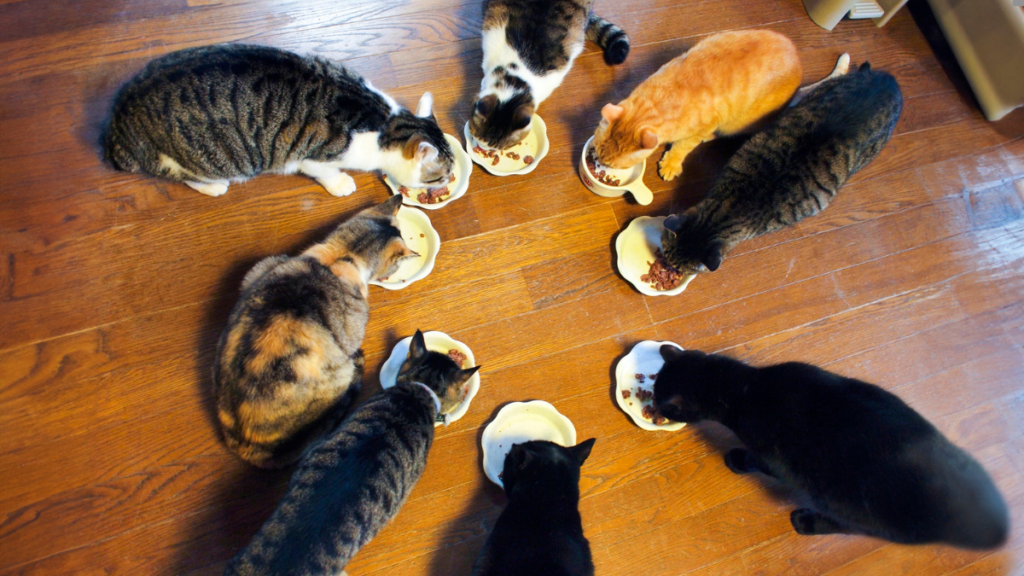
There are few things more satisfying than coming home to multiple cats that love and adore you. But kitties living under one roof can also lead to hissing, chasing, urine marking, freezing each other out, and every nuance of stress in between.
If you find yourself Googling “how to reduce tension in multi-cat homes” more than you’d like, don’t worry—you’re not alone. Personality conflicts and limited resources can cause problems in even the most loving clans. Thankfully, tension in multi-cat homes is common and often easily resolved with patience and the right knowledge about cat behavior.

Why Do Cats Feel Tension?
Unlike dogs, cats don’t naturally live together in supportive social groups. Because they’re territorial animals with instincts that tell them to stake claim to their space—food, toys, beds, you name it—living with other cats can sometimes cause stress.
Common reasons cats fight or feel tension in multi-cat households include:
-
Defending territory
-
Competition over resources (food, beds, litter boxes)
-
Varied social preferences (some cats just aren’t into cat cuddles)
-
Insufficient or improper introductions
-
Redirected aggression (your cat sees another cat outside and hisses at their roommate)
-
Medical conditions or pain
If you can pinpoint the reason your cats are feeling tension, you’ll be better equipped to address the root problem rather than simply reacting to symptoms.
Subtle Signs of Tension to Look For
If your cats are constantly chasing each other, screaming, and spraying everything in sight, there’s a good chance you already know there’s tension. However, tension in multi-cat households is often more subtle.
Look for these signs that your cats may not be getting along:
-
Hissing, growling, or swatting
-
Guarding food or litter boxes
-
Staring contests
-
Increased hiding
-
Decreased appetite
-
Over-grooming
-
Avoiding the litter box
-
Increased vocalization
The sooner you notice these subtle signs, the sooner you can help your cats feel relaxed and comfortable again.

The Most Important Factor in Multi-Cat Harmony
How you introduce cats to each other is the biggest predictor of long-term success. Cats that are forced to interact before they’re ready often associate each other with stress and fear.
Steps for Introducing New Cats
-
Keep cats separate until they’re ready to meet. This means the new cat should have their own food bowl, water bowl, litter box, and bed.
-
Swap bedding or use a cloth to transfer scent between cats.
-
Feed the cats on opposite sides of a door so they associate each other’s presence with something positive.
-
Allow visual contact using a baby gate or slightly open door.
-
Let cats interact gradually. Keep initial meetings supervised and slowly increase their length over time.
Introducing cats properly takes time, but skipping steps can lead to long-term behavior problems that are much harder to fix later.
Tips for Designing a Calm Multi-Cat Household
Your home’s setup has a big impact on how your cats interact. The more space, resources, and vertical territory you provide, the less stressed your cats will feel about sharing.
How to Cat-Proof Your Home
-
Provide multiple resources such as food bowls, beds, and litter boxes. A good rule of thumb is the number of cats plus one.
-
Add cat furniture. Climbing shelves and cat trees allow cats to claim space without conflict.
-
Maintain a routine. Feeding, playtime, and sleeping in consistent locations can significantly reduce tension.

Add More Resources
Since cats are naturally territorial, having plenty of resources throughout your home is essential. Each cat should have access to the following:
-
Litter boxes (number of cats + one)
-
Food and water bowls
-
Beds or designated sleeping areas
-
Scratching posts
Spreading these items throughout your home helps prevent dominant cats from guarding resources.
Use Vertical Space
Giving cats vertical territory allows them to avoid conflict and feel more secure.
Ideas for vertical space include:
-
Cat trees
-
Wall-mounted shelves
-
Window perches
-
Elevated beds or seating areas
Vertical space is especially important in small homes or apartments.
Establish a Daily Routine
Cats are creatures of habit. Consistent schedules help them feel safe and reduce stress.
Important daily routines include:
-
Feeding times
-
Play sessions
-
Sleeping areas
-
Interaction with you
Predictability helps reduce anxiety and territorial behavior.

Play Is Powerful
Play helps release built-up energy and satisfies your cat’s natural hunting instincts, making it one of the best tools for reducing aggression.
Benefits of Play
-
Releases energy
-
Mimics hunting behavior
-
Builds confidence
-
Reduces boredom
-
Redirects aggression
How to Play With Your Cat
-
Wand toys
-
Fishing pole–style toys
-
Laser pointers
-
Feather teasers
End each play session with a small meal to simulate a successful hunt.
Interrupt and Separate Fighting Cats
Despite your best efforts, conflicts may still happen. If your cats are fighting, intervene safely by making a loud noise or tossing a pillow nearby (not at them). Separate the cats and allow them time to calm down before reintroducing them.
How Not to Respond
-
Don’t yell
-
Never put your hands between fighting cats
-
Don’t force interaction before they’re ready
Stay calm—your cats will follow your lead.
Make Life Less Stressful With Pheromones
Cats release natural pheromones when they feel safe. Synthetic pheromone products can help reduce stress in shared spaces.
Helpful options include:
-
Feliway or other pheromone diffusers
-
Calming sprays for bedding or furniture
-
Blankets or towels carrying familiar scents

How to Prevent Aggression
Aggression can be scary, but many simple strategies can help prevent it.
Feed Cats Separately
If tension arises during meals, feed cats in separate rooms.
Other tips include:
-
Using puzzle feeders to slow eating
-
Avoiding free-feeding in tense households
Respect Individual Personalities
Not all cats will become best friends—and that’s perfectly okay. Provide shy cats with safe hiding spots and allow energetic cats opportunities to burn off energy.
How to Reduce Tension in Multi-Cat Homes: The Veterinary Solution
If your cat suddenly becomes aggressive or tense, rule out medical causes first. Contact your veterinarian if you notice sudden behavior changes.
Signs that may indicate a medical issue include:
-
Increased aggression
-
Litter box avoidance
-
Excessive vocalization
-
Decreased activity
Pain or illness can significantly affect behavior.
Don’t Lose Hope
Tension in multi-cat households can feel overwhelming, but patience pays off. Look for small improvements and celebrate progress, even if it’s slow.
When to Contact a Professional
If you’ve tried everything and tension persists, professional help may be necessary. Consider reaching out to:
-
Veterinarians
-
Certified animal behaviorists
-
Animal behavior consultants
You don’t have to live with constant stress—help is available.
Conclusion
Learning how to reduce tension in multi-cat homes comes down to understanding your cats. They aren’t little humans, and you can’t force relationships. By providing enough resources, respecting individual personalities, and creating a calm environment, you can help every cat in your home feel safe and secure.
Be patient with the process. Behavioral change takes time, but with consistency and care, you’ll begin to see positive changes in your feline family.
Save pin for later


- Dog Nutrition Guide for Better Health and Energy - May 23, 2026
- How to Keep Your Cat Healthy and Active at Home - May 17, 2026
- Dog Health Tips for Indoor and Apartment Living - May 17, 2026