
Dogs are loyal companions that make our lives more joyful and fulfilling. However, many dog owners focus primarily on feeding, walking, and grooming, overlooking a crucial aspect of their well-being: mental stimulation.
Dogs, like humans, need challenges for their minds. Without them, they can feel unfulfilled and develop behavioral problems. The good news is that providing mental stimulation for your dog is easier than you might think. By trying out the tips described below, you’ll make your pooch happier, calmer, and more balanced. Keep reading to learn how to keep your dog mentally stimulated.

Why Mental Stimulation Is Important for Dogs
Some people underestimate the value of mental stimulation for dogs. Sure, taking your dog out for a walk or run is essential, but physical activity alone isn’t always enough—especially for intelligent breeds. Without mental challenges, dogs may begin chewing shoes, barking excessively, or digging up the yard.
Mental stimulation helps your dog:
-
Reduce boredom and destructive behavior: By providing both physical and mental exercise, you can curb your dog’s excess energy, which often leads to mischievous behavior.
-
Develop problem-solving skills: Puzzle games and training sessions help your dog think critically and improve cognitive abilities.
-
Enhance overall health: Mental activity boosts focus, memory, and cognitive function, contributing to your dog’s overall well-being.
-
Strengthen the dog-human bond: Training or playing games that require your attention enhances trust and deepens your relationship.
Signs Your Dog Needs More Mental Stimulation
Before exploring how to keep your dog mentally stimulated, it’s important to recognize signs that your dog may need more mental engagement:
-
Constant chewing or destruction of furniture and shoes
-
Excessive barking or whining for no apparent reason
-
Pacing, hyperactivity, or restlessness
-
Searching for entertainment through overeating or scavenging
-
Lack of interest in toys or play
If your dog exhibits any of these behaviors, mental stimulation can help redirect their energy into healthy, positive activities.

How to Keep Your Dog Mentally Stimulated: Top 10 Tips
1. Puzzle Toys and Interactive Feeders
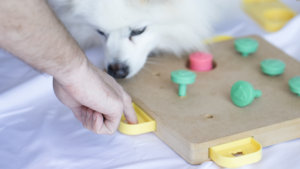
Puzzle toys and interactive feeders are excellent tools for engaging your dog’s mind. These toys require your pet to solve a puzzle or complete a task to access a reward, usually a treat or kibble. Examples include:
-
Treat-dispensing balls: Roll the ball to release treats.
-
Puzzle boards: Slide, lift, or spin compartments to uncover hidden rewards.
-
Snuffle mats: Hide kibble in a textured mat to encourage foraging.
Additional ideas:
-
Hide your dog’s food bowl in a new location.
-
Put a portion of food in a sock and roll it around for your dog to find.
A mentally challenged dog will stay engaged longer and is less likely to misbehave out of boredom.
2. Obedience Training and Trick Work
Training is more than teaching good manners—it’s a highly effective form of mental exercise. Commands and tricks require focus, memory, and mental effort, which can tire your dog in a healthy way.
Basic obedience commands:
-
Sit
-
Stay
-
Come
-
Down
-
Move front legs
Fun tricks to teach:
-
Shake hands
-
Spin
-
Roll over
-
Bow
-
Catch a dropped object
Challenge your dog’s memory and concentration by using hand signals or verbal cues. Keep sessions short—about 10–15 minutes—several times a day to maintain engagement without frustration.
3. Scent Work and Nose Games
Dogs have an extraordinary sense of smell, making scent games an excellent way to provide mental stimulation. These activities tap into their natural instincts and give them a sense of purpose.
Ideas for scent-based games:
-
Hide treats around the house and encourage your dog to find them.
-
Create a scent trail with a favorite toy or treat and see if your dog can follow it.
-
Place various objects around the room and teach your dog to fetch a specific one by scent.
Scent games are especially useful for high-energy dogs or those prone to boredom.
4. Interactive Play and Problem-Solving Games
Interactive play challenges your dog’s mind more than simple toy play. Games like tug-of-war, fetch variations, and hide-and-seek stimulate both the brain and body.
Examples:
-
Hide and seek: Hide yourself in different rooms and call your dog to find you.
-
Interactive fetch: Hide the ball or toy in different spots each time.
-
Toy hide-and-seek: Hide several toys and teach your dog to find them on command.
Interactive play is one of the easiest and most effective ways to provide mental enrichment.

5. Rotate Toys and Environments
Novelty keeps a dog’s mind active. Rotating toys and changing walking routes introduce new challenges.
-
Toy rotation: Leave only a few toys available at a time, hiding the rest for a few days.
-
New walking routes: Explore different neighborhoods or trails.
-
Dog-friendly outings: Visit parks, cafes, festivals, or pet expos.
These small changes prevent boredom and keep mental stimulation fresh.
6. Incorporate Problem-Solving Challenges
DIY problem-solving activities provide your dog with fun mental challenges:
-
Cup game: Hide a treat under one of three cups, shuffle them, and let your dog find the reward.
-
Box puzzle: Use boxes with flaps or lids to hide treats.
-
Mini obstacle course: Set up tunnels, ramps, or hurdles for your dog to navigate.
These games build confidence and a sense of accomplishment.
7. Engage in Social and Community Activities
Social enrichment is a powerful form of mental stimulation:
-
Organize dog-friendly playdates.
-
Attend group training sessions or private lessons.
-
Participate in dog-friendly events, festivals, or hikes.
Social interactions challenge attention, communication, and adaptive thinking.
8. Teach Life Skills
Everyday tasks can also be mentally stimulating:
-
Carrying groceries or small items safely.
-
Tidying up and putting toys away.
-
Performing light assistance tasks, like carrying a backpack during walks.
Teaching life skills is practical, rewarding, and mentally enriching.

9. Use Technology
Modern technology can supplement mental stimulation:
-
Automatic treat dispensers with timers
-
Pet cameras with interactive features (laser pointers, two-way audio)
-
Dog-friendly apps, audiobooks, or music
Technology should never replace human interaction but can enhance enrichment when used wisely.
10. Consider Your Dog’s Personality and Breed
Different dogs have different mental exercise needs. High-energy breeds like Border Collies or German Shepherds require more mental challenges than Bulldogs or Chihuahuas. Consider:
-
Energy level
-
Breed traits
-
Age and cognitive needs
Tailoring activities ensures your dog is appropriately challenged without frustration.
Benefits of Keeping Your Dog Mentally Stimulated
Mental stimulation provides numerous benefits:
-
Improved behavior and obedience
-
Fewer destructive behaviors
-
Reduced anxiety and stress
-
Enhanced cognitive function
-
Stronger dog-human bond
-
Cognitive longevity and overall health
Engaging your dog mentally is just as important as physical exercise and proper nutrition.
Tips for Getting Started
-
Start with small activities and gradually increase complexity.
-
Use positive reinforcement to reward accomplishments.
-
Mix physical, cognitive, and social activities.
-
Observe your dog to learn which activities they enjoy most.
-
Be patient and allow time for adaptation.
-
Avoid creating frustration or stress—mental stimulation should be fun.
Conclusion
Mental stimulation is essential for a dog’s well-being. It helps prevent boredom, reduces destructive behavior, strengthens the human-dog bond, and promotes overall happiness. There are countless ways to engage your dog’s mind—from puzzle toys and training to scent work, interactive play, problem-solving games, social activities, life skills, and technology.
To successfully learn how to keep your dog mentally stimulated, start small and gradually increase the variety and complexity of activities. Over time, you’ll enjoy a happier, healthier, and more fulfilled companion.
Save pin for later


- Dog Nutrition Guide for Better Health and Energy - May 23, 2026
- How to Keep Your Cat Healthy and Active at Home - May 17, 2026
- Dog Health Tips for Indoor and Apartment Living - May 17, 2026