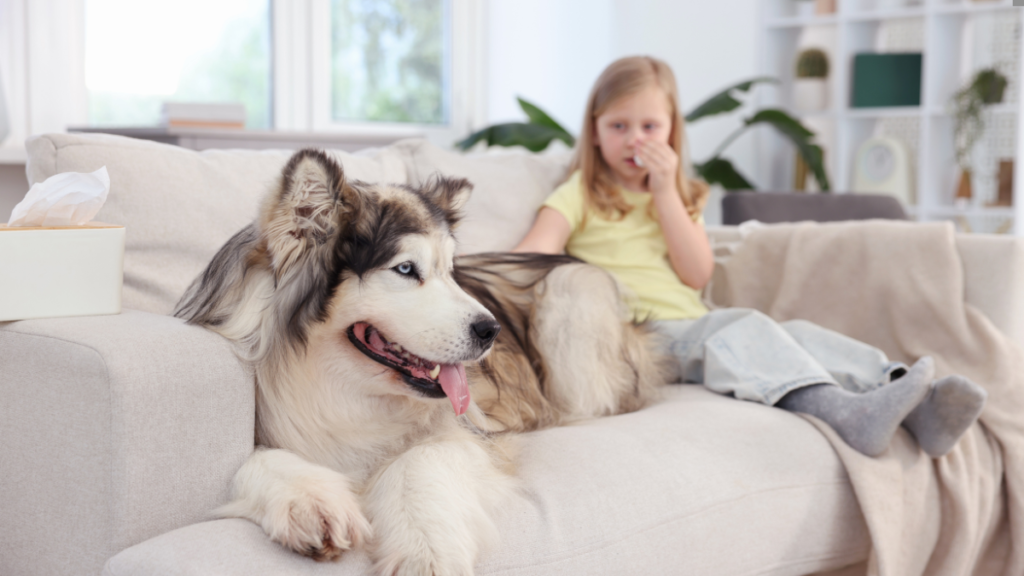
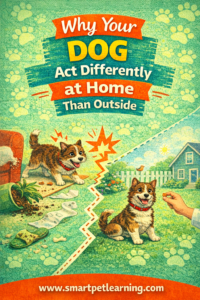
It’s no secret: your dog can trot beautifully past any passerby, execute flawless heelwork at the park, and be the epitome of civilized canine behavior—then unleash a tornado of chaos the second you walk through your front door.While it’s normal to feel frustrated, annoyed, or even embarrassed by your dog’s behavior at home compared to how they behave outside, it’s important to understand the real reason they act this way in the first place.
Contrary to popular belief, dogs behaving worse at home than outside usually isn’t about your dog being naughty or intentionally disobedient. In fact, home is often where your dog feels most comfortable and secure.

Why Dogs Behave Better Outside vs. Inside
The main reason dogs are better behaved outside than inside comes down to how different environments affect canine psychology.
Put simply: outdoors equals new sights, sounds, and experiences. Inside equals home sweet home.
Dogs process the world differently when they’re outside versus when they’re at home. Here’s how.
Environments Change How Dogs Respond
Outdoor environments are dynamic and ever-changing. New smells, scenery, noises, and rules demand your dog’s attention. The more stimuli they take in, the more vigilant and responsive they need to be.
Inside the home, your dog isn’t on high alert nearly as much. There’s less external stimulation, which can create a whole host of behaviors you might interpret as worse than their outdoor counterparts.
Home Behavior Isn’t Actually Worse
You might wonder how calming down after a walk could equal bad behavior. Here’s the thing: your dog isn’t being bad at home—they’re simply reacting to a change in environment.
Most “bad” behavior at home falls into one (or more) of these categories:
-
Winding down from outside stimulation
-
Testing limits
-
Seeking attention
-
Releasing extra energy
None of these reasons are sinister. In fact, they’re perfectly normal reactions to an environment with fewer outlets than the outdoors.
The reality is that dogs often display different behavior patterns at home versus outside. That doesn’t mean they’re trying to be naughty when they’re indoors.
Dogs Feel Safe at Home
Believe it or not, your dog is often exhibiting good behavior when they relax at home.
Dogs are more reserved in unfamiliar environments. They may hold their tails tighter, watch your body language more carefully, and hesitate before approaching new people or pets.
At home, your dog knows it’s a safe place to let their guard down. As a result, they may bark more, listen less, and test boundaries.
Does that mean they love you any less? Of course not. In fact, it means they trust you.
Outdoors Provides Structure Your Dog Knows How to Navigate
All walks have structure. You grab the leash, hit the pavement, and usually follow the same route. Maybe you stop at the park, or maybe you walk until your dog finishes their business. Walks and outdoor adventures provide built-in rules your dog learns to follow.
Indoors, however, doesn’t offer the same reliability. Dogs don’t instinctively know how to behave inside versus outside.
There’s no invisible leash reminding them to calm down if you decide not to go for a walk. Instead, they may start exhibiting behaviors like:
-
Ignoring commands
-
Being extra needy for attention
-
Counter surfing or stealing items
-
Barking for no apparent reason
-
Restlessness
Much of the behavior you see at home stems from a lack of mental stimulation.
Outdoor Stimuli Tire Them Out Mentally
Ever notice how tired your dog gets after a walk? That’s because outdoor stimuli keep your dog mentally engaged.
Every sight, smell, and sound takes effort to process. Even a 20-minute walk can work your dog’s brain harder than lounging around the house all day. When your dog is mentally tired, they tend to behave better.
But when your dog spends most of the day indoors, that mental stimulation disappears. Without it, excess energy often turns into unwanted behavior.
If your dog seems poorly behaved indoors, it’s probably not their fault. Chances are, they simply haven’t learned how to behave inside the way they’ve learned to behave outside.
Attention Levels Matter at Home vs. Outside
When you’re outside with your dog, your attention is usually focused on them. You’re watching for traffic, managing the leash, and paying close attention to your dog’s cues.
At home, your attention is divided between your dog, television, roommates, phones, and daily responsibilities. Dogs notice the moment your attention shifts—even if you’re in the same room.
Many dogs respond by engaging in attention-seeking behaviors such as:
-
Jumping
-
Licking your face
-
Pawing at you
-
Whining
-
Barking
Attention-seeking may seem impolite, but your dog isn’t trying to be bad. They’re simply doing what they’ve learned works to regain your focus.
Dog Training Happens Outside More Often
Most dogs receive a significant amount of training outdoors—during walks, classes, or structured activities.
The problem is that dogs aren’t great at generalizing behaviors to new environments. Just because your dog can “sit” at the park doesn’t mean they understand that “sit” also applies when you’re cooking dinner in the kitchen.
Indoor environments come with different distractions, emotions, and energy. If training only happens outside, indoor obedience may never fully develop.
Emotions Build Up at Home
Dogs absorb your emotions whether you realize it or not. Schedules, energy levels, tones of voice, and household tension all affect your dog.
These emotions can build throughout the day and eventually overwhelm your dog, leading to unwanted behavior—especially in the evening.
This is even more pronounced when dogs don’t get adequate decompression time after stimulation. You might notice behaviors like:
-
Zoomies
-
Barking for no clear reason
-
Jumping and excessive excitement
This isn’t your dog being naughty—it’s your dog releasing built-up emotions.
Additionally, dogs with unlimited access to the home may struggle even more. Too much freedom without structure can create anxiety rather than confidence.
Why Some People Misunderstand Bad Behavior Indoors
Many dog owners assume their dog behaves worse at home for intentional or defiant reasons.
“They know these commands—why won’t they listen inside?” is a common frustration.
The truth is that dogs don’t automatically understand how to behave indoors unless they’re taught. There’s no invisible rulebook telling them to calm down inside the house.
7 Tips to Improve Your Dog’s Behavior Indoors
You can reduce unwanted indoor behaviors by adjusting your home environment and creating structure similar to what exists outdoors.
Establish a Routine
Dogs thrive on predictability. Knowing what to expect—and when—helps them feel secure and responsive.
Daily routines should include:
-
Feeding times
-
Walk times
-
Training sessions
-
Playtime
-
Rest periods
Provide Mental Stimulation
Mental engagement is one of the best ways to prevent problem behaviors. Puzzle toys, scent games, and training sessions all help tire your dog’s brain.
Practice Training Commands Indoors
Short indoor training sessions help dogs generalize learned behaviors to new environments.
Keep sessions brief, positive, and consistent.
Reward Good Behavior (Instead of Yelling at Bad Behavior)
Rewarding your dog for calm, appropriate behavior is far more effective than reacting to bad behavior.
Catch your dog being good and reinforce it.
Provide Less Freedom Indoors
Leashes aren’t just for outdoors—they can be used inside too.
Baby gates or restricted areas help establish boundaries and reduce anxiety caused by too much freedom.
Give Your Dog a Chance to Wind Down
After exciting activities like car rides or walks, give your dog time to decompress before expecting obedience.
A calm transition leads to better behavior and a more enjoyable bond.
When to Worry About Your Dog’s Behavior Indoors
If your dog shows aggression, severe anxiety, or destructive behavior at home, it may be time to seek professional help.
Behavior issues are often symptoms of deeper problems—not intentional misbehavior.
Seeking help is no different than seeing a vet for physical health concerns.
Wrapping It Up
Dogs often behave worse indoors than outdoors for the same reason they love being home with you: they feel safe.
They trust the familiar people, smells, and routines you provide. By offering structure, mental stimulation, and clear boundaries indoors, you can help your dog succeed at home just as much as they do outside.
Save pin for later

- The Cutest Cat Breeds in the World - March 21, 2026
- Black Cat Names That Are as Mysterious and Beautiful as They Are - March 21, 2026
- Did You Know Your Dog Could Have Diabetes? - March 20, 2026