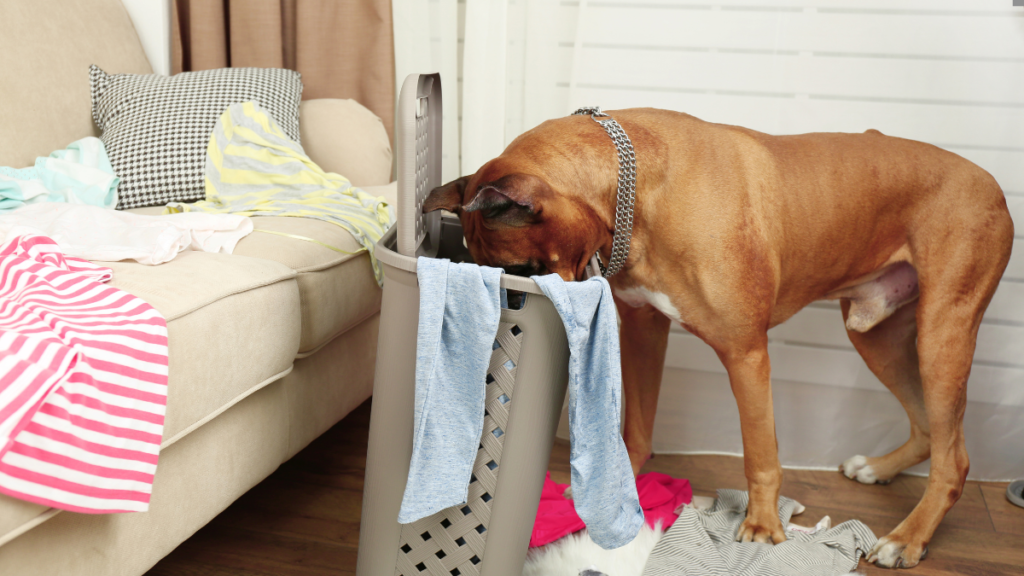
Do you have a room that your dog just won’t set foot in? Does your pup stop at the threshold, peek inside, and then turn around to walk away?Seeing your dog act like this can feel bizarre—and a little hurtful. You clean that room. You spend time in that room. What’s wrong with it? Are you doing something wrong?
Why does your dog avoid one room in your house? As it turns out, there’s almost always a good explanation. It’s just that dogs perceive their world differently than we do.
Why Do Dogs Avoid Certain Rooms?
Before we get into specifics, remember this: dogs don’t perceive spaces as “rooms.”
They perceive spaces as experiences.
That scary room holds emotion for your dog every time they walk past it. Whether it reminds them of a loud noise, an uncomfortable texture, or you leaving during a storm, they’ll store that emotion in their mind and react accordingly.
If enough bad experiences happen in one room, your dog may avoid it completely to stay safe—especially because dogs remember emotional experiences strongly, even if they can’t logically explain them to themselves.
So take heart knowing that whatever’s causing your dog to avoid that room is communicating something to you. Let’s review some of the most common reasons dogs fear certain areas.
1. Something Scary Happened There
The most common reason a dog avoids a room is that something frightening occurred there.
Maybe they:
-
Heard a loud noise (vacuum cleaners, blenders, thunder)
-
Slipped on the floor
-
Got scolded or punished
-
Heard fireworks outside
-
Got startled by sudden movement (fans turning on, doors slamming)
Your dog may have had a panic moment in that room. To a dog who panicked once, it’s only natural to assume the room is unsafe.
Rooms typically associated with this fear include:
-
Laundry rooms (loud machines)
-
Bathrooms (slippery floors and loud fans)
-
Kitchens (clattering dishes or appliances)
-
Basements or enclosed areas (echoing sounds, strange smells)
Even after you solve the problem, it may take time before your dog feels ready to venture back inside.
2. Something Smells Strange
Dogs live in a world of scent. If a room smells normal to you, it may smell intimidating or unpleasant to them.
Odd smells that may cause your dog to avoid a room include:
-
Strong cleaning supplies
-
New furniture with unfamiliar odors
-
Paint, glue, or recently renovated spaces
-
Medications used by pets or people
-
Air fresheners or candles
Dogs have extremely sensitive noses. Artificial, sharp, or overpowering smells can make them hesitant to enter.
Smells dogs commonly dislike include:
-
Chemical scents (laundry detergents, floor cleaners, fabric softeners)
-
Burnt odors (overcooked food, burnt toast)
-
Heavy perfumes or air fresheners
The next time you deep clean, rearrange furniture, or bring home a new couch, watch how your dog reacts.
To your dog, that room may suddenly smell scary and unfamiliar.
3. Strange Noises You Don’t Hear
Dogs hear far higher frequencies than we do. Some rooms may emit subtle sounds your dog notices even when you don’t.
Examples include:
-
Buzzing from outlets
-
Humming from appliances
-
Pipes knocking in walls
-
Whistling air vents
-
High-pitched electrical sounds from TVs and computers
Your dog may dislike the way that room sounds. Electronics often emit frequencies that stress dogs without you realizing it.
Notice if your dog avoids the room more at night or during certain times of day. An appliance or system could be turning on without your awareness.
4. Slippery Floors
Dogs need traction to feel secure. Slippery floors can make them feel unstable and unsafe.
Rooms with smooth flooring that may cause hesitation include:
-
Tile-floored rooms
-
Laminate flooring
-
Hardwood floors without rugs
A dog that slips once may associate that room with danger. It doesn’t matter whether they were injured—it only matters that they felt out of control.
As dogs age, joints weaken, making smooth surfaces even more intimidating. Dogs with arthritis, hip dysplasia, back pain, or neurological issues may avoid rooms that feel physically risky.
5. Rooms With Negative Associations
Some rooms carry emotional history.
Your dog may associate fear with:
-
Rooms where they were left alone during storms
-
Bedrooms where doors are closed at night
-
Crates or laundry rooms used for time-outs
-
Any space where they were scolded
Even if your intentions were good, your dog may have felt isolated or punished.
Dogs are social animals. Being separated from their “pack” can feel frightening. If a room reminds your dog of those moments, avoidance becomes a form of self-protection.
6. Environmental Changes
Dogs feel safest when life is predictable. Sudden changes can make a room feel unfamiliar.
Common triggers include:
-
New furniture
-
Rearranged layouts
-
Different lighting
-
New objects (plants, shelves, decor)
-
Someone using the room more often
To a dog, a changed room can feel like new territory. Some dogs need time to re-learn that the space is safe.
This is especially common in:
-
Anxious dogs
-
Dogs with past trauma
-
Senior dogs

7. Health Problems
Sometimes the issue is physical rather than emotional.
Your dog may avoid rooms that require them to:
-
Jump
-
Climb stairs
-
Walk on hard surfaces
-
Navigate tight spaces
Joint pain, arthritis, hip dysplasia, back problems, or neurological issues can make certain rooms uncomfortable.
If your dog suddenly avoids a room that involves these movements—especially in older dogs—consult your vet to rule out an underlying health concern.
How to Stop Your Dog From Avoiding One Room
Now that you understand some possible causes, you can help your dog feel safe again.
General guidelines:
-
Be patient
-
Use high-value treats
-
Create positive associations
-
Do not force your dog into the room
Dragging your dog inside or scolding them will only confirm their fear.
1. Make the Room Inviting
-
Add a rug for traction
-
Place familiar bedding or toys inside
-
Remove strong odors
-
Reduce noise if possible
Do what you can to make the space feel safe.
2. Create a Treat Trail
Place treats just inside the doorway. Gradually move them farther into the room.
Let curiosity lead. Never force your dog to step inside.
3. Sit in the Room Quietly
Dogs often feel safest near you. Sit on the floor with a book or your phone and relax.
Your calm presence communicates safety.
4. Feed, Play, and Give Attention Nearby
Offer treats near the doorway. Toss toys close to the room. Praise and pet your dog when they approach.
Practice this daily for a week, and something powerful happens: your dog begins to associate the room with good experiences.
This process—called counterconditioning—replaces fear with comfort.
When to Worry
Occasional avoidance is normal, especially after cleaning, redecorating, or hosting guests.
But seek help if your dog:
-
Avoids multiple rooms
-
Acts out of character (hiding, backing away)
-
Refuses to enter no matter what
-
Shows signs of anxiety or distress
-
Suddenly avoids a room intensely
-
Experiences changes in mobility or appetite
A veterinarian or certified dog behaviorist can help determine whether the cause is medical or emotional.
Conclusion
It can be confusing and upsetting when your dog suddenly decides they hate one room in your home.
But from your dog’s perspective, there is always a reason. Dogs process life through emotion, not logic.
-
“It used to scare me” becomes “That room isn’t safe.”
-
“I feel good there” becomes “That’s where good things happen.”
When you realize there’s always meaning behind your dog’s behavior, you open the door to empathy instead of frustration.
Some dogs need time to heal.
Some need gentle guidance.
And some simply need you.
With patience, understanding, and kindness, you can help your dog feel safe again—one room at a time.
Save pin for later


- The Cutest Cat Breeds in the World - March 21, 2026
- Black Cat Names That Are as Mysterious and Beautiful as They Are - March 21, 2026
- Did You Know Your Dog Could Have Diabetes? - March 20, 2026