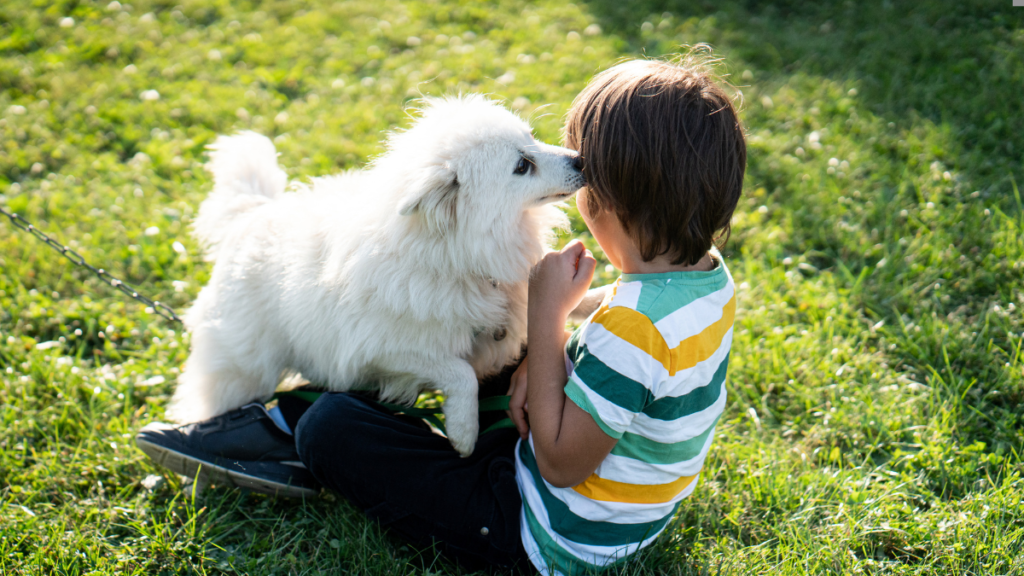
Do you own a dog? Have you ever wondered, Why does my dog lick me so much?Whether it’s your hands, face, feet, butt, or even behind your knees, chin, or clothes—licking can feel CONSTANT.
Because of this, many dog owners search Google for Why Dogs Lick People Constantly. It can be baffling to experience. It’s cute sometimes, but other times it’s downright annoying, worrying—or all three.So what gives?
While there are many reasons dogs tend to lick people, it very rarely has anything to do with being badly behaved, disrespectful, or dominant. Simply put, licking is one of the primary ways dogs interact with the world around them.

Why Do Dogs Lick? Licking Is Natural Dog Behavior
Before we jump into all the reasons dogs lick people, it’s important to acknowledge that licking is normal dog behavior.
Dogs are not people and don’t have hands to hold onto for comfort, connection, exploration, or greeting. Their mouths are essential tools for interaction and experiencing life.
Licking begins early—right from birth:
Mother dogs lick their puppies to clean them, stimulate breathing, encourage elimination, and provide comfort.
Puppies lick their mother’s mouth to stimulate milk flow and gain attention.
Because this behavior is instinctual from such an early age, licking becomes associated with safety, love, and communication.
Alright—now that we’ve covered that, here’s why dogs lick people constantly:
1 – Doggy Affection
Your dog licking you is most often just plain affection.
Dogs form emotional connections with their human caregivers and express closeness in dog-specific ways. Just like hugs or hand-holding in humans, licking can be a form of social bonding.
When your dog licks you:
-
They may be showing love
-
They may be reinforcing the bond you share
-
They may feel secure in your presence
Affection-based licking usually happens when:
-
You’ve returned home after being away
-
You’re sitting calmly
-
Your dog feels comfortable and content
During these moments, licking is often gentle and slow. You may notice relaxed body language, soft eyes, a wagging tail, or your dog leaning into you.

2 – Communication
Dogs don’t communicate using words. They rely on body language, vocalizations, and behaviors—including licking—to express how they feel.
When dogs lick each other, it can mean:
-
Submission
-
Acknowledgment
-
Avoidance of conflict
-
Social politeness
When dogs lick humans, they may be communicating similar messages, such as:
-
“I don’t want to upset you.”
-
“I care about you.”
-
“I respect you.”
-
“Please pet me.”
Dogs often lick more when they sense tension, raised voices, or emotional shifts in their humans.
3 – Anxiety, Stress, or Self-Soothing
As mentioned earlier, not all licking is the same. Sometimes dogs lick to cope.
Just like humans bite their nails or fidget when overwhelmed, dogs may lick as a self-soothing behavior.
You may notice excessive licking when your dog is:
-
In loud environments
-
Experiencing a change in routine
-
Responding to guests
-
Trying to regulate big emotions
-
Anticipating stressful events (like vet visits)
If your dog’s licking is frantic, intense, and paired with pacing, whining, yawning, or lip-licking, it likely indicates emotional discomfort. Emotional distress can be a major driver of excessive licking.
4 – Taste and Smell
Humans taste with their tongues, but dogs also smell with theirs.
Ever wondered why dogs lick people’s faces? Humans are covered in things dogs find interesting:
-
Salt from sweat
-
Natural oils
-
Food residue
-
Hormones
-
Unique scents
Your dog may lick you simply because you taste or smell fascinating to them—especially if they’re food-motivated or highly scent-driven.
5 – Seeking Attention
Dogs are excellent at learning which behaviors get results.
If your dog licks you and you:
-
Laugh
-
Talk to them
-
Push them away
-
Pet them
-
React emotionally
They quickly learn that licking equals attention.
At this point, licking becomes a learned behavior rather than an instinctive one.
This often happens when dogs:
-
Are bored
-
Lack mental stimulation
-
Spend long periods alone
-
Want more interaction
6 – Reinforcement
Similarly, some dogs lick simply because it’s a habit that has been reinforced over time.
Any behavior that is repeated and rewarded—even accidentally—becomes solidified.
If your dog has learned that licking leads to:
-
Comfort
-
Attention
-
Physical contact
They’ll likely continue doing it.
This type of licking isn’t driven by emotion—it’s driven by expectation.
7 – Appeasement Behavior
Dogs may lick as an appeasement gesture, signaling they are not a threat.
If your dog licks when you:
-
Look upset
-
Raise your voice
-
Appear frustrated
-
Move quickly or dramatically
They may be trying to calm you or defuse the situation.
This behavior is often paired with:
-
Avoiding eye contact
-
Turning their body away
-
Soft, non-threatening posture
Your dog is essentially saying, “I mean no harm.”
8 – Medical Issues
Medical causes of excessive licking are uncommon but worth considering.
If licking appears suddenly or intensifies, consider whether your dog might be experiencing:
-
Nausea
-
Digestive discomfort
-
Nutrient deficiencies
-
Allergies
-
Hormonal changes
Sudden behavioral changes should always be evaluated by a veterinarian.
9 – Puppy vs. Adult Dogs
You will never be licked as much as you are by a puppy—and that’s normal.
Puppies lick as part of:
-
Exploration
-
Teething
-
Social learning
-
Attention-seeking
Most dogs reduce licking as they mature—unless:
-
The behavior is reinforced
-
They lack stimulation
-
They use licking to cope with stress
Always consider your dog’s age and development when evaluating licking behavior.
10 – Breed Differences
Some dogs may lick more due to breed tendencies.
Breeds selected for:
-
Close human bonding
-
Emotional sensitivity
-
High sociability
May naturally show more licking behavior.
That said, breed alone doesn’t determine licking habits. Environment, learning history, and emotional health matter far more.
When Is Dog Licking Normal?
Dog licking is generally normal when:
-
It’s infrequent
-
Your dog can stop when asked
-
It doesn’t disrupt daily life
-
Body language is relaxed
Licking can be a healthy way to bond with your dog.
When Is Dog Licking a Problem?
Licking may be problematic if it:
-
Is constant and difficult to interrupt
-
Irritates your skin
-
Occurs during stress or anxiety
-
Replaces healthier coping behaviors
-
Makes others uncomfortable
Punishment won’t fix anxiety-driven licking—addressing the root cause will.
How to Respond to Your Dog Licking You
The goal is not punishment, but redirection and reinforcement.
Helpful strategies include:
-
Redirecting to calm behaviors
-
Rewarding moments when your dog chooses not to lick
-
Increasing mental stimulation
-
Providing enrichment
-
Maintaining consistent routines
-
Avoiding reinforcement of unwanted licking
If licking is anxiety-based, replacing it with healthier coping behaviors is essential.
What You Shouldn’t Do
Avoid:
-
Yelling
-
Hitting or spanking
-
Abruptly pushing your dog away
-
Reacting emotionally
These responses increase stress and may worsen licking.
Typing this made me upset too.
Why Do Dogs Lick Humans? Understanding the Root Cause
When we ask why dogs lick people, we’re really asking why—are they bored, sick, or upset?
“It’s because dogs are dogs” isn’t enough.
Most dogs lick to communicate, connect, self-soothe, or express affection. They aren’t trying to annoy you—even when they lick your face while you’re working.
They lick because that’s how dogs communicate.
The more you understand your dog’s language, the stronger and more respectful your relationship becomes.
Conclusion
Dogs lick humans constantly for many reasons—some obvious, some subtle. They lick for affection, stimulation, communication, stress relief, boredom, or habit.
Most of the time, licking isn’t bad or problematic. It’s simply part of how dogs operate.
Understanding why your dog licks you helps you respond compassionately, reduce unwanted behavior humanely, and meet their emotional needs.
And let’s be honest—sometimes, a puppy lick isn’t the worst thing in the world.
Save pin for later

- The Cutest Cat Breeds in the World - March 21, 2026
- Black Cat Names That Are as Mysterious and Beautiful as They Are - March 21, 2026
- Did You Know Your Dog Could Have Diabetes? - March 20, 2026