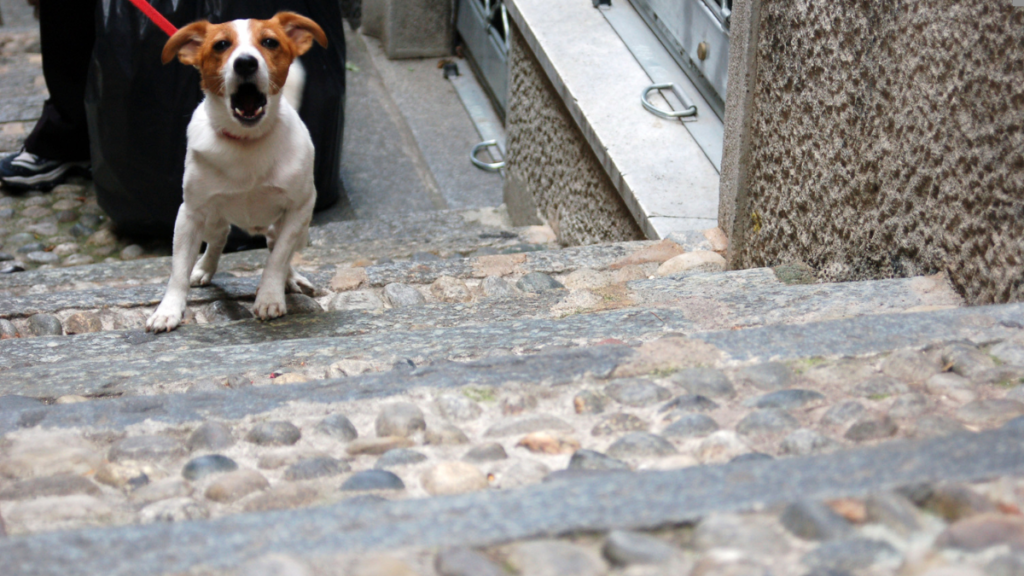
There are few noises more attention-grabbing than a dog barking at the door. It’s loud. It’s sharp. It feels sudden, scary, and frantic—and sometimes mortifying, especially if there’s clearly nothing there.But why do dogs bark at the door? If you’ve ever found yourself asking this question, you’re in good company. It’s actually one of the most common canine questions out there.
The upside is that door barking isn’t random or necessarily “bad” behavior. Your dog has something they want or need to tell you.Dog barking is instinctual, emotional, and learned behavior combined. Once you know why dogs bark at the door, you can change your response in ways that help you both feel less stressed.
Why Dogs Bark At The Door
Humans don’t bark. Dogs don’t speak English. But dogs are highly skilled communicators. They rely on body language, facial expressions, posture, and vocalizations to let us know what’s going on inside their heads.
Dog barking, in particular, is extremely versatile.
When dogs bark at the door, they could be trying to tell you:
-
“I hear someone!”
-
“I don’t know what to make of this.”
-
“This is my home.”
-
“There’s something strange going on.”
-
“I’m excited!”
The door signifies change. People come in and out of your home through that door—visitors, delivery people, weird noises, unfamiliar smells. It’s a vortex of unpredictability.
And unpredictability = triggers.
Territorial Behavior
Guarding territory is one of the most common causes of dog barking at the door.
Your dog is a descendant of animals that had to fight to claim their space or risk starvation. Your house becomes your dog’s den. The door is where the “safe inside” meets the “unsafe outside.”
So when they hear footsteps, a knock, or the doorbell ring, their brain goes into red alert:
-
“There’s someone in my territory.”
-
“I need to warn my family.”
-
“I should scare this away.”
It’s not aggression. Your dog thinks they’re doing their job.
Breeds prone to guarding are more likely to bark at the door than others. Herding breeds, traditional guard dogs, and breeds typically used for watchdog duties were selected to be alert and vocal.
But even tiny companion breeds can be highly territorial.
Fear-Based Barking
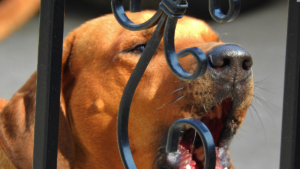
Door barking isn’t always the proud stance of a guard dog who’s fully in control. Sometimes dogs bark at the door because they’re scared.
When the door opens, outside creatures come inside. And outside creatures = strangers.
Dogs don’t always know whether a stranger is a good thing or a bad thing.
Fear-based barking generally sounds:
-
High-pitched
-
Fast
-
Repetitive
-
Often paired with pacing, trembling, or other nervous movement
In this instance, they aren’t trying to “protect” the house as much as protect themselves from a perceived threat.
“Go away. I’m scared.”
You may see this behavior in dogs who:
-
Had poor socialization as puppies
-
Had negative experiences with visitors in the past
-
Are generally anxious dogs or nervous breeds
For these dogs, door = scary strangers.
Excitement Barking
Sometimes dogs bark at the door because they’re happy.
Dogs are pattern-oriented creatures:
-
Doorbell = humans
-
Knock = attention
-
Door opens = excitement is coming
So if your dog has only had good experiences with people at the door, barking can be pure joy. They know guests mean pets, play, and adventure.
Excitement barking tends to be accompanied by:
-
Wagging
-
Spinning in circles
-
Jumping
-
Whining mixed with barking
Your dog isn’t scared or stressed or trying to protect their home. They just don’t know how to contain all that excitement.
In other words, they don’t know how not to bark.

Learned Behavior
Sometimes dogs bark at the door because they’ve learned that barking gets results.
Dogs learn very quickly what works and what doesn’t.
If dog barks at door and someone leaves, moves away, or you give them attention, dogs learn:
My barking has power.
Examples:
-
Dog barks → delivery person walks away
-
Dog thinks: “See? I scared you off.”
-
Next time, the dog barks even louder.
-
-
Dog barks → you rush to the door
-
Dog thinks: “Humans respond when I bark.”
-
Next time, any noise triggers barking.
-
Once barking at the door is reinforced, it becomes conditioned behavior. Your dog will start barking automatically before they even know what’s happening.
Understanding why dogs bark at the door is critical, because often the behavior persists simply because… it works.
Sound Sensitivity
Dogs bark at the door because dogs hear everything.
Footsteps on the pavement. Car doors closing. Keys jingling. Distant conversations. Elevators in apartment buildings.
You’re relaxing on the couch. Suddenly, your dog is barking at the door.
“What is it?” you think.
From your dog’s perspective, they’re just reacting to stimuli you can’t hear. Doors are where all that sound comes from, so dogs naturally focus there.
Sometimes your dog is simply trying to alert you.
Separation Anxiety
If your dog struggles with separation anxiety, barking at the door can take on a whole new meaning.
The front door is where you leave.
They may bark because they’re afraid of being left alone—or because they’re trying to prevent you from going.

What Starts the Behavior
Common triggers include:
-
Doorbell ringing
-
Knocking
-
Door creaking open
-
Footsteps
-
Door closing
-
People leaving
-
Keys
-
Delivery people
-
Package drop-offs
Think about it: someone arrives, your dog barks. The noise stops. From your dog’s point of view, they’ve successfully “handled” the situation.
How You React
Dogs closely watch human reactions.
If you rush to the door, yell, look stressed, or grab the handle urgently, your dog may think:
-
“Something is wrong.”
-
“My family is scared. I was right.”
Even saying “Relax” can reinforce the behavior if it comes with lots of attention.
Take a breath. Your reaction matters more than you realize.
Calm leadership tells your dog:
“I’ve got this. You don’t need to react.”
Is It Normal For Dogs To Bark At The Door?
Yes—very normal.
It only becomes a problem when it:
-
Is excessive
-
Causes stress
-
Leads to fear or aggression
-
Disrupts daily life
Your dog isn’t being disrespectful. They’re reacting the way they believe any sensible dog would.
Now that you understand Why Dogs Bark At The Door, you can approach the behavior with curiosity instead of frustration.

A Quick “Bark” Translator
| Bark Tone | Possible Emotion |
|---|---|
| Deep, low bark | Proud / territorial |
| High-pitched, fast bark | Afraid or anxious |
| Short bark mixed with whine | Excited |
| Single, sharp bark | Alerting |
| Long, frantic barking | Overstimulated |
Listen to tone and body language together to understand your dog’s emotional state.
How To Stop Your Dog From Barking At The Door
You’re not trying to stop your dog from communicating.
You’re teaching them a better way to do it.
No punishment required.
Desensitize the Doorbell
-
Play the doorbell sound quietly
-
Reward calm behavior
-
Gradually increase the volume
-
Repeat
This teaches your dog the sound is harmless.
Teach “Place”
Train your dog to go to a bed or mat when the doorbell rings.
Over time, the door becomes a cue for calm instead of chaos.
Reduce Triggers
Use white noise, curtains, or baby gates to limit sights and sounds from the door.
Manage Your Energy
If you rush or tense up, your dog will too. Calm behavior from you creates calm behavior in them.
When to Ask for Help
If your dog:
-
Lunges
-
Growls
-
Snaps
-
Shows intense fear
Seek help from a qualified behaviorist. This isn’t failure—it’s advocacy.
Final Thoughts
Does your dog bark at the door? Great—you’re normal.
Your dog isn’t trying to annoy you. They’re communicating the only way they know how.
Once you understand Why Dogs Bark At The Door, you begin to hear:
-
“We hear something.”
-
“I don’t know what it is.”
-
“I care about this.”
With patience, practice, and positive reinforcement, you can teach your dog that the door means calm, not chaos.
The door doesn’t have to be a battleground. It can simply be another peaceful part of home.
Save pin for later


- The Cutest Cat Breeds in the World - March 21, 2026
- Black Cat Names That Are as Mysterious and Beautiful as They Are - March 21, 2026
- Did You Know Your Dog Could Have Diabetes? - March 20, 2026