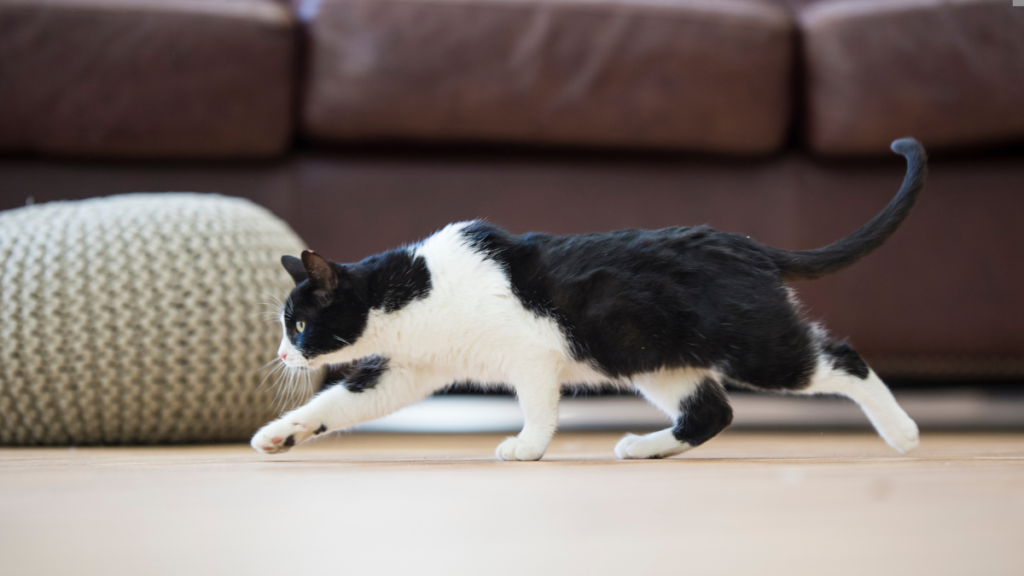
If you’ve ever watched your cat stalk another pet around your home—their shoulders dipping low to the ground, eyes focused, tail twitching ever so slightly as they slowly follow your dog, cat, kitten, bunny, or rat across the room—you’ve probably felt more than a little baffled.Your cat seems angry, your nerves are on edge, and every fiber of that other pet’s being is telling them to run.
It’s stressful, confusing behavior—for everyone involved. And just when you thought your pets’ interactions couldn’t get any stranger, this happens.To stop cats from stalking other pets inside your house, you’ve got to look past “bad behavior” and into the way cats think, feel, and react to their environment.
Why Do Cats Stalk Other Pets in the House?
Okay, let’s address the biggest and most obvious reason your cat stalks other pets in the house:
They’re cats.
It’s that simple.
Stalking isn’t complicated or personal. It’s nature rubbing up against nurture.
House cats may not have to hunt to survive, but they still have the body and brain of a hunter. When those instincts kick in, they look for something to satisfy that need—and guess what else lives in your home?
Movement.
Other pets.
Outdoor animals they can see through the windows.
Escaping the predator–prey mind game is basically impossible for the animals involved, which is why understanding how to manage the situation is so important.
Fearful Stalking vs. Excited Stalking
Fearful and excited stalking look identical in body language, which is why most owners don’t realize there are two very different types of stalking behavior happening at different times.
Excited stalking comes from your cat’s prey drive. It’s rooted in curiosity, engagement, and tracking movement.
Fearful stalking is panic—it comes from anxiety and concern.
Experts typically describe two types of stalking behavior:
Predatory Play
Social Dominance
Play is exactly what it sounds like: your cat is playing with the other pet. This type of stalking is superficial and doesn’t usually escalate to violence.
Dominance-based stalking is a reaction to stress or fear. Your cat views the other animal as a threat to their resources, safety, or position.
Dominant behavior often happens when:
-
You’ve recently introduced another pet into the household
-
Your dog is excitable, sprawling, smelly, or demanding
-
Your cat doesn’t have adequate space to escape animals or people
-
Your cat has had negative experiences with other animals in the past
The difference between predatory and dominant behavior can be summed up with one question:
Would your cat prefer that the other animal go away?
If yes, they’re likely acting out of fear.
If not, they’re likely playing.
Knowing how to recognize each situation helps you take control of the environment and interrupt stalking behavior before anyone gets hurt.

Reasons Cats Stalk Other Pets
Let’s dive into the most common reasons your cat stalks other pets in the home.
Boredom and Attention-Seeking
Does your cat pick on the same pet every day? What about right before dinner, when you’re cooking in the kitchen?
We often call this “OCD-style stalking,” and it usually stems from two things:
-
Boredom
-
A desire for attention
Both are attempts to entertain themselves and feel important. It isn’t personal that they chose your dog—they just want stimulation.
Steps you can take to reduce boredom-based stalking:
Practice regularly scheduled play sessions
Engage in interactive, predatory play using wand toys and chase games. Don’t skip the stalk phase by tossing toys on the ground—complete the full hunting sequence.
Cat-proof your home
Cats require daily mental and physical stimulation to stay balanced. Provide plenty of toys, perches, climbing areas, and enrichment that doesn’t involve harassing other pets.
Fearfulness and Attempting to Gain Control
Your cat may stalk a new puppy because they feel scared or overwhelmed. Other pets can infringe on their space, routines, and resources.
Steps to reduce fear-based stalking:
Provide vertical space and escape routes
Cat trees, shelves, elevated beds, and window perches allow cats to observe without directly entering another animal’s space.
Rule the roost
Privacy matters. Make sure your cat has hiding spots and resting areas they don’t have to share.
Introduce pets slowly and safely
If you rushed introductions, stalking is more likely. Go slowly, allow distance-based observation, and give pets time to understand one another before close contact.
Redirected Hunting Responses
Ever notice how your cat only stalks certain pets? Maybe they fixate on the rabbit but ignore the dog entirely.
This often comes down to prey drive and individual personality. Factors like age, energy level, intelligence, and breed can influence how strongly hunting instincts show up.
Tips to reduce redirected hunting behavior:
Don’t encourage the behavior
Picking up your cat to comfort them while they’re stalking or yelling at the other pet to “leave the cat alone” reinforces the behavior and teaches your cat that stalking gets results.
Manage interactions proactively
Supervise shared time and redirect behavior at the earliest signs. Punishing your cat after the fact only increases stress and worsens the problem.
Instinct vs. Intent
Just because your cat hunts other pets doesn’t mean they want to hurt them.
When a cat’s prey drive kicks in, they aren’t making emotional decisions—they’re responding to instinct.
This principle applies to your cat, too. They aren’t trying to be cruel or destructive; they’re acting on biological programming.
Incorrect Pet Introductions
This one deserves repeating.
Some cats adapt quickly to new animals. Others need significant time.
Forcing interactions doesn’t allow either pet to feel safe. To your cat, a new animal may appear as a loud, unpredictable stranger who eats their food, invades their space, and disrupts routines.
Naturally, your cat will react.
Stress Hormones and Chronic Stalking
Chronic stress keeps a cat’s nervous system in a constant state of alertness. This can cause stalking to persist even when you think you’ve addressed the issue.
There’s no instant fix for stress-induced stalking, but consistent environmental management, enrichment, and patience can reduce the behavior over time.
How Do I Prevent My Cat From Stalking Other Pets?
Want to know how to prevent your cat from stalking other pets? Start here.
Rule Out Medical Issues
Visit your veterinarian to rule out underlying conditions that may affect mood, energy, or impulse control. Conditions like hyperthyroidism can increase agitation in older cats.
Increase Mental and Physical Stimulation
Daily play sessions are non-negotiable. Especially in households with high-energy cats and lower-energy dogs, structured play prevents your cat from using other pets as an outlet.
Teach your cat to “hunt” toys so they can satisfy those instincts appropriately.
When Does Stalking Become Aggression?
Stalking can escalate if left unmanaged—but punishment is never the answer.
Tail twitching and stiff posture mean your cat isn’t playing—they’re preparing to react.
Aggression in cats is usually fear-based, not malicious.
Aggressive Intent
Hissing, lip curling, and posturing with the intent to harm—often seen in cats who feel cornered or threatened.
Aggressive Reaction
Defensive swatting during a conflict or sudden movement. This is a response to stress, not intent to injure.
Final Thoughts
Simply put: your cat isn’t trying to be mean.
They’re responding to instinct, stress, boredom, or fear.
If you understand why cats stalk other pets in the home and learn to recognize early warning signs, a peaceful multi-pet household is absolutely possible.
Just remember:
-
Never punish stalking behavior
-
Provide ample physical and mental enrichment
-
Seek professional guidance if the behavior doesn’t improve
We hope you found this article helpful. For more resources on keeping your pets happy, healthy, and stress-free, explore our archives.
Save pin for later


- The Cutest Cat Breeds in the World - March 21, 2026
- Black Cat Names That Are as Mysterious and Beautiful as They Are - March 21, 2026
- Did You Know Your Dog Could Have Diabetes? - March 20, 2026