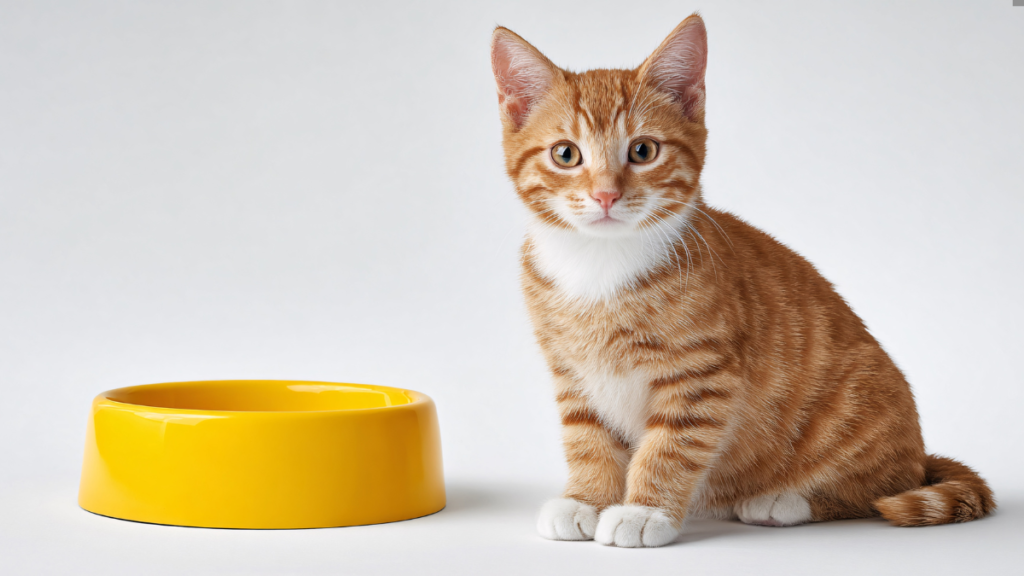
Ah, the sound of a spoonful of kibble crashing to the floor. Milk splashing everywhere. Your cat calmly looking at you like they did absolutely nothing wrong.
Sound familiar? If you share your home with a cat, chances are you’ve experienced this moment at least once. And if it’s happened more than once, chances are you’ve asked yourself this question:
Why Cats Knock Over Food Bowls, even when they’re hungry and know exactly how to behave around food?
Why Cats Knock Over Food Bowls Even When They’re Hungry
Your Cat’s Instincts Are Triggered
Domesticated cats may live indoors their entire lives, but they are still natural hunters. Your cat may know they have food waiting for them, but how that food is presented can trigger deeply instinctual behavior.
Many tips to reduce or stop Why Cats Knock Over Food Bowls come from understanding wild cat behavior. In the wild, cats don’t eat from bowls. They catch their food, bat it around, inspect it, and play with it before finally eating.
It’s completely natural for cats to see a bowl as an object they can—and should—manipulate. Flipping it over may be their way of making sure it’s safe, empty, or edible.
To your cat, the food bowl is more than just a dish. It’s an object in their territory that smells like food. Pawing at it, dragging it, and tipping it over is instinctive behavior.
Consider Your Cat’s Food and Water Bowls
Another possible reason has nothing to do with spite or attitude. Instead, it comes down to your cat’s anatomy and how it affects their comfort.
Whisker Sensitivity
Cats have extremely sensitive whiskers. When a food bowl is too narrow or too deep, their whiskers rub against the sides while they eat. This can quickly become uncomfortable—or even painful.
Instead of eating peacefully, your cat may knock the food onto the floor, where their whiskers don’t touch anything.
This is known as whisker fatigue. If your cat eats for a moment and then flips the bowl to dump the food, whisker discomfort is a likely cause.
Lightweight or Slippery Bowls
Cats love to interact with moving objects. Lightweight or plastic bowls slide easily across the floor, and your cat will quickly learn that even a small tap can send the bowl skidding—or flipping completely over.
Some cats actually enjoy this and treat it like a game. Others knock the bowl over accidentally while trying to stop it from moving.
Is Your Cat Checking the Food?
Have you ever noticed your cat flipping their bowl just to inspect the food more closely?
Cats are naturally cautious eaters. In the wild, spoiled food can be dangerous, so cats instinctively sniff and examine their meals before eating.
Knocking over a food bowl is one way to test whether the food is fresh. If it smells strange, has been sitting out too long, or you’ve recently changed brands or flavors, your cat may flip the bowl to investigate.
Your cat may be saying:
-
“Try this again.”
-
“This smells strange.”
-
“I don’t think this is fresh.”
Sometimes it’s simply entertaining for them to paw at the food until it ends up on the floor.
Maybe Your Cat Is Telling You Something
Cats communicate with their humans in creative ways. Sometimes they meow. Sometimes they sit on your keyboard. Other times, they knock over their food bowl.
If your cat learns that tipping their bowl leads to:
-
Fresh food
-
Fresh water
-
A different meal
-
Attention from you
They may repeat the behavior intentionally.
Your cat may be communicating:
-
“I don’t like this food.”
-
“This doesn’t seem fresh.”
-
“Leave my food alone.”
-
“Refill my water.”
Boredom or Extra Energy
If your cat knocks over bowls when you’re not around, early in the morning, late at night, or during quiet periods, boredom may be the real issue.
Indoor cats need mental and physical stimulation. Without enough playtime, they entertain themselves—and food bowls make excellent toys.
-
Bowls make noise when they fall
-
Pushing bowls moves objects with their paws
-
Knocking over bowls gets your attention
-
It disrupts their environment in an interesting way
Providing regular play sessions and enrichment can significantly reduce this behavior.
Watch Where You Put That Bowl
Food bowl placement matters more than many cat owners realize.
Placing bowls near loud appliances, in busy walkways, next to the litter box, or near other animals can cause stress.
Stressful Locations
If your cat seems tense while eating or constantly looks around, they may feel unsafe. Knocking over the bowl can be a stress response or an attempt to move food to a safer place.
Cornered Feeding Areas
Cats dislike feeling trapped. When a bowl is placed in a corner or against a wall, your cat can only see one direction.
Some cats pull food out to eat elsewhere. Others knock the bowl over entirely to eat in peace.
Don’t Forget About Water Bowls
Cats are especially known for knocking over water bowls.
Cats instinctively distrust still water. In the wild, stagnant water can be unsafe, so they prefer moving sources.
If your cat tips over their water bowl, try:
-
Refreshing it more often
-
Using a wider bowl
-
Switching to a pet water fountain
Light reflections, bugs, or nearby windows can also tempt cats to paw at the water until the bowl tips over.
Two Cats? You May Have a Competition Issue
Cats are territorial eaters. Even cats that get along well may feel uncomfortable eating side by side.
If food competition or stealing is common, try separating feeding stations so each cat has their own space.
Possible Medical Issues
In most cases, bowl tipping is behavioral or environmental. However, medical issues can contribute.
Arthritis
Cats with arthritis may find it painful to lower their heads. Tipping the bowl can make eating more comfortable.
Mouth Sensitivity
Dental problems or mouth pain can make eating from a bowl uncomfortable.
Vision Impairment
Cats with reduced vision may feel trapped by deep bowls or have trouble locating food.
When to Consult Your Vet
If bowl tipping begins suddenly or is paired with appetite changes, weight loss, or unusual behavior, consult your veterinarian.
Why Cats Knock Over Food Bowls Even When They’re Hungry
Cats can be hungry and still dislike:
-
The bowl
-
The placement
-
The smell of the food
-
The smell of the bowl
-
The taste or texture
Knocking over the bowl allows them to avoid discomfort while still eating.
Conclusion
Cats knock over food bowls for many reasons—instinct, comfort, boredom, communication, or health.
With small adjustments, this behavior is often preventable. And even when it isn’t, understanding the reason behind it makes it far less frustrating.
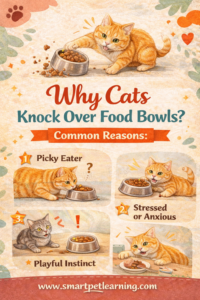
Why Cats Knock Over Food Bowls is a normal feline behavior—and rarely has anything to do with anger or spite.
Save pin for later

- The Cutest Cat Breeds in the World - March 21, 2026
- Black Cat Names That Are as Mysterious and Beautiful as They Are - March 21, 2026
- Did You Know Your Dog Could Have Diabetes? - March 20, 2026