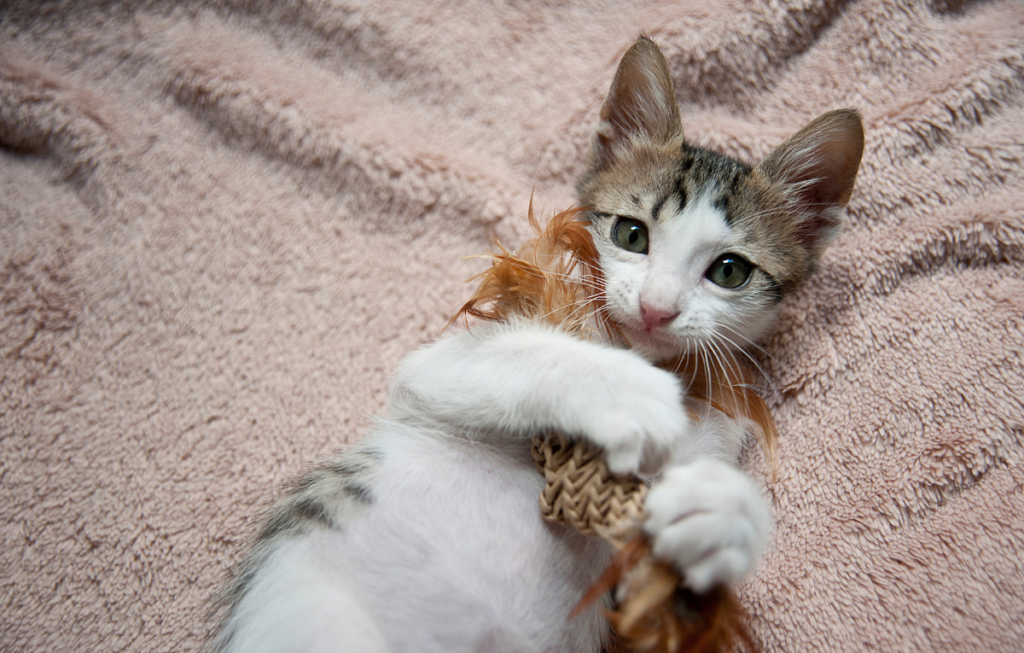
Standing in the pet store, staring at row after row of colorful toys, can make you wonder: Why do cats ignore toys even when you’re trying really hard to choose just the right one?
You get it home and shake it near them. You make silly noises to get them interested… and your cat looks right through it. They blink. They yawn. They turn away.
It’s normal to feel confused or even a little rejected. Toys should capture their attention, right? But if you know your cat, you know this behavior isn’t personal. In fact, there are several normal reasons why cats ignore toys.
Think of cats like humans—if you know what they like, their hobbies, and what’s going on in their lives, you’ll better understand why they react the way they do.
Cats Are Individuals
Yes, cats can be finicky. But there’s a reason for that.
A cat’s personality is influenced by instinct, environment, age, mood, and health—as well as the toy being offered. Cats react to subtle details we often don’t understand. When your cat ignores a toy, it could be an easy fix or a signal that something is going on.
Here are 12 reasons why cats ignore toys and what you can do about it.
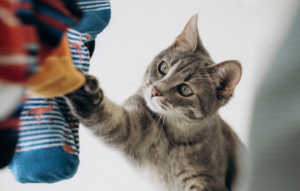
1. The Toy Isn’t Appealing to Their Hunting Instincts
Cats are natural-born hunters. Whether indoor or outdoor, your cat has the instincts of a predator that hunts to survive.
Their natural play sequence imitates hunting. When playing with toys, cats typically:
-
Hunt
-
Stalk
-
Chase
-
Pounce
-
Capture
-
“Kill”
…and then often play with their prey toy for a while.
Anything that doesn’t mimic this cycle may fail to hold their attention.
Examples of unappealing toys:
-
Toys that move too slowly (or not at all)
-
Toys with predictable movements
-
Mechanical toys that make loud noises (which can annoy them)
Remember how quickly your cat pounced on a laser pointer when you first got it? Cats may lose interest because there’s no capture phase. The dot can never be caught.
Toys that dart around corners, pop out from behind objects, or slink under furniture are usually more intriguing. These movements stimulate their predator instincts more effectively than holding a toy directly in front of them.
Experiment with different ways of moving toys on a string. Think less like a human and more like prey.
2. They’re Overstimulated
Sometimes the reason a cat ignores toys is the opposite of under-stimulation—they may be overwhelmed.
Many cats are sensitive to toys that are:
-
Brightly colored
-
Loud or noisy
-
Strongly scented
-
Moving too rapidly or unnaturally
Homes with other pets can also create distractions. Too many stimuli at once may stress or overwhelm your cat.
If your cat must dodge dogs while trying to play, or if toys are constantly being stepped on in busy areas, try playing in a quiet room with minimal distractions.
3. Age Is a Factor
Cats play differently depending on their age.
Kittens
Kittens usually have abundant energy. They will play with almost anything—including your toes peeking out from under a blanket.
Senior Cats
Older cats may experience arthritis, stiffness, or joint pain, which can reduce interest in vigorous play. Cats are good at hiding pain, so decreased activity may be one of the few visible signs.
Adult Cats
Adult cats typically play, but they are often more selective and prefer shorter bursts of activity.
A toy that fascinated your cat as a kitten might no longer appeal to them as a senior. Pay attention to how their preferences change over time.
4. The Toy Doesn’t Match Their Personality
Cats, like people, have individual personalities.
Some are:
-
Extroverted or introverted
-
Bold or timid
-
Climbers
-
Food-motivated
-
Ground-oriented
Personality influences toy preferences.
Consider:
-
Does your cat stalk animals outside the window?
-
Do they love knocking objects off counters?
-
Do they chase toys relentlessly or bat them a few times before walking away?
Observing your cat’s natural tendencies can help you choose toys that align with their interests.
5. Your Cat Isn’t in the Mood
Cats don’t play just because we want them to. They play when they feel like it.
Forcing play can create negative associations. Allow your cat to walk away if they’re not interested.
Cats are crepuscular, meaning they are most active at dawn and dusk. Playtime during these periods often yields better results.
If your cat experiences zoomies in the morning or evening, that’s a clue about their natural energy patterns.
Ignoring a toy today doesn’t mean they will ignore it forever. Timing matters.

6. Too Many Toys Can Cause Boredom
Ironically, having too many toys can reduce interest.
If toys are scattered around the house all the time, they lose their novelty.
Toy rotation helps. Store some toys away for a few weeks and reintroduce them later. They will feel fresh and exciting again.
Rotation is one of the simplest ways to address why cats ignore toys without buying new items.
7. Health Issues
A sudden loss of interest in play may indicate an underlying health problem.
Cats often hide discomfort, so behavioral changes can be an important clue.
Signs to watch for:
-
Decreased appetite
-
Excessive hiding
-
Changes in grooming habits
-
Difficulty jumping onto furniture
-
Reduced movement or playfulness
If you notice these symptoms, consult a veterinarian.
8. Strange Smells
Cats rely heavily on scent. If a toy smells like plastic, chemicals, or something unfamiliar, they may avoid it.
To improve acceptance:
-
Air out new toys for a few days
-
Place them near your cat’s bedding so they absorb familiar scents
-
Rub the toy with a blanket your cat likes
-
Add a small amount of catnip (if your cat responds to it)
Scent familiarity can increase interest.
9. They Want You to Play With Them
Cats often respond more enthusiastically when humans are involved.
A toy left on the floor may be ignored, but the same toy becomes exciting when you move it.
Solo play has value, but interactive play strengthens bonds and provides richer stimulation.
If your cat ignores toys alone but engages when you participate, that’s a clue about their preferences.
10. They’re Stressed
Changes in routine or environment can reduce playfulness.
Common stressors include:
-
Moving to a new home
-
New pets
-
Visitors
-
Major schedule changes
-
Rearranged furniture
Even subtle changes can affect sensitive cats.
Focus on restoring a sense of security before expecting enthusiastic play.
11. Lack of “Rewards”
In the wild, cats hunt to capture prey. If play sessions never allow your cat to “win,” they may lose interest.
Let your cat catch the toy occasionally. Allow them to bite and kick it.
A successful capture completes the hunting cycle and provides a sense of accomplishment.
12. They Found Something More Interesting
Sometimes the simplest explanation is correct.
Your cat may ignore a toy because something else is more stimulating:
-
Boxes
-
Paper bags
-
Sunlight moving across the floor
-
Bugs
-
Other animals
-
Shiny objects
Natural objects often provide richer sensory experiences than manufactured toys.
That doesn’t mean you wasted money—cats simply prefer variety.
How to Encourage Play
If your cat seems uninterested, try these tips:
-
Rotate toys regularly
-
Play in short bursts (5–10 minutes)
-
Move toys like prey (pause, hide, and reappear)
-
Match playtime to natural energy peaks
-
Allow occasional “wins”
-
Avoid forcing play
Positive experiences build lasting interest.
When It’s Okay if Your Cat Ignores Toys
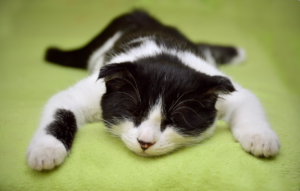
Cats sleep a lot and may not always feel like playing.
They may ignore toys because they are:
-
Sleepy
-
Full
-
Stressed
-
Observing
-
Simply not in the mood
This is normal behavior.
Play remains important for mental and physical health, but it should occur on your cat’s terms.
Play: The Bottom Line
Play provides:
-
Exercise
-
Mental stimulation
-
Bonding opportunities
-
A channel for energy
However, every cat plays differently.
Experiment to discover what your cat enjoys. Some prefer chasing feathers, others batting balls, and some prefer short, gentle sessions.
Patience is key.
Final Thoughts
When cats ignore toys, it usually has nothing to do with you.
They are complex creatures with individual preferences. Understanding those preferences takes time and observation.
Mix up play styles, rotate toys, and pay attention to what excites your cat. Most importantly, let them be themselves.
If they love boxes more than expensive gadgets, that’s fine. At the end of the day, your bond with your cat matters more than the toys you buy. Toys are just one small part of a happy life together.
Save pin for later

- How to prevent scratching issues - March 3, 2026
- Why cats ignore toys - March 3, 2026
- How to teach calm behavior indoors - March 3, 2026