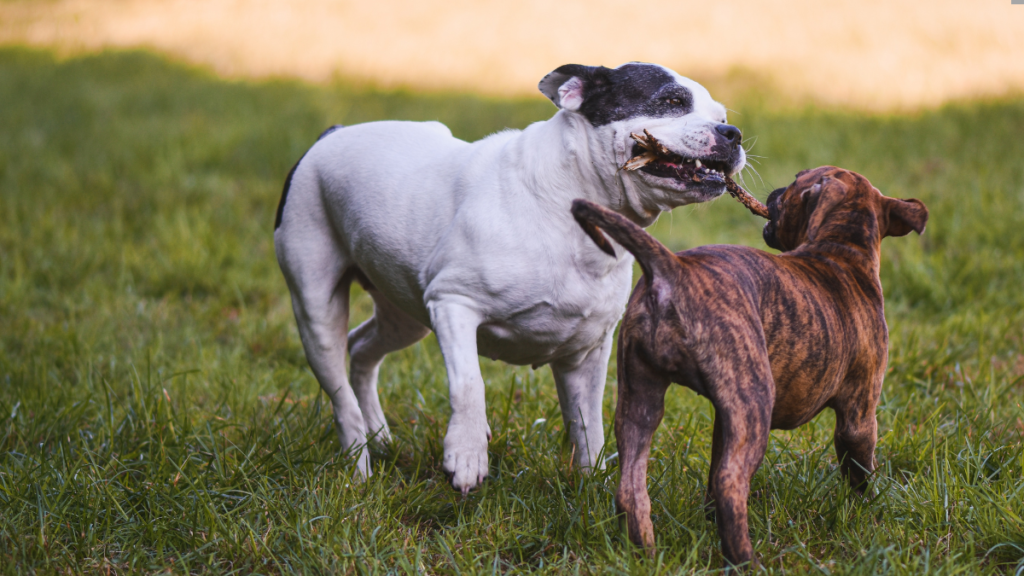
You chose to live with dogs because they enrich your life in countless ways. But sometimes, they test your patience too! As new puppy parents, we faced behavior problems with our puppy that we didn’t expect. Later, we learned that millions of Americans rehome puppy after puppy because their adult dogs develop behavior issues.
Whether you’ve got a new puppy, an adult dog you just adopted, or a longtime furry friend who might benefit from these top dog behavior tips, we’ve got you covered.

WHY DOG BEHAVIOR IS IMPORTANT
Dog training isn’t about dominance.
It isn’t about punishment.
And it definitely isn’t about “winning.”
Dog behavior is communication.
Dogs speak by doing. They bark, chew, jump up, pull on the leash, or turn their heads away to tell you how they’re feeling, what they need, or that they don’t understand.
Behavior problems are almost never sudden or random; they’re symptoms of one or more basic unmet needs:
-
Physical: More exercise, better nutrition, or adequate rest
-
Mental: Stimulation, learning, or problem-solving opportunities
-
Emotional: Stress, fear, or anxiety
-
Environmental: Unclear or inconsistent rules
There are countless reasons why your dog does what they do. By paying attention to their behavior starting today, you can prevent many behavior problems before they ever begin.
THE BASICS OF GOOD BEHAVIOR
Our top dog behavior tips cover everything from house training a puppy to properly guiding an older dog. But before anything else, it’s important to ensure your dog’s basic needs are being met.
PROVIDE FOR YOUR DOG’S BASIC NEEDS
1. Your Dog Gets Plenty of Exercise
Your dog needs daily exercise—both physical and mental (we’ll cover mental exercise next). Think of exercise as the foundation of good behavior. Without enough physical activity, your dog may entertain themselves in ways you don’t love, like destroying your favorite shoes!
Remember, dogs are individuals. Some dogs are worn out after a 30-minute walk, while others need several hours of vigorous activity each day.
2. Your Dog Has Enough Mental Stimulation
Dogs need mental enrichment just as much as physical exercise. Without it, boredom can set in—and bored dogs often develop behavior problems.
Mental enrichment can include puzzle toys, training sessions, scent games, learning new tricks or commands, or anything else that encourages your dog to think.
3. You Have Established a Routine
Dogs thrive on routine. They like knowing what to expect each day. Feeding times, walks, playtime, and bedtime should be consistent. A predictable schedule helps dogs feel secure and reduces stress-related behavior problems.
DOG TRAINING BASICS
As important as exercise and mental stimulation are, raising a well-behaved dog takes more than long walks and puzzle toys. Every trainer has their own approach—and here are a few key concepts we believe are essential:
-
Reward good behavior
-
Be consistent
-
Use dog-friendly communication
-
Establish rules early
-
Train your dog to meet your expectations
-
Socialize your dog
-
Understand your dog’s unique personality
-
Use positive reinforcement
-
Start training early—and never stop
-
Keep training fun
COMMON DOG TRAINING QUESTIONS
“How do I get my dog to stop [insert frustrating behavior here]?”
Remember: dogs speak by doing. If you want your dog to stop doing something, you must teach them what you want them to do instead.
Here are solutions to some common behavior problems:
Jumping on People
Dog sees person = Excitement
Dog jumps up to greet person = GOOD!!
Solution: Teach your dog to “sit” when greeting people. Reward them every time they greet someone with all four paws on the ground.
Demand Barking
Dog wants something = Barks
Dog gets what they want = GOOD!!
Solution: Identify what your dog wants and teach a better way to ask. If your dog barks for treats, teach them to take treats calmly.
If your dog barks for attention while you’re working, teach “leave it” or “drop it,” and reward them for ignoring you.
Pulling on the Leash
Dog sees something exciting = Speeds up
Dog reaches exciting thing = GOOD!!
Solution: Teach loose-leash walking. Show your dog that a loose leash leads to more freedom and fun.
Destructive Door Chewing
Dog is bored = Chews door frame
Owner ignores it = GOOD??
Solution: Don’t ignore the problem. Redirect boredom with appropriate chew toys and limit access to tempting areas.
HOUSE TRAINING YOUR DOG
There’s far more to dog training than any single article can cover. Some of the most common questions we receive include:
-
How to housetrain a puppy
-
How to instill basic obedience
-
How to manage leash aggression
HOW TO TRAIN YOUR DOG
Now let’s get into our Top Dog Behavior Tips—skills every dog owner should know.
Communicate Clearly
Dogs don’t understand long explanations. They respond to tone, body language, and timing more than words.
-
Use simple cues
-
Reward immediately
-
Reinforce behaviors you want repeated
Rewards can include treats, praise, toys, playtime, or affection.

ONE COMMON MISTAKE ALL TRAINERS WARN AGAINST
Consistency is critical. If Grandma allows a behavior that you don’t, your dog will be confused.
Everyone in the household must follow the same rules. Agree on expectations and enforce them consistently.
HELP YOUR DOG LEARN WHAT YOU WANT
Dogs need guidance. Teach them how to succeed using positive reinforcement.
Use Positive Reinforcement
Don’t just stop unwanted behavior—teach an alternative.
Put your dog in a position to succeed. For example, if you don’t want your dog jumping on the couch, teach them where they should go instead and reward that behavior.
Positive reinforcement works for nearly every behavior problem.
FINAL THOUGHTS
Raising a happy, well-behaved dog doesn’t happen overnight. It takes time, patience, and a willingness to understand your dog as an individual. Behavior challenges are not signs of a “bad dog”—they are signals that something needs attention, guidance, or clarity.
By meeting your dog’s physical and mental needs, communicating clearly, setting consistent boundaries, and using positive reinforcement, you create an environment where good behavior can thrive. These Top Dog Behavior Tips are not about control or perfection; they’re about building trust, confidence, and a strong bond between you and your dog.
Save pin for later

- The Cutest Cat Breeds in the World - March 21, 2026
- Black Cat Names That Are as Mysterious and Beautiful as They Are - March 21, 2026
- Did You Know Your Dog Could Have Diabetes? - March 20, 2026