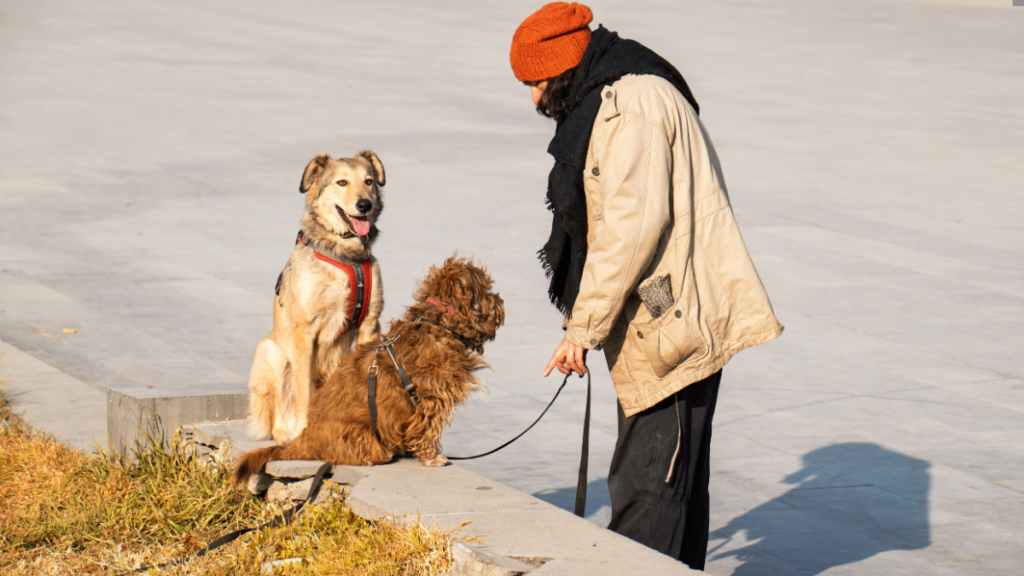
Dogs love everyone. They always want to play with guests. Dogs are super friendly. Oh, and they have big wagging tails that can’t help but spread puppy joy wherever they go!
Like us, dogs have boundaries, preferences, and emotional thresholds. Some dogs don’t like strangers. Some dogs are bothered by crowds. Others become overwhelmed around certain familiar people under the right circumstances.
Instead, they offer us little glimpses into their emotional state through tiny movements and behaviors we might not recognize unless we know what to look for. When we ignore these small signals, that’s when dogs feel compelled to escalate.
Why Do Dogs Become Uncomfortable Around People?
Understanding why your dog may feel uncomfortable around people will help you better recognize their subtle stress signals.
Remember: An uncomfortable dog is not a “bad” dog.
It’s simply a dog that feels unsafe about something in a person or situation.
Reasons dogs become uncomfortable around people include:
-
Lack of positive socialization as a puppy
-
Traumatic experiences with a person
-
Genetics (some dogs are naturally more wary of people)
-
Stimulus overload (loud noises, excitement, fast movements)
-
Physical discomfort or pain
-
Loss of control (being forced into something)
Dogs don’t want to feel uneasy around people. Learning how to spot those uncomfortable moments is the first step to helping them.
Signs Your Dog Is Uncomfortable Around People
Here is your helpful list of subtle signs your dog is uncomfortable around people.
1. Turn Their Head Away
One of the first subtle signs your dog is uncomfortable is when they turn their head away.
Turning away is an appeasement signal. It means your dog is trying to avoid conflict or appear non-threatening.
Examples include:
-
Looking to the side as someone approaches
-
Avoiding eye contact
-
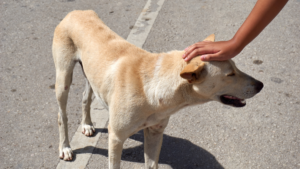
Turning their head away while you pet them
If your dog turns their head away, they’re politely saying, “I don’t love what’s happening right now.”
2. Lick Their Lips (No Ice Cream!)
There are many reasons your dog may lick their lips. But when your dog repeatedly licks their lips and there’s no food involved, it’s a subtle sign of stress or anxiety.
You may notice this when:
-
A stranger leans over your dog
-
Someone reaches toward them
-
Your dog is surrounded by guests
This tiny tell is easy to miss, but it’s one of the clearest indicators that something feels off.
3. Yawn Randomly
Is your dog tired? If not, they’re likely yawning to comfort themselves.
Dogs often yawn when they’re stressed. It helps them regulate their emotions.
Your dog may be uneasy if they:
-
Yawn when meeting new people
-
Yawn when hugged
-
Yawn during large gatherings
-
Yawn when being trained by a new person
4. Freeze
When your dog freezes, they’re not being calm—they’re signaling discomfort.
Freezing can include:
-
Stiffening up
-
A tail that suddenly stops
-
Tense muscles
-
Slightly bulging eyes
If your dog freezes around people, it’s time to change something. This is often the final moment before barking, growling, snapping, or biting.
5. Drop or Tuck Their Tail
When dogs feel uncomfortable, their tail often drops low or tucks between their legs.
This may happen when:
-
Someone approaches quickly
-
Someone bends over them
-
They feel surrounded by strangers
Think of a tucked tail as your dog trying to make themselves smaller.
6. Whale Eye
“Whale eye” occurs when you can see the whites of your dog’s eyes.
You might see it:
-
When someone hugs your dog
-
When a child gets too close
-
When strangers stare at them
It’s a strong indicator of stress.
7. Move Away
Your dog may try to create space by:
-
Stepping back
-
Leaning away
-
Hiding behind you
-
Leaving the room
Walking away is a clear sign the interaction wasn’t enjoyable.
8. Sudden Scratching or Grooming
Dogs often perform “displacement behaviors” to release stress.
This may look like sudden:
-
Scratching
-
Sniffing the ground
-
Grooming
Especially during:
-
Introductions
-
Parties
-
Visits from guests
It’s your dog’s way of coping.
9. Pant When They’re Not Hot
Dogs also pant when nervous.
Watch for panting that happens:
-
Indoors
-
In cool weather
-
During social interactions
-
Alongside tense body language
10. Hold Their Ears Back
When uneasy, a dog’s ears may:
-
Flatten against the head
-
Turn sideways
-
Flick back and forth
This shows alertness mixed with uncertainty.
11. Slow Wag With a Stiff Body
Not all tail wags are happy.
A slow, stiff wag paired with a tense body signals discomfort.
12. Quiet Growling
Some dogs growl very softly.
A growl is communication—not misbehavior. It’s your dog asking for space.
13. Avoid People After Being Pet
If your dog walks away, hides, or lies down after being petted, the interaction likely felt uncomfortable.
A content dog usually seeks more engagement.
14. Aloof Around Certain Types of People
Your dog may act differently around:
-
Men vs. women
-
Children
-
People in hats or uniforms
This often stems from past experiences.
My Advice About These Subtle Signs
If these signs are ignored, your dog may stop using them. Subtle signals can turn into obvious reactions. Yawns become snaps.
Do yourself and your dog a favor: catch those uneasy moments and act.
How You Can Help Your Uncomfortable Dog
-
Tell people “no pets” if your dog shows stress signals.
-
Let your dog choose when and how to approach others.
-
Provide a safe space they can retreat to.
-
Reward calm observation from a distance with treats.
-
Never force greetings, hugs, or contact.
-
Work with a trainer or behaviorist if fear is widespread.
Tips for Teaching Others About Your Dog
Ask friends and family to avoid:
-
Staring
-
Approaching too fast
-
Petting over the head
-
Ignoring your dog’s attempts to walk away
These small changes make a big difference.
When to Consult a Vet or Behaviorist
Seek professional help if your dog regularly:
-
Freezes
-
Growls
-
Tries to escape
-
Shows escalating fear
These are warning signs. Don’t wait for a bite.
Teaching Long-Term Confidence
Reward calm behavior:
-
From a distance
-
In quiet settings
-
In short sessions
-
With high-value treats
Progress slowly. Confidence grows through safety and trust.
Final Thoughts
Dogs communicate constantly through their bodies.
The problem isn’t that dogs don’t speak—it’s that we don’t always listen.
By learning these subtle signs, you’re telling your dog, “I hear you.” And that builds trust.
A dog who trusts their owner will face their fears—not because they’re tough, but because they know you have their back.
Save pin for later

- The Cutest Cat Breeds in the World - March 21, 2026
- Black Cat Names That Are as Mysterious and Beautiful as They Are - March 21, 2026
- Did You Know Your Dog Could Have Diabetes? - March 20, 2026