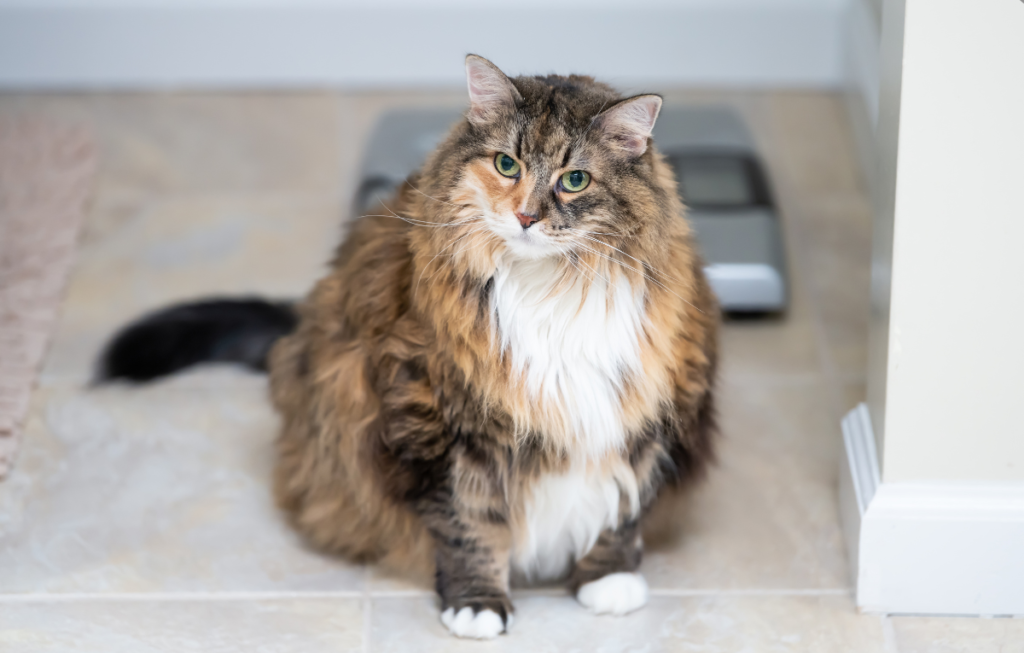
I’ve owned cats for most of my life and worked around them even more. You know one thing about cats? It can be super easy to overlook the fact that your cat is overweight.
Cats hide their problems very well. Combine that with the fact that cats gain weight slowly over time and it’s very common for a cat owner to not realize they have an overweight kitty until it’s suddenly really bad.
Don’t worry. If you’re concerned your cat might be overweight, you’ve already taken the first step: caring enough to ask that question.
Why Your Cat’s Weight Gain May Be Worse Than You Realize
Let’s start with the facts: if your cat is overweight, it’s not healthy. Just like with people, excess weight comes with a laundry list of risks and problems for cats. Diabetes, painful joints, heart disease, urinary problems, shorter lifespans — the list goes on.
The thing is, none of those things will tell on your cat like they might with a dog. An overweight cat will simply be slower and sleep more. Some playful energy here and there can mask the warning signs. That’s why knowing how to tell if your cat is overweight is key.
What Should Your Cat’s Ideal Weight Be?
There’s no simple answer to this one. Depending on your cat’s breed, build, and age, healthy weight will vary. On average, most adult cats should weigh between 8 and 10 pounds. That being said, large-breed cats like Maine Coons can weigh upwards of 18 pounds and be perfectly healthy.
Instead of worrying too much about what your cat should “weigh,” vets often use what’s called a Body Condition Score (BCS). This system gives your cat a rating from 1 to 9 based on their overall physical appearance. One is emaciated and nine is obese. Healthy cats will be around a four or five on this scale. At this score, you should easily be able to feel your cat’s ribs without applying pressure but still see an indent where their waist is when you view them from above.
Checking Your Cat for Weight Problems at Home
Of course, your vet can help you determine your cat’s BCS, but you can perform a few basic tests at home to see if your cat is in the green or if you should schedule a vet visit.
Rib Test
Run your hands down either side of your cat’s rib cage. You should be able to easily feel their ribs, kind of like running your fingers across the back of your hand when it’s resting in a gentle fist. If you have to press hard to feel your cat’s ribs, they’ve probably got a layer of fat on there that you can’t feel. If the ribs are protruding quite sharply, your cat may be too skinny.
Waist Inspection
Looking down at your cat, you should see an hourglass shape. There should be a noticeable narrowing halfway between their rib cage and their hips. If your cat resembles more of a rectangle or oval when you look down, it might be time for a diet.
Tummy Tango
Look at your cat from the side. Ideally, you’ll see a slight upward angle in the belly just before the hind legs. If your cat’s belly drags or swings as they walk, that’s called a “floppy skin test” and it’s excess fat, usually around the love handle area — aka the fat pad that lots of chubby cats develop.
Trouble Keeping Clean
Is your cat unable to groom itself properly anymore? Trouble around the base of the tail, the back, and inner thighs are all common places cats will miss as excess fat makes it difficult to reach. You may notice your cat’s coat will look dull or matted in areas where they can’t reach.
Loss of Activity or Rapid Breathing
Does your cat suddenly hate to play, or get winded by running up stairs or jumping onto furniture? Cats will naturally slow down with age, but if your cat suddenly cannot climb more than one step before needing to rest or takes no interest in toys that they used to love, they may be overweight. Extra weight strains your cat’s heart and muscles, making routine activities more difficult.
Can’t Feel the Bones?
Same idea as the rib test. You should be able to run your hands down your cat’s spine and feel their hip bones without pressing hard. Hip bones shouldn’t stick out like your elbows, but you should be able to feel them. If you squeeze your cat’s sides and can’t feel any kind of bone structure, there’s probably a thick layer of fat in the way.
Common Causes of Weight Gain in Cats
Knowing why your cat is overweight is important when it comes to fixing the problem. Here are some of the most common reasons your cat might have recently gained a few pounds:
Free feeding — Many cat owners leave food out all day for their cats to graze on as they please. While this might seem convenient, most cats will constantly overeat if given the opportunity. Cats are opportunistic eaters by nature.
Too many treats — Honestly, who can resist a kitty trying to blackmail you with that adorable face? Treats are easy to overdo, but remember that even small treats and training rewards add up.
Boredom — Indoor cats that aren’t given enough toys or attention often fall into routines of very little physical activity. Remember that cats should be playing every day.
Getting older — Senior cats tend to slow down. Similarly, neutered cats typically experience drops in metabolism. Simply put, these cats need fewer calories than they used to.
Health issues — Although rare, weight gain can be attributed to medical problems like hypothyroidism. Either way, taking your cat to the vet is never a bad idea.
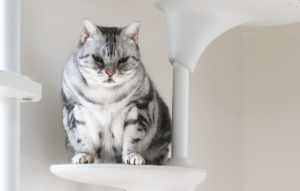
What To Do If You Think Your Cat Is Too Fat
If your DIY examination has led you to believe your cat could shed a few pounds, now it’s time to talk to your vet. They can confirm your suspicions with a proper weigh-in and body condition score. From there, your vet will let you know if there are any underlying causes you should be worried about and will help you map out a plan to reach your cat’s ideal weight.
These are just some general tips that will help most overweight cats.
Stop free feeding. Begin serving your cat measured meals 2–3 times per day. Your vet will likely suggest a specific amount of food based on your cat’s target weight.
Try a new cat food. Some cat foods contain unnecessary carbohydrates that can cause cats to gain weight. Cats do best on a high-protein, low-carb diet. But please consult your vet before switching foods!
Play with your cat daily. Believe it or not, even 10–15 minutes of dedicated playtime will help your cat burn calories and lose weight over time. Try wand toys, laser pointers, and puzzle feeders to keep your cat guessing.
Cut down on treats. If you routinely give your cat treats, stop or cut down significantly. There are lower-calorie treats available, but you should still use them sparingly. Consider substituting some of your cat’s regular kibble as “training treats.”
Weigh your cat weekly or monthly. Invest in a small kitchen scale. You can track your cat’s weight loss over time and watch the numbers drop!
FAQ
How can you tell if your cat is overweight without a scale?
The rib test and waist check are great at-home assessments. If you absolutely cannot feel your cat’s ribs without pressing and your cat looks more like an oval rather than an hourglass from above, your cat is overweight.
Can cats have a belly pooch?
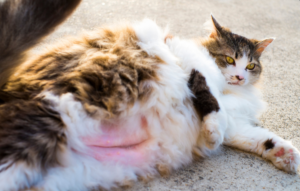
Many cats have what is known as a “primordial pouch.” A primordial pouch is a flap of extra skin that hangs down on your cat’s belly. This is completely normal and different from fat. The difference between fat and a primordial pouch is that the skin will be flat along your cat’s belly while fat will hang more heavily.
How long should it take my cat to lose weight?
Ideally, your cat should never lose weight too quickly. A good rule of thumb is about 0.5%–1% of body weight per week. Losing weight too quickly is dangerous and can lead to something called hepatic lipidosis in cats.
My cat seems healthy. Do I need to worry about weight?
Yes. Cats are extremely proficient at hiding pain and discomfort. A cat that seems healthy can very easily be obese enough to put strain on their organs, joints, and metabolism. Ask your vet about your cat’s weight during your next visit regardless of how they may seem at home.
My cat refuses to eat less food. Now what?
This is very normal. Transitioning away from free feeding takes time, and many cats will protest by crying and carrying on. Try the transition slowly by mixing old food with new. Try filling an enrichment toy with their kibble to help slow down eating.
Wrapping Up
Monitoring your cat’s weight is one of the best steps you can take to ensure they live a long, happy life. The best part is that it’s pretty easy to tell if your cat is overweight — now that you know how. If you suspect your cat has a weight problem, start by giving them a once-over at home and then consult with your vet.
Remember, your cat doesn’t have to be skinny to be healthy. Just healthy enough to hop up on the couch next to you for many years to come.
Save pin for later


- How to Build a DIY Dog Gate for Stairs and Doorways - April 8, 2026
- 8 DIY Dog Treat Recipes Your Furry Bestie Will Beg For - April 8, 2026
- How to Create the Ultimate Outdoor Dog Run in Your Backyard - April 8, 2026