
Capibaras are calming animals to be around. Everyone knows that. I fell in love with them from the second I learned they were emotionally expressive animals. So you’re trying to learn all you can about taking care of exotic pets? Great, capibaras are a wonderful choice!
Whether you’re a proud owner of these gentle giants or you just find yourself curious about capybara care, understanding how to tell if your pet is happy and healthy is the most valuable skill you can have. Capibaras can’t vocalize their needs to you in the same way that humans and cats can, but they sure do provide hints! Everything from their body language, to the sounds they make, to what they’re eating and when — you’ll start to notice things if you pay close enough attention. When you learn how to interpret these signals, you’ll understand your pet on a whole other level.

What Makes Capibaras Unique Animals to Care For
Similar to any pet, it helps to know exactly what you’re taking care of when caring for a capibara. Capibaras are rodents — the largest rodents in the world, in fact. They are South American creatures that travel in groups and spend their lives near bodies of water, eating grasses and grazing on vegetation.
They’re social animals, spending just as much time with each other as they do eating and sleeping. This is the key point to remember when you’re trying to understand your pet better. Capibaras are complex pets. Their happiness and physical health rely heavily on their surroundings, diet, companionship, and how well you care for them.
1. Watch Their Body Language Closely
Just like any animal, you can learn a lot about how your capibara is feeling by watching how they carry themselves. Happy capibaras move freely, without rushing about or constantly trying to hide.
Body language you can look for:
- Relaxed posture — spending time lying on the ground, flat out on their side with legs stretched.
- Closing their eyes to slowly blink at you (or maintaining eye contact) without looking tense.
- Loose movements that don’t seem hurried.
Stressed capibaras might repeatedly twitch, attempt to conceal themselves (whether that’s behind objects or you), or freeze up at the slightest noise. While sitting and standing, take note of their posture. A hunched back and timid walk can indicate pain or other physical issues.

2. Listen to the Sounds They Make
Trust me, you’re going to find that capibaras are VERY vocal. Teaching yourself their sounds and what they mean is one of my favorite parts of taking care of a capi.
Here are some common noises and what they generally mean:
- Purring: Capibaras do in fact purr, and you’ll notice them doing this when they’re happy and relaxed. Similar to cats, you’ll hear this when your capibara is being petted or if they’re lounging contentedly beside another animal.
- Clicking Sounds: Whether it’s small clicking noises or them chattering their teeth, this is usually a sign of affection between capibaras. Consider it a compliment if your capibara is doing this to you!
- Whistling / Chirping: Capibaras will also make whistling or chirping sounds. Higher-pitched vocalizations can indicate they’re communicating with those around them.
- Barking: This is usually a sign of alarm or fear. If something startles your capibara, they will bark. Occasional barking is normal, but if you notice your capibara barking frequently, there might be something in their environment that is stressing them out.
- Whining / Crying: Another distress call that your capibara doesn’t want you to ignore. Whether it’s a sign of loneliness, pain, or another issue, whining and crying aren’t normal, and you should investigate what is causing your animal stress.
3. Observe Their Eating and Drinking Habits
Let’s talk about a happy and healthy capibara’s biggest hobby: eating. These animals eat… A LOT. As grazers, you should always see your capibara either snacking on grasses or chowing down on hay. They should maintain a consistent appetite throughout the day. If you start to notice they suddenly aren’t interested in food or aren’t eating like normal, consider it a red flag.
Grasses and hay should be the staple of their diet. Supplement their meals with leafy greens and the occasional fruit as a treat. Capibaras love treats.
Drinking habits matter too. Like all pets, you should always have fresh, clean water available for your capibara to drink. This holds doubly true since they love to soak in their water for hours on end. Watch how much they drink and whether they utilize their water source regularly. Dehydration can cause serious side effects if left untreated.
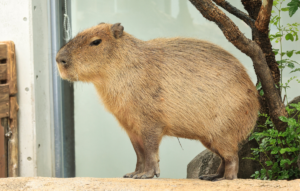
4. Check Their Physical Appearance Regularly
As you learn how to tell if a capibara is happy and healthy, you’ll want to get comfortable performing routine checkups on your pet. You have to look at them anyway, so you may as well learn what you’re looking for!
Coat:
Capibara fur is naturally pretty sparse, but their coat should still look sleek. Bald spots, sores, and irritated skin are immediate concerns that your capibara may be dealing with skin parasites or infections, or may have eaten something they reacted badly to.
Eyes:
This goes for any pet. Are their eyes clear and bright? Are they cloudy or filled with discharge? Taking note of your pet’s physical appearance will allow you to catch issues before they become serious.
Teeth:
Capibara teeth are large, and they continuously grow throughout their life. Watch for overgrown teeth, teeth that don’t line up properly, or signs that your capibara seems to have difficulty chewing or eating.
Weight:
You should be able to see some definition in your capibara’s body. Capibaras are naturally on the husky side, but you shouldn’t be able to easily make out their ribs or hip bones. Conversely, ensure your capibara isn’t overweight from too many treats!
Feet & Nails:
Because capibaras tend to spend a lot of time near or in water, always keep an eye on their feet. Softening of the skin can lead to foot infections if they regularly swim in dirty water.

5. Evaluate Their Social Interactions
As highly social animals, your capibara’s relationships with their fellow companions will tell you a lot about how they’re feeling emotionally. A happy capibara will want to spend time with the other animals in their group.
You should see your capibara bonding frequently with others. This can be through grooming each other, taking naps close to each other, playing, or following one another around.
If your capibara seems to be avoiding others on a regular basis or acting out toward another capy they once got along with, something may be bothering your animal. Whether it’s sickness, stress, or some tension in their relationship with their companion, use other cues to determine if your capibara is letting you know something is wrong.
If you’re the only owner, ensure you’re spending plenty of time with your capibara. These animals become lonely without another capy to keep them company and entertained. Neglect can be incredibly harmful to a capibara over an extended period of time.

6. Note Their Activity Levels and Daily Routines
Every healthy capibara has a certain rhythm to their day. They eat, they soak in the water, they sleep, they play with others. As long as that rough routine stays consistent, you should be fine. However, if you start to notice sudden changes in how active they are — or if your normally playful pet becomes lethargic and refuses to do things they normally love — take note.
Knowing how to tell if a capibara is happy and healthy will come with experience. You’ll start to notice the subtle differences in your pet’s behavior and recognize when something isn’t right. Every animal has a different personality. Some capibaras are naturally more energetic, while others are a lot more chill. Use your capibara’s normal behavior as your guide.
7. Keep Up With Vet Visits
This tip applies to any animal. You know your pet the best, but that doesn’t mean you know everything. Preventative health care is incredibly important for capibaras. They are experts at hiding pain and illness until it’s too late.
Find yourself a reputable exotic veterinarian who specializes in rodents, and get your capibara checked annually — or every six months if you can swing it. That way, if something DOES come up, you’ve already established a relationship with a vet who knows how to properly care for your pet. Trust me, you don’t want to be searching “exotic vet near me” during an emergency.

Conclusion
While capibaras may seem like a difficult pet to truly understand, you’ll learn more about them than you think with a little patience. Capibaras are emotionally complex animals that feel happiness and sadness just as you and I do. When you start to understand your pet’s mood and needs, you form a special bond with them — a bond that lets you know how to take care of them and when something may be wrong.
There’s nothing better than that feeling of knowing your pet would do anything to return the love you give them every day.
Save pin for later


- How to Make a DIY Dog Bed That Is Cozy and Stylish - March 18, 2026
- How to Keep Ocean Fish Healthy in a Home Aquarium - March 18, 2026
- Did You Know Did You Know Butterflies Taste With Their Feet? - March 18, 2026