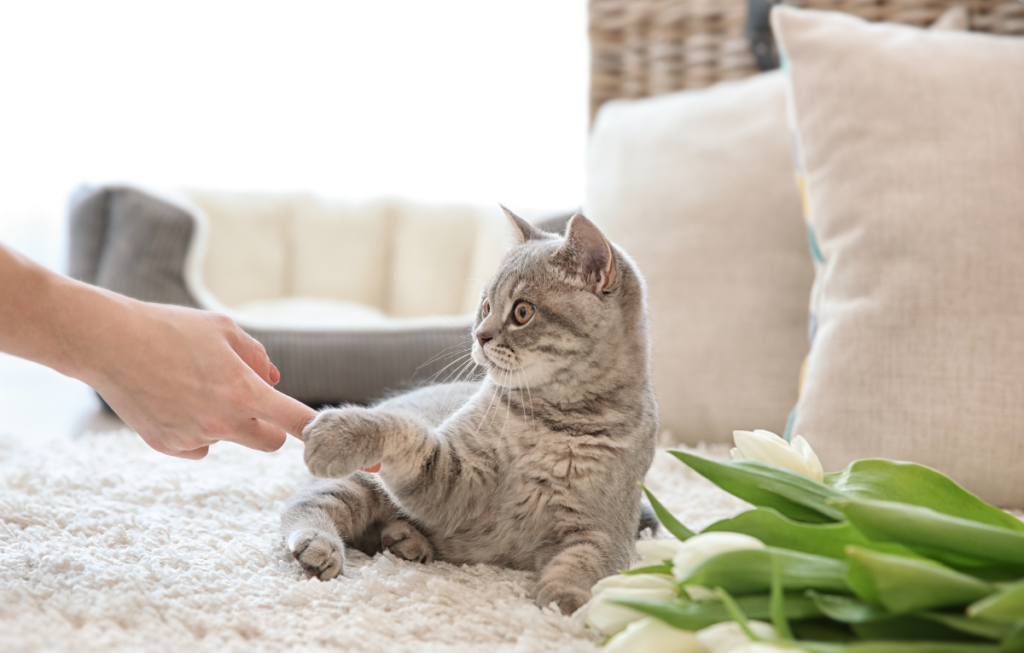
One of the most common questions our site receives is how to prevent scratching issues on furniture. Scratching is one of the most common behavioral issues that come with owning cats.
While cats need to scratch to keep their claws sharp, stretch their muscles, and mark their territory, you might not want them to scratch your furniture. The key to stopping your cat from scratching furniture is understanding why they scratch and how to humanely deter the behavior. Below, we’ll discuss how you can prevent scratching issues with your cat.
Why Do Cats Scratch Furniture?
The first thing to understand when learning how to prevent scratching issues is that cats do not scratch to be naughty or to destroy your furniture on purpose. Cats are creatures of instinct and have a natural urge to scratch. In the wild, cats scratch trees to sharpen their claws and mark their territory with scent. Even though your cat may not need to keep their claws sharp to catch food or mark territory inside your home, they will still instinctively want to scratch.
Keeping this in mind will help you figure out how to prevent scratching issues. It can be easier to sympathize with your cat’s behavior when you realize that they will scratch whether you like it or not. Your goal is to teach them where it is acceptable to scratch and where it is not.
Most of the time, cats scratch because they are happy and excited. However, sometimes cats may scratch more when they are stressed or anxious. If your kitten scratches a lot during play, they are likely excited and trying to release energy. Understanding this will help you determine how to respond when your cat starts scratching.
Providing a Good Scratcher
One of the best ways to prevent scratching issues is by providing your cat with a suitable alternative. Cats need to scratch, so if you do not provide an appropriate place, they will likely scratch where they choose. Buying your cat a scratching post or pad is one of the easiest ways to redirect their attention.
When choosing a scratching post or pad, try to pick one made from materials that cats love to scratch. Posts and pads made from sisal rope, cardboard, and wood are excellent options. Avoid synthetic materials that may not appeal to your cat.
Place your cat’s scratching post near the items they already scratch. If your cat scratches the arm of your sofa, try placing the scratching post next to the sofa. This way, they have something appropriate to scratch that is just as accessible.
Make sure the scratching post is sturdy and does not move when your cat uses it. A flimsy post may frustrate your cat and discourage use. Consider buying a heavy scratching post or one that can be secured to the wall.
Place multiple scratching posts and pads around your house. You may find that your cat prefers one type of material over another. Providing options increases the likelihood that your cat will use the posts.

Redirecting with Positive Reinforcement
Positive reinforcement is another excellent way to prevent scratching issues. Whenever your cat uses their scratching post, reward them with treats or praise. They will begin to associate scratching the post with positive experiences and continue the behavior.
If you catch your cat scratching furniture, gently move them to their scratching post. Never yell at your cat for scratching the wrong object. Yelling can frighten your cat and harm your relationship.
Patience is important when training your cat to use a scratching post. It may take time for your cat to learn where scratching is appropriate.
Using Natural Repellents
Natural repellents can help prevent your cat from scratching furniture. These repellents make furniture less appealing while encouraging your cat to use alternatives.
Cats dislike the smell of citrus, so you can try making a diluted citrus spray and applying it to your furniture. Test the spray on a small area first to ensure it does not damage the fabric. You can also purchase store-bought sprays designed to deter pets.
Double-sided tape is another useful deterrent. Cats dislike the sticky sensation on their paws and will often avoid areas covered with tape.
Furniture covers or throws can also help. These create a barrier between your cat’s claws and your furniture. While not a permanent solution, they can be useful during training.
Trimming Your Cat’s Claws
Keeping your cat’s claws trimmed is another great way to prevent scratching issues. When cats scratch, they remove the outer layer of their claws. Trimming claws regularly makes them less sharp and reduces potential damage. If you have never trimmed your cat’s claws, consult your veterinarian for guidance.
Providing scratching posts also helps maintain claw health. Scratching removes the outer layer of the claws, which is a natural and healthy process.
Claw caps are another option. These soft plastic tips fit over your cat’s claws and help prevent furniture damage while still allowing scratching behavior.

Keeping Your Cat Happy and Relaxed
Sometimes cats scratch more when they are anxious or stressed. If you suspect this is the cause, there are steps you can take.
Maintain a consistent routine for your cat. Feed them at the same time each day and play with them regularly. A predictable schedule helps reduce stress.
Interactive play is an excellent way for cats to release energy. Toys that mimic hunting, such as dangling strings or feather toys, can keep your cat engaged and active.
Provide a safe and comfortable space where your cat can relax. Cats appreciate quiet areas where they can retreat when they feel overwhelmed.
If you believe your cat’s scratching is related to anxiety, consult your veterinarian. They can help identify the cause and recommend solutions.
Making Your Home Cat-Friendly
Creating a cat-friendly environment can also reduce scratching issues. If your cat has plenty of enrichment and entertainment, they are less likely to scratch furniture.
Cat trees and shelves provide opportunities for climbing and exploration. Many cat trees also include built-in scratching posts, offering dual benefits.
Window perches allow cats to observe the outdoors. Watching birds or other activity outside can be mentally stimulating and entertaining.
Regular play and attention are important. A happy and engaged cat is less likely to engage in destructive behaviors.

Tips to Avoid
Avoid punishing your cat for scratching the wrong surface. Punishment does not teach your cat what behavior is correct and can damage your relationship.
Always provide an alternative scratching surface. Cats need to scratch, so they will seek other options if none are available.
Be consistent with your rules. Correct unwanted behavior every time it occurs so your cat understands expectations.
Tips for Continued Success
Learn which scratching materials your cat prefers. By understanding their preferences, you can provide options they are more likely to use.
Even after training, continue to monitor your cat’s behavior. Preferences and habits can change over time.
Conclusion
Learning how to prevent scratching issues does not have to be difficult. By providing appropriate alternatives and using humane training methods, you can protect your furniture while respecting your cat’s natural instincts. Patience is key—behavioral changes take time. With consistency and understanding, your cat will learn where scratching is acceptable and your home will remain intact.
Save pin for later

- How to prevent scratching issues - March 3, 2026
- Why cats ignore toys - March 3, 2026
- How to teach calm behavior indoors - March 3, 2026