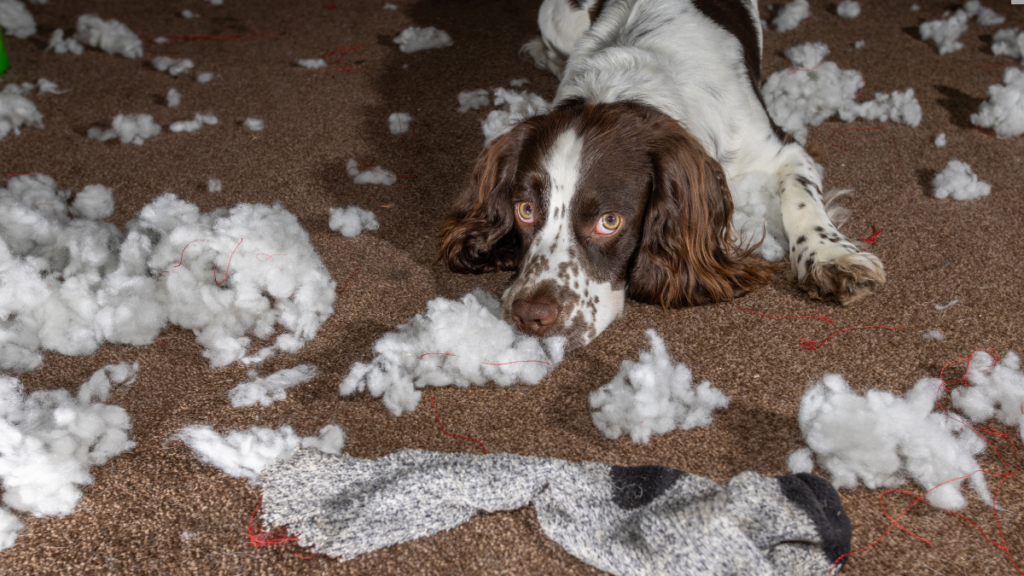
Dogs are wonderful, playful, and loyal—many of us even consider them members of our family. However, like children, dogs can sometimes exhibit unwanted or destructive behaviors around the house. Fido may chew furniture, scratch doors, dig holes in the yard, or go after your favorite shoes. Destructive behavior is frustrating, but it can also endanger your dog’s safety.
So, how do you stop dogs from behaving destructively?

Dog Destructive Behavior: The Why Behind the Behavior
Preventing dog destructive behavior begins with understanding why dogs act destructively. Contrary to popular belief, dogs don’t usually destroy things out of spite or malice. Most dogs chew your favorite shoes or scratch furniture because of their natural instincts, energy, and behavioral needs.
The most common causes of destructive behavior include:
1. Boredom
Dogs need regular mental and physical stimulation, especially active breeds like Border Collies, German Shepherds, and Huskies. Without enough engagement, a dog may chew, dig, or scratch simply to keep busy.
2. Separation Anxiety
Dogs are social creatures that thrive on companionship. Dogs left alone for long periods can develop separation anxiety, which may lead to destructive behavior as they try to cope with stress or nervousness.
3. Teething
Puppies explore the world with their mouths. During teething, chewing helps relieve the discomfort of sore gums, which can result in chewed furniture or household items.
4. Attention-Seeking
Dogs can also learn that certain behaviors grab their owner’s attention. Destructive behavior, even if it leads to scolding, can provide the attention a dog craves.
5. Lack of Training
Dogs need guidance to learn what behaviors are acceptable. Without clear training, they may accidentally destroy items or repeat undesirable behavior.
Identifying the causes of your dog’s destructive behavior is essential because it determines the best strategies to prevent it. A single rule or method doesn’t apply to every dog—meeting your dog’s unique needs is key.
The Best Strategies to Stop Dogs From Behaving Destructively
Understanding why dogs act destructively allows you to proactively address the behavior before it becomes a bigger problem. Here are the most effective strategies:
1. Exercise and Play
Regular physical activity is one of the most important ways to prevent destructive behavior. A well-exercised dog is far less likely to destroy property out of excess energy.
-
Walks: Aim for at least 30–60 minutes a day, depending on your dog’s breed and age.
-
Play: Games like fetch, tug-of-war, and agility exercises provide physical exercise and strengthen your bond.
-
Mental exercise: Puzzle toys, treat-dispensing toys, and training games challenge your dog’s mind, which is just as important as physical activity.
High-energy dogs benefit more from multiple short bursts of activity throughout the day than from a single long session.
2. Crate Train Your Dog
Dogs need a safe, comfortable space to relax and feel secure. Crate training is an excellent way to provide a den-like environment and prevent access to household items.
-
Use the crate only as a positive, safe space—not as punishment.
-
Include soft bedding or blankets to make it inviting.
-
Add chew toys or treats to make the crate enjoyable.
-
Gradually increase crate time until your dog is comfortable.
Puppy-proofing your home also helps prevent destruction. Remove items that your dog may chew and provide safe alternatives.

3. Provide Chew Toys and Appropriate Outlets
Chewing is a natural behavior, especially for puppies. Providing suitable chew toys helps redirect energy to acceptable objects.
-
Offer a variety of textures: rubber, rope, plush, and edible chews.
-
Rotate toys regularly to maintain interest.
-
Redirect your dog to toys if they start chewing furniture or shoes.
-
Reward your dog with praise or treats whenever they choose toys over household items.
Consistency and repetition are crucial for reinforcing positive behaviors.
4. Address Separation Anxiety
Separation anxiety is a common cause of destructive behavior, but it can be managed with proper strategies:
-
Gradual desensitization: Start with short absences and slowly increase the duration.
-
Positive reinforcement: Reward calm behavior when you leave or return.
-
Comfort items: Leave clothing with your scent or a favorite toy for reassurance.
-
Professional help: In severe cases, consult a certified dog trainer or behaviorist.
5. Training and Obedience
Training is essential to prevent destructive behavior. Dogs that understand which behaviors are acceptable are less likely to engage in mischief.
-
Basic commands: Teach commands like “leave it,” “drop it,” “sit,” and “stay” to improve impulse control.
-
Positive reinforcement: Reward good behavior rather than punishing destructive actions.
-
Consistency: Everyone in the household should follow the same rules to avoid confusion.
-
Redirection: If your dog chews furniture, redirect them to a toy and reward the correct choice.
Training takes patience and repetition, but it’s crucial for long-term success.

6. Mental Stimulation
Mental stimulation is just as important as physical activity. Bored dogs are more likely to destroy your belongings.
-
Short daily training sessions: Keep your dog mentally engaged.
-
Interactive toys: Puzzle toys and treat-dispensing toys challenge your dog’s mind.
-
Scent games: Hide treats around the house for your dog to find.
-
Exposure to new experiences: Introduce your dog to new sounds, people, and environments.
Mental stimulation tires your dog out in productive ways and reduces destructive tendencies.
7. Avoid Punishment
Punishing a dog for destructive behavior can be counterproductive and may increase anxiety.
-
Focus on prevention: remove access to tempting objects.
-
Redirect your dog to appropriate behavior.
-
Use positive reinforcement to encourage good habits.
Punishment doesn’t teach what to do—it only creates confusion or fear.
8. Monitor Diet and Health
Your dog’s diet and overall health can affect behavior. Dogs in discomfort or with nutritional deficiencies are more likely to act destructively.
-
Feed an age-appropriate diet suitable for your dog’s size and activity level.
-
Schedule regular veterinary checkups.
-
Watch for digestive issues, dental pain, or other health problems that could increase chewing or restlessness.

9. Manage Your Dog’s Environment
Controlling your dog’s environment is an effective way to reduce destruction.
-
Keep shoes, clothes, and valuables out of reach.
-
Use baby gates to restrict access to certain rooms.
-
Provide a safe outdoor space for digging and play.
Managing the environment limits opportunities for mischief while still allowing your dog to be a dog.
Breed-Specific Behaviors
Certain breeds are more prone to destructive behavior due to energy levels, intelligence, or instincts:
-
High-energy breeds: Huskies and Border Collies need more exercise.
-
Intelligent breeds: German Shepherds, Poodles, and Corgis may become bored without mental challenges.
-
Terriers and hunting breeds: Have strong instincts to dig or hunt, leading to destructive behaviors.
Knowing your dog’s breed tendencies can help you implement targeted prevention strategies.
When to Seek Professional Help
Some dogs may continue destructive behavior despite your best efforts. Signs you may need professional help include:
-
Persistent chewing or digging despite redirection.
-
Severe separation anxiety.
-
Aggression toward humans or other animals.
-
Self-harming behaviors, like excessive licking or chewing.
Certified dog trainers, behaviorists, or veterinarians can assess your dog and recommend an appropriate plan.
Conclusion
Dog destructive behavior can be frustrating and stressful, but it’s preventable. Providing regular exercise and play, mental stimulation, appropriate outlets for energy, and crate training can significantly reduce destruction. Training and obedience teach your dog what behaviors are acceptable, while managing the environment and avoiding punishment helps reinforce positive habits. Monitoring your dog’s diet and health is also crucial, as underlying medical issues may contribute to destructive tendencies.
Preventing dog destructive behavior requires time, patience, and consistency—but the result is a well-adjusted dog and a home free of damage. By understanding your dog’s needs and implementing these strategies, you can enjoy a happy, healthy relationship with your furry companion.
Save pin for later

- The Cutest Cat Breeds in the World - March 21, 2026
- Black Cat Names That Are as Mysterious and Beautiful as They Are - March 21, 2026
- Did You Know Your Dog Could Have Diabetes? - March 20, 2026