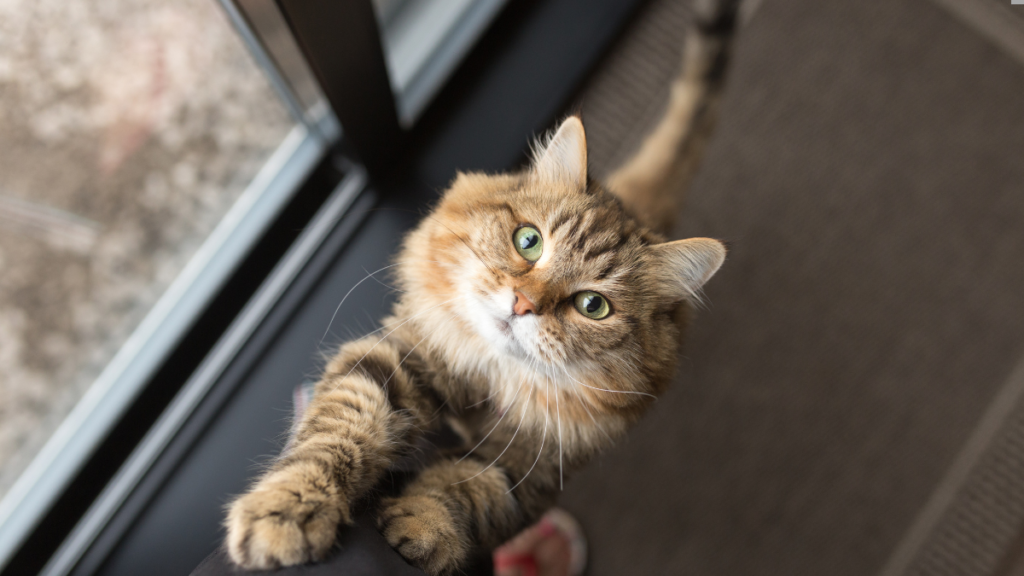
Cats love to climb, hunt, and explore, so it only makes sense that they are drawn to vertical spaces in your home. From lofty perches on bookcases to leaping on curtains, they use every opportunity to extend their territory and survey their kingdom. DIY cat climbing walls are a great way to provide your cat with the vertical stimulation they crave while keeping their claws off your walls and furniture.
Making your own cat climbing wall is easy, customizable, and inexpensive. You can create anything from simple shelves to elaborate climbing systems that use multiple levels, tunnels, and platforms, providing a stimulating environment that will keep your cat entertained for hours.
DIY Cat Climbing Wall Ideas
Creating a DIY cat climbing wall doesn’t have to be difficult or complicated. By following a few simple guidelines and using safe, sturdy materials, you can design a custom playground that your cat will love and that you’ll be proud to display in your home.
Whether you have a single kitten or multiple felines, here are some helpful tips on how to make a DIY cat climbing wall for your pet.
Planning Your Cat Climbing Wall
Before you start building, it’s important to take some time to plan your cat climbing wall.
Assess Your Space
The first step is to look around your home and figure out where you can fit a cat wall. Areas with empty vertical space—like walls near corners, above furniture, or in hallways—are ideal.
Avoid areas near fragile décor or electronics, and consider ceiling height and how much space your cat will need to jump safely between platforms.
Determine the Number of Cats
If you have more than one cat, it’s a good idea to design a wall with multiple levels, platforms, and escape routes so that each cat has its own space. Cats are territorial and prefer having their own spots to claim as their own.
Choose Your Style
Cat walls can be purely functional or highly decorative. You can create a system of simple shelves, a full-scale cat jungle gym, or a visually appealing floating shelf design with integrated platforms and cat trees.
Safety First
Safety is crucial. Check for hazards such as sharp edges, loose brackets, unstable surfaces, or materials that may splinter. Make sure your DIY cat climbing wall is securely anchored to prevent accidents.
Materials Needed
Building a DIY cat climbing wall doesn’t require specialized materials. Here are the essentials:
-
Plywood or MDF boards: Strong and easy to cut into shelves or platforms.
-
Brackets and wall anchors: Use heavy-duty brackets to securely mount shelves.
-
Carpet or sisal: Cats love textured surfaces for climbing and scratching. Cover shelves with carpet, sisal mats, or faux grass.
-
Ropes or ladders: Add vertical climbing elements or hanging accessories.
-
Soft cushions or beds: Provide lounging spots on larger platforms.
-
Paint or stain (optional): Use non-toxic, pet-safe paint for aesthetics.
Step-by-Step Instructions
Follow these steps to build a customizable DIY cat climbing wall.
Step 1: Measure and Mark the Wall
Decide the height of each platform based on your cat’s size. Smaller cats or kittens need lower shelves, while adult cats can handle higher jumps.
-
Low shelves: 12–18 inches apart
-
Mid-level shelves: 18–24 inches apart
-
High shelves: 24–36 inches apart
Mark the wall where each platform will go and use a level to ensure the shelves are straight.
Step 2: Prepare the Platforms
Cut plywood into your desired shapes. Squares, rectangles, or organic shapes like leaves or clouds work well. Cover each platform with carpet or sisal for traction and comfort.
Step 3: Install the Brackets
Attach heavy-duty brackets to the wall using anchors suitable for your wall type (drywall, concrete, etc.). Make sure the brackets can support your cat’s weight.
Step 4: Mount the Platforms
Secure the platforms onto the brackets. Check stability by gently pressing or shaking them before letting your cat explore.
Step 5: Add Climbing Features
Enhance your cat wall with ropes, ladders, or wall-mounted tunnels. You can also attach scratching posts vertically or diagonally to provide additional enrichment.
Step 6: Create Cozy Spots
Cats love to nap at high points. Place soft cushions, beds, or enclosed cubbies on larger platforms for comfort and privacy.
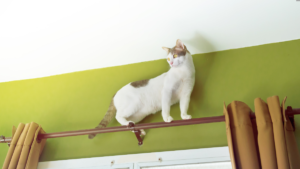
Creative Designs for DIY Cat Climbing Walls
DIY cat climbing walls can be functional, artistic, or both. Here are some inspiring ideas:
Floating Shelves Jungle
Stagger shelves at different heights to mimic a jungle. Add a vertical rope or climbing net for added challenge.
Geometric Wall
Use hexagonal or triangular shelves for a modern look. Cats enjoy hopping between different shapes.
Integrated Scratching Wall
Attach sisal mats or posts to the platforms to create a dual-purpose wall that keeps claws off your furniture.
Cat Tunnel Maze
Add tunnels and enclosed spaces to provide mental stimulation and hiding spots.
Furniture Integration
Extend shelves from existing furniture, like bookshelves or cabinets, for a seamless play area.
Personal Touches
Add pet-safe plants or decorative elements to enhance the wall’s appearance and match your home décor.
Safety Tips
Ensure your DIY cat climbing wall is safe with these tips:
-
Secure Anchoring: Fasten all brackets and shelves into studs or solid anchors.
-
Weight Limits: Don’t overload shelves with heavy beds or toys.
-
Non-Toxic Materials: Use pet-safe paints, adhesives, and finishes.
-
Smooth Edges: Sand edges to prevent injuries.
-
Gradual Heights: Avoid placing shelves too far apart for kittens or older cats.
Benefits of DIY Cat Climbing Walls
DIY cat climbing walls offer numerous benefits:
-
Physical Exercise: Jumping and climbing strengthen muscles and improve agility.
-
Mental Stimulation: Navigating different surfaces and heights keeps cats sharp.
-
Behavioral Improvement: Active cats are less likely to scratch furniture or act out.
-
Bonding Opportunities: Watching your cat explore can be a joyful experience.
-
Space Optimization: Vertical walls free up floor space and declutter your home.
Maintenance Tips
Keep your cat climbing wall in top shape:
-
Inspect Regularly: Check for loose brackets, worn carpet, or damaged wood.
-
Clean Surfaces: Vacuum or wipe shelves to remove fur and dust.
-
Rotate Toys: Swap out hanging toys or tunnels to maintain interest.
-
Adjust Heights: As cats grow or age, adjust shelf spacing for safety and comfort.
Frequently Asked Questions
Can I make a cat climbing wall for multiple cats?
Yes! Multiple levels and separate platforms reduce conflicts and give each cat its own territory.
What if I live in a small apartment?
Even in small spaces, narrow shelves, wall-mounted tunnels, and vertical platforms can create an engaging climbing wall.
Do I need special tools?
No. Basic tools like a drill, screwdriver, level, measuring tape, and saw are sufficient. A jigsaw may be useful for custom shapes.
How long does it take to build?
Simple walls can be built in a few hours. More complex, multi-level designs may take a weekend.
Final Thoughts
A DIY cat climbing wall is more than a play structure—it enriches your cat’s life, promotes physical and mental health, and adds an interesting focal point to your home.
Whether you choose a minimalist design, a jungle-themed wall, or a geometric art-inspired setup, your cat will love the vertical space, and you’ll enjoy seeing them thrive.
Building a DIY cat climbing wall is an affordable and customizable project that allows you to tailor every detail to your space, your cat’s preferences, and your personal style.
Save pin for later

- Best Dog Crate Picks for Dog Owners - March 13, 2026
- Top 10 Insane Facts About The Cane Corso - March 13, 2026
- Pet Insurance For Dogs Explained! - March 13, 2026