Dogs are incredible animals that have been our loyal companions for thousands of years. They’re known for their intelligence, playfulness, and ability to bring joy into our lives. But there’s one thing about dogs that many people don’t know: they can recognize human faces.
Dogs have a special skill when it comes to identifying people based on their facial features. In this article, we’ll delve into the fascinating world of canine facial recognition and explore how they do it. From understanding their vision to learning about some fun facts about their abilities, read on to discover why dogs are not only man’s best friend but also experts at recognizing faces.
Do Dogs Recognize Humans by Face?
Dogs rely heavily on their sense of smell, but it turns out they also have the ability to recognize human faces. Scientists have discovered that certain areas of a dog’s brain light up when they see a familiar face, much like in humans.
In fact, this ability is so strong that dogs can even distinguish between different family members or close friends just by looking at their faces. It’s a skill that has helped them form strong bonds with their owners over thousands of years.
This section explores just how well dogs can recognize humans by face and provides fascinating insights into their exceptional skill.
The Science of Dogs Recognizing Faces
Dogs have a unique way of processing visual information that is different from humans. Their eyes are positioned on the sides of their heads, giving them a wider field of vision but making it harder for them to focus on details. To compensate for this, dogs rely on movement and contrast to help them identify objects and people.
Recent studies have shown that dogs use a process similar to humans to recognize faces. When a dog looks at a human face, their brain analyzes different features, such as the distance between the eyes and the shape of the nose, to create a mental map of the face.
Dogs can remember these mental maps and use them to identify people in the future. This is why your dog may get excited when they see someone they recognize or seem hesitant around strangers.
The Process of Facial Recognition in Dogs
The process of facial recognition in dogs is complex and not fully understood. However, research has shown that they rely on a combination of visual cues and scent to identify people.
When it comes to visual cues, dogs use their eyesight to detect subtle differences in a person’s facial features. They pay close attention to the distance between the eyes, the shape of the ears, and the length of the nose, among other things.
Dogs also use their sense of smell to help recognize people. They have an extraordinary sense of smell and can pick up on scents imperceptible to humans.
When dogs encounter someone they recognize, they will often sniff them to confirm their identity. So, if you’ve ever wondered how your dog knows you even after being apart for a while, the answer lies in their ability to recognize your face and smell your scent.
Interesting Facts About Dogs and Facial Recognition
There are several fascinating facts about dogs and facial recognition:
-
Dogs can recognize human faces even if they are upside down, as they focus on the overall shape rather than the orientation of the eyes or nose.
-
They are more likely to recognize faces of people they are familiar with, such as family members or close friends.
-
Dogs can distinguish between people of different races and ages.
-
Dogs have better vision in low-light conditions compared to humans, allowing them to recognize faces in the dark.
-
Studies show that dogs can even read human emotions by facial expressions. They can tell when we are happy, sad, angry, or afraid just by looking at our faces.
This ability to read human emotions is one of the many reasons dogs make such exceptional companions.
How Dogs See the World
Dogs see the world differently than humans. While their vision is similar to ours in some ways, they have unique features that set them apart.
Dogs are better at detecting motion and seeing in low light conditions. They also have a wider field of view, allowing them to observe more of their surroundings at once.
Understanding how dogs perceive the world helps explain their behavior. For example, when a dog responds to a hand signal during training, it’s because they can clearly see the motion. Similarly, knowing that dogs have difficulty focusing on small, moving objects helps explain why they might chase squirrels or birds instinctively.
How Dogs Perceive Human Faces
Dogs are amazing creatures that can recognize and understand human faces. They can even sense when someone is lying or being unkind. Dogs use their ability to read human emotions to build strong bonds with their owners.
They recognize human faces by observing the distance between the eyes, the shape of the nose, and the position of the mouth. Dogs can remember faces they’ve seen before and even differentiate between family members and strangers.
Dogs are also sensitive to body language and tone of voice, which helps them detect when we are upset or angry. This is why it’s important to be gentle with our dogs, as they pick up on negative emotions and react accordingly.
Facial Recognition Abilities in Dogs
Dogs have an impressive ability to recognize human faces. Research shows that they can distinguish between individual faces as effectively as humans can. Dogs are particularly skilled at recognizing familiar faces, such as those of their owners and family members.
Did you know that dogs can recognize other dogs by their facial features too? They can even differentiate between breeds based on facial characteristics.
Facial recognition is essential for dogs, as it helps them identify owners, family members, and other dogs they know. They rely on cues such as eye distance, nose shape, and mouth position. Surprisingly, dogs can recognize faces even when upside down, a rare skill in the animal kingdom.
Dog Breeds and Facial Recognition Skills
Different dog breeds have varying abilities when it comes to facial recognition. Some breeds are naturally better at recognizing faces than others. For example, Border Collies and Golden Retrievers are known for their exceptional skills in this area.
On the other hand, breeds like Dachshunds and Beagles are less adept at facial recognition. This is because different breeds have different brain structures and cognitive abilities. Some breeds are bred for specific tasks that require better facial recognition, such as herding dogs like Border Collies, who need to identify individual animals in a flock.
Do Dogs Recognize People in Photos?
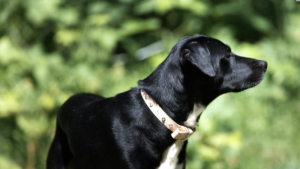
Dogs have an incredible ability to recognize human faces, even in photos. Research shows that dogs can identify individuals in photographs, even if they have never met them before. They use the same parts of the brain that humans use to process faces and can remember and differentiate between people they’ve met only once.
Some studies even suggest that dogs can recognize their own reflection in a mirror, distinguishing themselves from other dogs that may look similar.
The Evolutionary Aspect of Dogs Recognizing Faces
The ability of dogs to recognize faces has evolved over thousands of years. Domestication played a significant role in developing this skill. While dogs have a powerful sense of smell, their vision and ability to process facial cues are equally important.
Dogs have binocular vision, which allows them to see in 3D and perceive depth. This helps them focus on facial features to recognize individuals. They are also adept at reading human body language, which enhances their understanding of emotions. This ability to recognize faces has helped dogs form strong bonds with humans for millennia.
Dog Training and Facial Recognition
Dog training is an essential part of responsible pet ownership and helps build a strong bond between owner and dog. One key aspect of training is understanding how dogs recognize faces.
Dogs are naturally curious and learn quickly. They can remember human faces, which is why consistent facial expressions are crucial during training. Positive expressions reinforce good behavior, while negative expressions can create confusion or anxiety.
Facial recognition is also important for socialization. Exposing dogs to different people, places, and experiences helps them become well-rounded. Owners should introduce dogs to new people while maintaining positive and consistent facial expressions to ensure successful interactions.
Conclusion
Dogs have an incredible ability to recognize human faces. They use visual and olfactory cues to identify people, can remember faces over time, and even recognize individuals in photographs. Different breeds exhibit varying levels of skill, and consistent training enhances their ability to recognize and respond to human faces.
Facial recognition has been a vital part of dogs’ evolution and has helped them form strong bonds with humans over thousands of years. By understanding how dogs perceive our faces and emotions, we can strengthen our relationships with them and ensure they feel secure, loved, and understood.
Save pin for later


- The Cutest Cat Breeds in the World - March 21, 2026
- Black Cat Names That Are as Mysterious and Beautiful as They Are - March 21, 2026
- Did You Know Your Dog Could Have Diabetes? - March 20, 2026