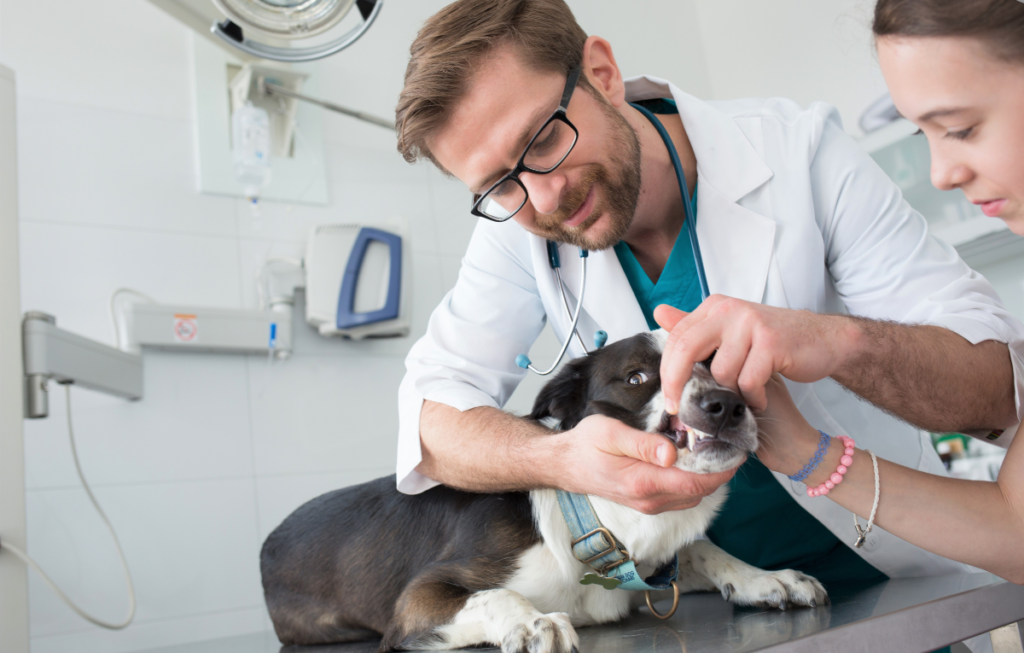
You love your dog, and naturally, you want it to live a long, active, and comfortable life. But one area many pet owners accidentally overlook is dental care. That’s why understanding Dog Dental Health Tips For Cleaner Teeth and Gums is one of the smartest things you can do for your dog’s long-term health.
Most people don’t realise how important dental health is until their dog develops serious bad breath, pain while eating, or visible dental disease. Unfortunately, by the time symptoms become obvious, the problem is often already advanced.
The good news?
Most dental issues are preventable with simple daily habits and consistent care. The best part is that dog dental care does not need to be complicated or expensive. Small daily habits can make a huge difference over time.
Let’s dive in.
Why Dog Dental Health Is Important
Your dog’s mouth affects far more than just their breath.
Dental disease can impact your dog’s:
- Comfort
- Energy levels
- Appetite
- Mood
- Behavior
- Overall health
When bacteria build up inside your dog’s mouth, they can eventually enter the bloodstream and spread throughout the body.
This bacterium may affect organs such as the following:
- The heart
- Kidneys
- Liver
That means poor dental health can eventually become a whole-body health issue.
This is why dog dental health tips for cleaner teeth and gums matter so much. Dental care isn’t just cosmetic. It’s preventative health care.
How Dental Disease Develops
Most dental disease begins the same way.
It starts with plaque.
The process usually looks like this:
- Your dog eats food
- Food particles remain on teeth
- Plaque begins forming
- Plaque hardens into tartar
- Gums become irritated
- Infection develops
- Dental disease progresses
The longer tartar stays on the teeth, the harder it becomes to remove.
That’s why prevention matters so much.
Stopping plaque early is far easier than treating advanced dental disease later.
Common Dog Dental Problems
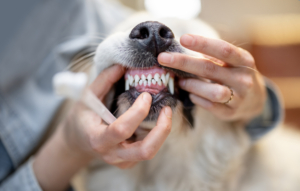
Understanding the most common dental issues can help you spot problems early.
1. Gingivitis
Gingivitis is inflammation of the gums.
Common symptoms include:
- Red gums
- Swollen gums
- Bad breath
- Sensitivity around the mouth
If left untreated, gingivitis can progress into more serious infections.
2. Periodontal Disease
Periodontal disease is extremely common in dogs, especially older dogs and small breeds.
Symptoms may include:
- Loose teeth
- Missing teeth
- Pain while chewing
- Infection
- Bleeding gums
- Refusing food
This condition becomes serious because the infection spreads below the gumline.
Once bacteria enter deeper tissues, they may spread throughout the body.
3. Plaque and Tartar Buildup
Plaque and tartar create the foundation for most dental problems.
Signs include:
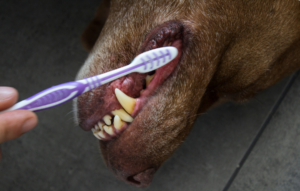
- Yellow or brown buildup on teeth
- Persistent bad breath
- Inflamed gums
Tartar is difficult to remove without professional cleaning.
4. Broken or Cracked Teeth
Dogs love chewing, but chewing the wrong things can damage their teeth.
Common causes include:
- Rocks
- Hard bones
- Extremely hard chew toys
- Antlers
- Hard nylon products
Symptoms of damaged teeth include:
- Difficulty chewing
- Mouth sensitivity
- Pawing at the mouth
- Drooling
- Refusing hard food
Broken teeth can become very painful and infected.
Signs Your Dog Needs Dental Care
Dogs are extremely good at hiding discomfort.
That means dental disease often progresses quietly.
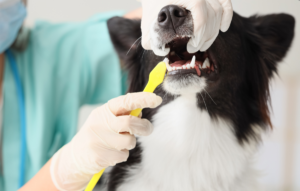
Watch for these warning signs:
- Bad breath
- Bleeding gums
- Drooling
- Difficulty chewing
- Eating less food
- Pawing at the mouth
- Red or swollen gums
- Loose teeth
- Behavioral changes
Important reminder
Bad breath is not “normal dog breath”.
A persistent odour usually signals bacterial buildup or infection.
Why Brushing Your Dog’s Teeth Matters
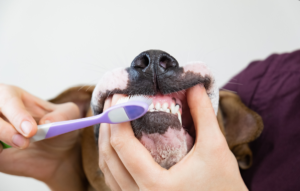
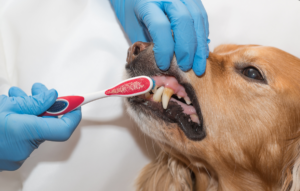
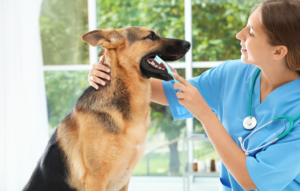
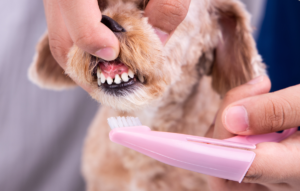
Brushing your dog’s teeth is one of the best things you can do for their health.
Why brushing works
Brushing removes plaque before it hardens into tartar.
Daily brushing dramatically lowers the risk of:
- Gum disease
- Tooth loss
- Infection
- Painful inflammation
How often should you brush?
Ideally:
- Every day
At minimum:
- Several times per week
Consistency matters more than perfection.
What You Need to Brush Your Dog’s Teeth
You do not need expensive tools.
Dog toothbrush
Use a toothbrush designed specifically for dogs.
Dog toothbrushes are softer and shaped for canine mouths.
Dog toothpaste
Always use toothpaste made specifically for dogs.
Dog toothpaste:
- It is safe to swallow
- Often tastes appealing to dogs
- Helps fight plaque build-up
Never use human toothpaste.
Human toothpaste may contain ingredients that are toxic to dogs.
How to Get Your Dog Comfortable With Tooth Brushing
Many dogs resist brushing at first.
That’s completely normal.
The key is patience.
Step-by-step introduction
1. Let your dog investigate the toothbrush
Allow them to sniff it calmly.
2. Introduce the toothpaste
Let them taste a small amount.
3. Touch the gums gently
Get them comfortable with mouth-handling.
4. Start slowly
Brush only a few teeth at first.
5. Keep sessions short
A few seconds is enough initially.
6. Reward your dog afterwards.
Use praise, affection, or healthy treats.
Never punish your dog during brushing.
You want dental care to feel safe and positive.
Dog Dental Chews and Products
Dental chews can help support oral hygiene.
However, they should never replace brushing.
Benefits of dental chews
Some products may help:
- Reduce plaque
- Freshen breath
- Encourage chewing
- Massage gums
Important reminder
Dental treats are supplements, not substitutes.
Brushing remains the most effective daily habit.
Nutrition’s Role in Dental Health
Your dog’s diet affects their oral health more than most owners realise.
Poor diets can contribute to:
- Plaque build-up
- Inflamed gums
- Weak immune systems
Focus on:
- High-quality dog food
- Balanced nutrition
- Healthy ingredients
- Limited sugary treats
Healthy gums begin with overall body health.
That’s why nutrition is a major part of Dog Dental Health Tips for Cleaner Teeth and Gums.
Hydration Matters Too
Water plays a surprisingly important role in dental health.
Why hydration matters
Water supports saliva production.
Saliva helps:
- Wash away bacteria
- Reduce food build-up
- Protect teeth and gums
Ways to encourage hydration
- Provide fresh water daily
- Wash bowls regularly
- Monitor drinking habits
- Consider pet water fountains
Hydration supports your dog’s entire body, including their mouth.
Professional Veterinary Dental Care
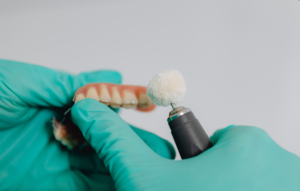
Home care is important, but professional cleanings are still necessary.
Your veterinarian can remove tartar that brushing cannot.
During professional dental cleaning, vets may:
- Remove tartar
- Examine teeth
- Check gum health
- Identify infections
- Detect damaged teeth
Professional cleanings help stop small problems before they become severe.
Why Small Dogs Often Have More Dental Problems
Small dog breeds are especially vulnerable to dental disease.
Why?
Because:
- Their teeth are crowded closely together
- Tartar accumulates faster
- Smaller jaws trap debris more easily
Breeds often prone to dental issues include:
- Chihuahuas
- Yorkshire Terriers
- Toy Poodles
- Maltese
- Dachshunds
Smaller dogs often require extra dental attention.
Safe Chewing Habits
Chewing can help support oral health.
But unsafe chewing can break teeth.
Safe chewing options
- Vet-approved dental chews
- Rubber chew toys
- Softer dental treats
Avoid:
- Rocks
- Hard bones
- Extremely hard antlers
- Very hard nylon toys
If something feels harder than your dog’s teeth, it may be unsafe.
Monitoring Your Dog’s Mouth at Home
You don’t need to become a dog dentist.
But checking your dog’s mouth regularly helps you spot problems early.
Things to watch for
- Red gums
- Swelling
- Tartar buildup
- Broken teeth
- Bleeding
- Mouth sensitivity
Early detection can prevent expensive treatment later.
Senior Dogs Need Extra Dental Care
As dogs age, dental problems become more common.
Older dogs are more prone to:
- Tooth loss
- Gum disease
- Pain while eating
- Infections
Helpful habits for senior dogs
- Check teeth more often
- Schedule regular vet visits
- Monitor eating behaviour
- Offer softer food if needed
Never assume your senior dog’s mouth pain is “just ageing”.
Dental Health Can Affect Behaviour
Pain changes behaviour.
Dogs suffering from dental issues may:
- Become irritable
- Withdraw socially
- Stop playing
- Refuse food
- Avoid chew toys
Sometimes behaviour problems are actually health problems.
Pay attention to sudden personality changes.
Building a Daily Dental Care Routine
Dog dental care becomes much easier once it becomes routine.
Simple daily dental routine
1. Check your dog’s mouth briefly
Look for redness or buildup.
2. Brush teeth regularly
Even a few minutes helps.
3. Provide safe chewing options
Healthy chewing supports oral health.
4. Monitor eating habits
Difficulty chewing may signal pain.
5. Stay consistent
Small daily habits matter most.
Perfect routines don’t exist.
Consistent routines do.
Common Dog Dental Care Mistakes
Avoid these common mistakes.
Waiting for symptoms
By the time symptoms appear, the disease may already be advanced.
Assuming bad breath is normal
It usually is not.
Relying only on dental treats
Chews alone rarely prevent disease.
Ignoring chewing problems
Pain while eating deserves attention.
Using human toothpaste
Human toothpaste can be dangerous for dogs.
Why Prevention Beats Treatment
Advanced dental disease can become:
- Painful
- Stressful
- Expensive
- Difficult to treat
Preventive care is much easier.
Healthy dental habits can:
- Reduce veterinary bills
- Improve quality of life
- Prevent pain
- Support overall health
- Help your dog live longer
Reducing Stress During Dental Care
Dental routines should feel calm and safe.
Helpful tips
- Keep sessions short
- Use praise often
- Stay patient
- Start slowly
- Avoid force or punishment
The goal is progress, not perfection.
Why Consistency Matters Most
Your dog will never have a perfectly spotless mouth forever.
That’s normal.
What matters most is consistency over time.
Healthy daily habits include:
- Brushing teeth
- Proper nutrition
- Regular vet visits
- Monitoring the mouth
- Safe chewing habits
Small habits repeated daily create long-term results.
Final Thoughts
Your dog’s dental health affects far more than just their teeth.
A healthy mouth supports:
- Better comfort
- Easier eating
- Better energy
- Healthier organs
- Improved quality of life
The good news is that dental care does not need to be overwhelming. If there’s one thing to remember from these Dog Dental Health Tips For Cleaner Teeth and Gums, it’s this: Preventive care works best when it becomes part of your daily routine.
Simple habits practised consistently can help your dog stay healthier, happier, and more comfortable for years to come.
Save Pin for later.

- Dog Nutrition Guide for Better Health and Energy - May 23, 2026
- How to Keep Your Cat Healthy and Active at Home - May 17, 2026
- Dog Health Tips for Indoor and Apartment Living - May 17, 2026