
If you own a cat you know how sharp those tiny claws can be. Over the years of learning how to properly take care of cats, I had to learn about nail maintenance the hard way. Believe me, trimming cat’s claws doesn’t have to be hard. There is a right way and a wrong way to trim them. Done correctly, your cat won’t even realize you are trimming them.
Done incorrectly, you could end up with a very stressed cat and some scratches on your arms. I want to show you how to trim them correctly every time.

Why should you trim your cat’s claws?
Many cat owners never trim their cat’s claws because they figure that cats naturally wear them down by scratching. While this is true, it does not prevent their claws from growing long. Long claws can curl under and grow into their paw pad. Not only is this painful for your cat, it can lead to infection. Scratching also doesn’t keep your cat’s claws from becoming sharp. Imagine sharp kitty claws digging into your couch, clothes, or even you.
Trimming your cat’s claws is one of the most important parts of caring for your cat that most owners neglect. Yes, trimming their claws keeps your furniture intact, but there are many health benefits to trimming them as well. Regular trimming keeps their claws at a manageable length, preventing discomfort to your cat and possible injury to you.
Desensitizing Your Cat To Paw Handling
It’s important that before you even think about grabbing those nail clippers you take the time to make sure your cat is okay with you handling their paws. Most cats do NOT love you touching their paws, so if you want this process to go smoothly, start before you even begin trimming.
The night before you plan to trim their claws, spend some time just holding each of their paws gently when you cuddle. Apply gentle pressure on the toe pad to extend their nail and release. Reward your cat with a treat every time you touch their paws. Repeat every day until your cat doesn’t react when you handle their paws. If your cat freezes up, hisses, swats, or tries to move away, STOP. Slow down. You’re trying to build a trusting relationship with your cat. That doesn’t happen overnight.
Another good tip is to trim your cat’s claws when they are already calm, like after a meal or when they just woke up from a nap. A wound-up, antsy cat will not hold still through a claw trimming session.

What You Will Need:
Here is everything you need to properly trim your cat’s claws.
- Cat Nail Clippers: Guillotine style clippers and scissor style clippers both work great. Human nail clippers are not a good option because they can crush the nail instead of cutting it.
- Styptic Powder: If you accidentally cut into the quick (more on that later) this will stop the bleeding quickly.
- Treats: I like to have these handy to reward my cat after we are done with each paw. If your cat is extra nervous, you can reward them after each nail you trim.
- Towel: Not necessary, but some cats respond better when wrapped in a towel. It restricts their movement without feeling scary or stressful to them.
How To Trim Your Cat’s Claws:
Alright, your cat is comfortable being handled and you have everything you need. Let’s trim some nails!
Find a quiet well-lit area:
Trimming your cat’s claws should never be done in a rush. Make sure you have plenty of light to see what you are doing. Unlike dogs, you can see the quick in cat’s nails. The quick is the pink vein that runs up the middle of their nail. If you cut the quick it will bleed and hurt your cat. That’s why you need good light. The brighter the better.
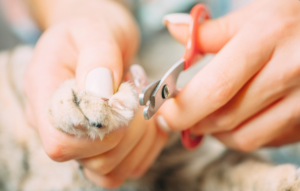
Hold a paw in one hand and use your thumb and forefinger of your other hand to apply gentle pressure to the toe pad. The nail should naturally extend forward.
You should be able to see where the quick ends. If your cat’s nails are clear or light in color, it will be easy to see where the pink of the quick stops. If your cat’s nails are dark, you will have to be extra careful not to cut the quick. Do not trim that far.
Position your clippers at about a 45-degree angle and trim only the very tip of the nail. You do not have to trim much off at all. You can always trim more later if you need to.
Do not try to trim all four paws in one sitting. Unless your cat is extremely comfortable with the situation, go slow. I typically only recommend trimming one or two claws at a time for cats new to the process. Reward your cat with a treat and some praise after each paw you trim.
Repeat every 2-3 weeks.
The great thing about cats is their nails grow FAST. Staying on a schedule will ensure the nails do not get too long between trimming sessions.

Trimming Cat Claws Mistakes To Avoid
Even if you have the best intentions, there are some common mistakes that people make when learning how to trim cat’s claws.
Cutting into the quick — This is the most common mistake made by beginners. Cutting into the quick will cause your cat pain and bleeding. Your cat will likely associate nail trimming with this pain and become increasingly stressed during each session.
Not using sharp clippers — Dull nail clippers can tear or crush your cat’s nails rather than give them a clean cut. Replace your clippers when they no longer easily cut through nails.
Trimming too many nails at once — Don’t pick up your cat and try to trim all twenty nails when they’ve never had them trimmed before. Take your time and let your cat get used to the process.
Not trimming the back claws — We tend to neglect the back claws because they are harder to reach and not as sharp. The back claws still need to be trimmed though.
Punishing your cat — If your cat pulls away, scratches, or bites, do NOT punish them. They are scared. Calmly put the nail clippers down and try again another day. If you rush your cat and push them into something they fear, you will never gain their trust.
Cutting The Quick
Accidents will happen. Even I have cut into the quick before. If you do cut the quick, the nail will begin to bleed. Apply styptic powder to the tip of the nail and apply firm pressure for a few minutes. The bleeding should subside quickly.
If the nail continues to bleed after a few minutes, or if the cut looks severe, please contact your veterinarian.
FAQs
How often should I trim my cat’s nails?
Typically every two to three weeks is sufficient. Depending on your cat’s lifestyle, they may need them done more or less frequently. Indoor cats may need them done more often because they have fewer surfaces to scratch outdoors that help wear their nails down.
Can I use human nail clippers on cats?
No. Cat’s nails are curved and human nail clippers are made to cut flat. You risk cracking your cat’s nail by using the wrong clipper. Invest in a cat-specific nail clipper.
My cat HATES having their claws trimmed. What should I do?
Take things slower. Continue to work on desensitizing your cat’s paws. Only trim one nail at a time and space out trimming their nails over a few days. If your cat becomes extremely anxious and you feel you may harm your cat by attempting to trim their nails, have your veterinarian do it.
Can’t I just declaw my cat?
Declawing is actually a surgical procedure that removes the last bone of each toe. It’s not simply cutting the claw. Declawing your cat is cruel and inhumane. Many countries have banned or restricted the procedure. Just trim their nails.
My cat goes outdoors. Do they still need their claws trimmed?
Yes. Though their front claws will likely always be sharper due to the nature of climbing and defending themselves outdoors. You can leave their claws slightly longer than you would an indoor-only cat, but you should still trim them regularly.
Final Thoughts
Learning how to trim cat’s claws can be intimidating at first, but it will become second nature before you know it. Be patient and take your time. Do not rush the process and keep trimming sessions short. Reward your cat and show them lots of love. They may never LIKE you trimming their nails, but with enough patience, most cats will tolerate it. Please don’t neglect this part of your cat’s grooming. It’s important to their health and well-being.
Save pin for later


- Dog Nutrition Guide for Better Health and Energy - May 23, 2026
- How to Keep Your Cat Healthy and Active at Home - May 17, 2026
- Dog Health Tips for Indoor and Apartment Living - May 17, 2026