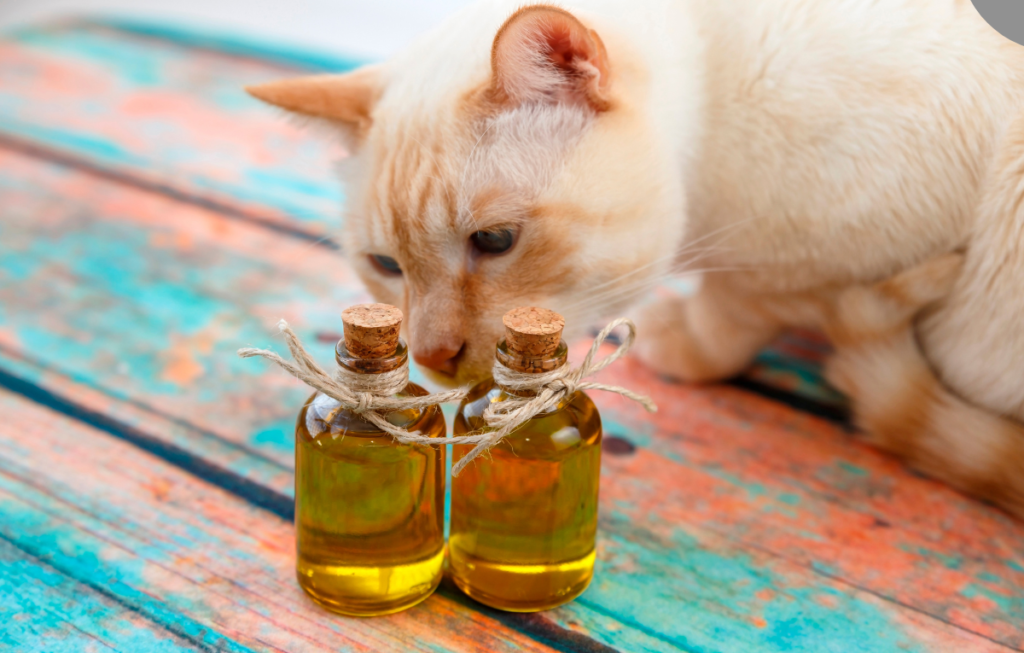
Essential oils are everywhere these days. They promise all kinds of benefits for humans, and it’s not unusual to wonder if they might offer the same benefits to cats, too. However, as it turns out, Are Essential Oils Safe for Cats? is a much more complicated question. I want to help you understand everything you need to know about essential oils and cats. I love natural wellness just as much as the next person, but I also have a cat—and watching how he reacts to certain things has taught me to research every natural remedy I bring into my home.
I don’t want you to unknowingly harm your cat. That’s why I’m going to walk you through everything you need to know about essential oils and cats in a simple, practical way.

Are Essential Oils Safe for Cats? Breaking Down Safety
Before we cover which essential oils you should or shouldn’t use around cats, let’s talk about why they react differently to many oils in the first place.
The main reason is simple: cats’ bodies process chemicals differently than humans (and dogs).
Their systems cannot handle certain compounds found in essential oils the same way ours can.
This doesn’t mean every oil will harm your cat, but it does mean you need to be very careful with the words “natural” and “essential oil.”
Let’s Talk About Exposure
As you might expect, there are several ways your cat can be exposed to essential oils.
Some are obvious, while others may surprise you.
Here’s how cats can be exposed to harmful essential oils:
Diffusers
If you run a diffuser at home, your cat is breathing in those oils—even when diluted with water.
Direct Skin Contact
Some people apply oils directly to their cat’s fur or skin. NEVER do this.
Pet Products
Some shampoos and flea treatments contain essential oils. Even “natural” products can include harmful compounds.
Accidental Ingestion
Your cat may walk through oil residue and later lick it off while grooming.
Each of these scenarios can be harmful, which is why it’s important to understand which oils to avoid.

Dangerous Essential Oils for Cats
There are several essential oils that can be harmful to cats. The most common include:
Tea Tree Oil
Can cause rapid poisoning symptoms such as weakness, vomiting, and seizures.
Peppermint Oil
May cause respiratory distress and liver strain.
Citrus Oils (Lemon, Orange, Lime, etc.)
Cats lack the enzyme needed to metabolize citrus compounds, making these especially dangerous.
Eucalyptus Oil
Can cause drooling, weakness, and difficulty walking.
Lavender Oil
Often considered “mild,” but still potentially harmful in high concentrations or frequent use.
Cinnamon, Clove, and Thyme Oil
Can cause respiratory and skin irritation in cats.
Symptoms of Essential Oil Exposure
If your cat is exposed to harmful essential oils, you may notice:
- Excessive drooling
- Weakness
- Vomiting
- Loss of appetite
- Difficulty walking
- Cold limbs
- Behavioral changes
If you notice any of these symptoms, contact your veterinarian immediately.

Diffusers Aren’t Always Cat-Friendly
I used to think diffusers were harmless as long as my cat didn’t directly touch them.
However, when oils are diffused, particles settle on furniture, carpets, and even your cat’s fur. Your cat then ingests them while grooming.
Over time, this exposure can build up and cause harm.
Bottom Line: Essential Oils Are Not Recommended for Cats
While some oils may be safer than others, there is still too much uncertainty about safe concentrations and long-term effects.
Is it worth the risk?
In my opinion, no.
A pleasant-smelling home is not worth putting your cat’s health at risk.
Alternatives to Essential Oils That Are Safe for Cats
You can still keep your home fresh without essential oils:
- Open windows for ventilation
- Use pet-safe cleaning products
- Use baking soda for odor control
- Ask your vet about safe natural herbs
Can Essential Oils Be Safe Around Cats?
This is a common question.
There may be a few oils that are less harmful in very specific conditions, but the reality is that safety varies widely between cats.
An oil that is harmless to one cat may cause a severe reaction in another.
So again, is it worth the risk? For most pet owners, the answer is no.
Cats vs Dogs and Essential Oils
People often ask, “My dog is fine around essential oils—why not my cat?”
Dogs have a liver enzyme called glucuronidation that helps them process essential oils more effectively.
Cats lack this enzyme, which makes them significantly more sensitive to essential oil compounds.
Just Because It’s Natural Doesn’t Mean It’s Safe
This is one of the biggest misconceptions.
‘Natural’ does not automatically mean safe.
Essential oils are plant-based chemicals designed to protect plants from predators and pests. Some of these compounds are toxic to animals—including cats.
What to Do If Your Cat Has Been Exposed
If you think your cat has been exposed to essential oils:
1. Stop Using the Oil Immediately
Turn off diffusers and remove all sources.
2. Move Your Cat to Fresh Air
Place them in a well-ventilated area.
3. Do NOT Try Home Remedies
Never give milk or attempt home treatments.
4. Contact Your Veterinarian
Seek professional help as soon as possible.

Can Cats Safely Use Essential Oils?
Unless specifically directed by a veterinarian, it is best to avoid using essential oils around cats entirely.
Speak with your vet about safer, pet-friendly alternatives instead.
How to Cat-Proof Your Home From Essential Oils
You can reduce risk by making a few changes:
Use Pet-Safe Products
Choose cleaning products designed for homes with pets.
Wash Bedding Regularly
Clean blankets and bedding to keep odours under control.
Use Fresh Air Instead of Fragrances
Open windows instead of using scented products.
Clean Litter Boxes Frequently
A clean litter box reduces odour naturally.
Keep Your Cat Clean
Regular brushing helps reduce odours and shedding.
Final Thoughts
Natural products are popular, but when it comes to cats, caution is essential. So, are essential oils safe for cats? Until there is clear, reliable evidence showing safe use, it is best to avoid them entirely.
Your cat’s health is far more important than a scented home. Instead, focus on pet-safe alternatives and simple natural methods that don’t carry unnecessary risks.If you care about your cat’s well-being, avoiding essential oils is the safest choice.
Save Pin for later.

- Dog Nutrition Guide for Better Health and Energy - May 23, 2026
- How to Keep Your Cat Healthy and Active at Home - May 17, 2026
- Dog Health Tips for Indoor and Apartment Living - May 17, 2026