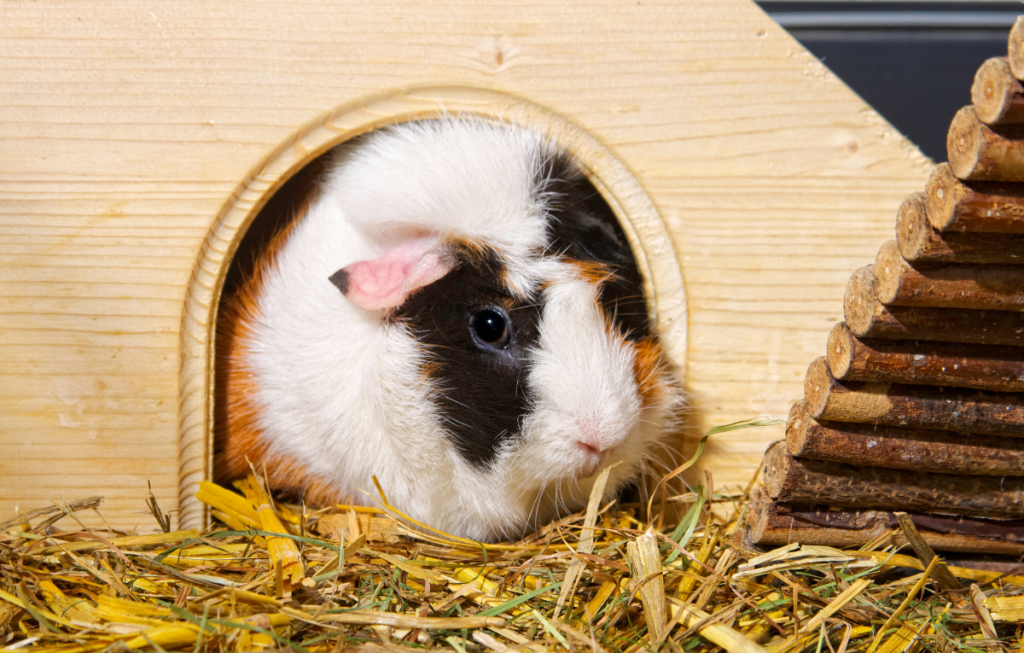
When your guinea pig runs around their cage, you’ll notice them darting towards any tunnels or odd corners they can find. They love hiding. I know I do. I’ve watched my guinea pigs play countless times and once their wheels stop spinning, I can pretty much guess which tunnel they’ll disappear into next.
Their hiding obsession made me wonder: how can I make DIY guinea pig hideouts for them to snuggle up in? What materials should I use? And how can I make sure they’re safe?
Well, you’re in luck — making your own guinea pig hideouts isn’t just a fun craft to do. It’s one of the best things you can provide for your guinea pig.
Why Guinea Pigs Need Hideouts In The First Place
Guinea pigs spend much of their day hidden beneath bushes or fallen rocks in the wild. They live such vulnerable lives as prey animals, so being out in the open is dangerous. Hiding allows them to sleep safely without fear of being hunted by predators.
Guinea pigs don’t have predators in your house. Well, they shouldn’t if you’re responsible — no cats or hawks inside! But their instinct to hide is still there. Without somewhere to hide, your guinea pig will feel stressed.
Giving your guinea pig a hideout allows them to relax because they know they can always retreat to a small, enclosed space. It’s their sanctuary. They can fall asleep undisturbed, take shelter when spooked, or just lounge about when they don’t feel like interacting with you.
Piggies without hideouts tend to be skittish, hiding whenever you approach their cage. They might chew their bars more, chatter their teeth, or sleep less. Whatever the case may be, it’s obvious they’re unhappy.
Give them a hideout and they’ll spend hours dozing off inside it.
Hideouts are essential for happy guinea pigs.
What Makes A Good Guinea Pig Hideout
Knowing that your guinea pig needs a hideout is great. But what actually makes for a good hideout? Let’s cover the characteristics of a hideout before we jump into building ideas.
Size is important. Your hideout should be large enough for your guinea pig to comfortably turn around inside. If you have multiple guinea pigs sharing a cage, you ideally want one large hideout they can share, or multiple hides so one doesn’t guard the entrance and corner the other out.
Ventilation is another important factor. Guinea pigs can overheat easily, and an enclosed hide with no airflow traps heat and moisture. Make sure any hide you build for your guinea pig has some openings for air to pass through.
Materials should always be non-toxic. Guinea pigs will chew anything and everything they can get their teeth on — I’m not exaggerating when I say everything. Don’t use any woods treated with stains, paints, or sealants. Opt for safe fabrics, and be wary of glue and thread.
Ease of cleaning is always something to consider when making anything for your guinea pig’s cage. Hideouts collect dust and will get soiled with bedding and urine. If you make something difficult to clean or that takes forever to dry, your healthy cleaning routine just got a lot harder.
Simple DIY Hideout Ideas You Can Make At Home
Alright, let’s get building!
The following are several DIY guinea pig hideout plans (or blueprints, if we’re getting technical) that you can build. They range from easy enough for anyone to tackle, all the way up to more difficult builds for if you’re feeling crafty.
Cardboard Box Hideout
This is by far the easiest option on this list, and guinea pigs LOVE it. Simply grab any decent-sized cardboard box (a shoebox or small shipping box is ideal), and cut an opening on one side large enough for your guinea pig to fit through comfortably.
Boom. Hideout. You can customize it by cutting two openings on opposite sides, creating a tunnel instead.
Don’t worry about covering the box in stickers or glossy paint since guinea pigs will likely chew on it. Those typically contain chemicals you don’t want your pet nibbling. Plain brown cardboard works best.
Cardboard is also one of the easiest materials to replace when it gets chewed up or soiled. No guilt, no worries.
Fleece Tent
If you’re handy with a needle and thread, fleece tents are another excellent option. Fleece is safe for guinea pigs, it doesn’t fray, and it’s nice and cozy. All you’ll need is a large piece of fleece fabric, some wooden dowels or stiff wire for structure, and the ability to sew.
Cut your fleece into either a triangle or dome shape with an opening on one side. Slide your wooden dowels through sewn channels along the edges to support it, and you’re done!
Guinea pigs love nesting into these little tents, and they’re machine washable. Make cage cleaning day a breeze.
Wooden Box Hideout
Want something sturdier than cardboard? Build your piggy a small wooden box! You don’t need to be a master carpenter for this DIY hideout. All you really need is untreated pine planks cut to size and nailed together.
I would build the base around 25cm x 25cm with the height being around 20cm. Don’t forget to leave a doorway on one side at least 10cm wide.
For an added bonus, you can build your hideout with a loosely attached roof. That way you can easily reach in to check on your piggy, and cleaning becomes simpler.
Remember — no paint, varnish, or sealant. Only raw untreated wood. Guinea pigs love chewing the edges off their hideouts, and that’s perfectly fine as long as it’s safe.
PVC Pipe Tunnel
Speaking of chewing, PVC pipe tunnels make great guinea pig hideouts. A wide PVC pipe (something around 10–15cm in diameter would work great) cut to around 30–40cm gives your guinea pig a nice dark tunnel to run through and hide inside. Guinea pigs feel most secure when in tunnels because it mimics the inside of a burrow.
Head to your local hardware store. They’ll cut the PVC pipe to size for you and file down any sharp edges. Guinea pigs can poke themselves if the PVC is particularly rough. PVC hides are easy to wipe down, don’t retain moisture, and hold up incredibly well to chewing.
Arranging Hideouts Inside The Cage
Just as important as building the hideout is where you place it inside the cage. Keep these tips in mind when installing your DIY project.
Hideouts should always go somewhere away from food and water bowls. Guinea pigs like to nap in their hideouts for hours at a time, and you don’t want your piggy sleeping right next to their water bowl where moisture can accumulate.
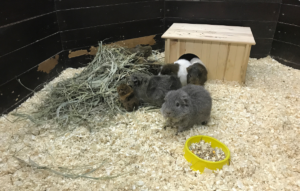
For multiple guinea pigs, space multiple hideouts throughout the cage. This discourages competition between your pets and allows each one their own spot to relax. Dominant guinea pigs sometimes guard hides from the others, leaving only one pig with access to shelter. Providing multiple hides fixes this problem.
Don’t overcrowd the cage with hideouts. Guinea pigs still need open space to run around and explore! I recommend one hideout per pig, plus one.
Keeping Hideouts Clean and Safe
Building a DIY hideout isn’t much use to you if you can’t keep it clean. Spot clean hiding areas daily by removing soiled bedding from inside and around the outside of the hideout. Clean them thoroughly once a week.
Wood hides should be wiped down with a damp cloth and left to air dry before putting them back into the cage. You don’t want moisture getting trapped inside the hideout because that can lead to mold growth. Mold is extremely bad for guinea pigs.
Fleece tents and fabric hides can be washed along with your cage bedding. Cardboard hides are easily replaceable, so swap them out when soiled.
A hideout is no good to your guinea pig if it’s developed a foul odor that doesn’t go away after cleaning, shows visible mold growth, has sharp edges guinea pigs can injure themselves on, or has fallen apart from chewing. When in doubt, throw it out and build a new one.
A Few Extra Tips To Make Your Hideouts Even Better
Fill your hideout with hay. Guinea pigs love burrowing into hay, and it gives them something to snack on while they nap. Hay also provides nice insulation and makes your hideout feel more natural.
Heavier is better. Hideouts that are too light can be easily tipped over, potentially trapping or scaring your guinea pig. If you built your wooden box hideout and it feels like it could tip over, either find a heavier material to use for the base or secure it to the cage wall.
Switch it up. Guinea pigs love variety and get bored just like we do. Rotating your hideouts every few weeks or so by adding a new cardboard box hide will keep their environment enriched and give them new things to explore.
Conclusion
DIY guinea pig hideouts are the best. They’re inexpensive, easy to build, and highly beneficial for your guinea pig. You can start off simple with nothing more than a box, or build your way up to constructing your piggy their very own wooden house.
At the end of the day, all that matters is your guinea pig has a safe, comfy spot they can go to relax whenever they please.
Now get building and let your guinea pigs enjoy their new hideouts!
Bonus points if you catch them taking a much-needed siesta.
save pin for later

- Dog Nutrition Guide for Better Health and Energy - May 23, 2026
- How to Keep Your Cat Healthy and Active at Home - May 17, 2026
- Dog Health Tips for Indoor and Apartment Living - May 17, 2026