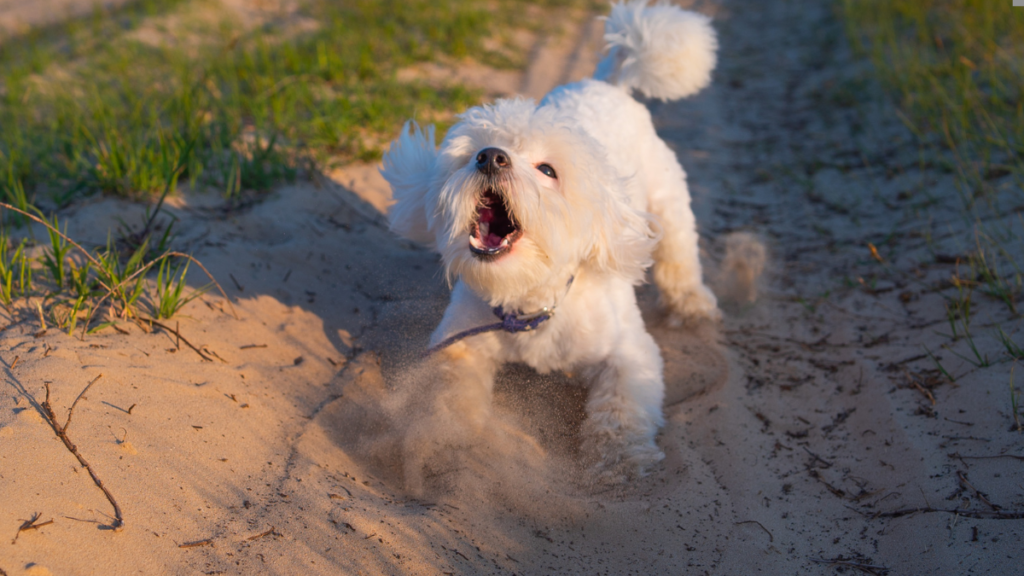
Life would be easier if dogs would just listen.But dogs can’t listen when they are scared, stressed, overwhelmed, or overstimulated.Trying to train behavior problems away with force or intimidation may feel like it works in the moment.But a quick fix is not the same thing as real change.Your dog is behaving this way for a reason. His reasons just aren’t very good ones.
So why don’t corrections work?Because punishment may stop behavior temporarily, but it does not address the cause. Below, we’ll dig into exactly why corrections don’t fix dog behavior problems—and what does.One important note before we begin: Dogs cannot be labeled as “stubborn” or “strong-willed.” Dogs with behavior problems are experiencing emotions they don’t know how to communicate or manage—any more than we would if we suddenly found ourselves thrust into their body without explanation.
Does that mean behavior problems are impossible to fix?
Reasons Why Corrections Fail
What Do “Corrections” Mean?
For the purposes of this article, when we say corrections, we are referring to consequences for unwanted behavior that are scary, painful, or otherwise unpleasant for the dog. These can include:
-
Yelling or verbal punishment
-
Physical punishment
-
Sprays or sudden noises
-
Devices that cause pain
-
Pressure-based tools
-
Time-outs used as punishment
The word correct implies immediate cessation of unwanted behavior.
In reality, dog behavior doesn’t change that easily.
There are many reasons punishment doesn’t fix dog behavior problems.
Here’s why.

1. Dog Behavior Problems Are Symptoms of a Deeper Issue
If your dog could talk, he would tell you why he’s doing what he’s doing.
All behavior is communication.
When your dog misbehaves, he’s communicating that he’s scared, bored, confused, stressed, overstimulated, frustrated, or has another unmet need.
To humans, barking, jumping, chewing inappropriate items, pulling on leash, growling, or rushing through doors can seem like intentionally naughty behavior. But dogs are not trying to drive us crazy.
Until we understand why your dog is behaving a certain way—and meet his underlying needs—unwanted behavior is likely to continue.
If you don’t teach your dog what to do instead, yelling and punishment may quiet him when you’re present to correct him.
But he’s likely to continue the behavior—or replace it with a new and possibly worse one.
Force, intimidation, and scare tactics may control behavior.
But they don’t fix it.
2. Punishment Suppresses Signals Instead of Addressing Emotions
If your dog growls when you approach his food bowl, yelling at him for growling doesn’t teach him that your presence is safe.
It teaches him not to growl.
You may be able to get closer without hearing a warning—but the underlying fear remains.
That’s how dogs end up snapping or biting “without warning.”
The emotion driving the behavior was never addressed.
The same applies to leash pulling, reactivity, or fear-based behaviors. Yelling or jerking the leash doesn’t teach calm walking—it only teaches the dog to suppress behavior when you’re nearby.
Fearful, reactive, and abused dogs are especially vulnerable because punishment removes their ability to communicate discomfort safely.
When you punish fear, frustration, or stress-driven behavior, you disable communication instead of improving it.
Training should always improve communication between you and your dog.
Punishment damages it.
3. Punishment Increases Fear and Stress
Punishment doesn’t just stop behavior—it increases stress.
Anything your dog finds uncomfortable or scary counts as punishment.
Stress inhibits learning.
Think about trying to concentrate on something important while you feel threatened or uncomfortable. It’s nearly impossible.
Dogs learn best when they feel safe and confident.
Fear and stress raise cortisol levels, which reduces learning, memory, and emotional regulation.
So when you punish your dog during training, you actually reduce their ability to learn and retain what you’re trying to teach.
Training should be enjoyable and engaging.
Fear motivates dogs to shut down or react—not to learn.

4. Corrections Don’t Teach Dogs What You Want
Stopping a behavior does not teach an alternative.
Your dog isn’t going to magically know what to do just because you scold him for jumping or chewing the wrong item.
If you stop the behavior you dislike without teaching a replacement behavior, your dog will still do something—and you probably won’t like that either.
Teaching what you want is just as important as discouraging what you don’t.
5. Dogs Learn Through Association, Not Morality
Dogs don’t understand right and wrong the way humans do.
They learn through associations.
If your dog growls at strangers and you yell every time someone enters the yard, your dog may associate strangers with punishment.
Now he’s afraid of people—and you.
Instead of reducing fear, punishment intensifies it.
When scary things are paired with punishment, dogs learn that the world is even less safe.
That’s why punishment often makes fear-based behaviors worse.

6. Dog Behavior Doesn’t Happen in a Vacuum
Look at when and where your dog’s behavior problems occur.
Does your dog behave well outside but poorly at home?
Does he beg while you cook but ignore plates at the table?
Is he fearful indoors but confident on walks?
Behavior is heavily influenced by environment.
If your dog only misbehaves in certain settings, the environment—not the dog—may be the problem.
Is your dog bored? Under-exercised? Overstimulated? Confused by inconsistent rules?
Behavior often improves when the environment improves.
Conclusion
Modern dog training has evolved beyond dominance myths and punishment-based obedience.
At its core, training is communication.
You cannot build a healthy relationship with your dog based on fear and intimidation. Any behavior change achieved that way is fragile and will break down under stress.
Effective training builds trust and understanding.
That doesn’t mean letting your dog do whatever he wants.
It means understanding how dogs learn, what their behavior communicates, and how to guide them through mistakes.
Save pin for later

- Dog Nutrition Guide for Better Health and Energy - May 23, 2026
- How to Keep Your Cat Healthy and Active at Home - May 17, 2026
- Dog Health Tips for Indoor and Apartment Living - May 17, 2026