Have you ever noticed your cat gently tapping their paw—or even a litter clump—into their water bowl before drinking? Maybe they splash water everywhere and still don’t drink.
We know how you feel.
Cat owners wonder about—and joke about—their pets’ unique habits all the time. While behaviorists and veterinarians often approach pet behavior from a clinical perspective, we prefer learning why cats act weird so we can see the world from their perspective and ensure they’re healthy both physically and emotionally.
1. Cats Follow Instinct, Not Etiquette
Indoor cats live pretty cushy lives—but their brains are still hardwired for survival. Many of their instincts and repetitive behaviors are shaped by millions of years of evolution.
Fresh water is scarce in the wild. Stagnant water can hide bacteria, parasites, or toxins. Moving water, on the other hand, usually means fresher, safer hydration.
Your cat may know their water bowl is safe—but their instincts may not.
Test dips can help your cat feel reassured that the water is clean and safe. This behavior isn’t meant to annoy you.
2. Cats Have Poor Depth Perception
This is the most common explanation for why cats paw at water bowls—and most people don’t realize it.
Simply put, cats struggle to see still water. Their eyes don’t easily register where water begins inside a bowl. If the bowl is clear, shallow, or placed in a dimly lit area, the water can appear almost invisible.
Asking your cat to stick their face into what looks like thin air isn’t very intuitive—so they tap the water with their paw to create movement.
Once the water ripples, it reflects light. That movement helps cats see where the water is. Once they can see it, they feel confident enough to drink.
For many cats, poor depth perception alone explains this behavior.
3. Whiskers Are Super Sensitive
Cat whiskers aren’t just decorative—or tools for poking you in the face. They help cats gauge distance and sense their surroundings.
When whiskers brush against both sides of a narrow or deep bowl, it can overstimulate the nerves and cause discomfort. This is often referred to as whisker stress or whisker fatigue.
To avoid this discomfort, some cats refuse to put their faces directly into bowls. Instead, they paw water out of the bowl and drink it from the floor, or bat at the water until it pools in one corner.
Try offering water in a wide, shallow bowl—many cats find this far more comfortable.
4. Cats Are Curious… and Lazy
Water is fascinating to cats.
It moves.
It reflects light.
It reacts when touched.
For some cats, pawing at water is simply play—especially for kittens and younger cats still learning how the world responds to them.
If the behavior is occasional, playful, and your cat is still drinking enough water, there’s no reason to stop it. Some cats just enjoy interacting with water.
5. Stress Can Cause Weird Behavior
Environmental changes can stress cats more than we realize. Moving furniture, new pets, unfamiliar people, loud noises, or schedule changes can all affect your cat—even if the stress isn’t obvious.
Stress contributes to many behaviors, including urine marking, scratching, aggression, hunting behaviors, and displacement behaviors like pawing at water.
If your cat suddenly starts pawing at water more than usual, pay attention to their overall mood and behavior. Contact a veterinarian if you notice additional changes in appetite, energy, or habits.
6. Did You Put the Water Bowl in the Worst Spot Possible?
Believe it or not, cats dislike drinking water near their food bowl or litter box. In the wild, water sources near prey or waste are often contaminated.
That instinct hasn’t disappeared—even if your cat loves their bowl.
If your cat tests the water but avoids drinking, try moving the bowl to a quiet area away from food and litter. Offering multiple water bowls throughout your home also gives cats the freedom to choose where they feel safest drinking.
7. The Bowl Material Matters More Than You Think
Water bowls come in plastic, metal, ceramic, and glass—and cats can have strong preferences.
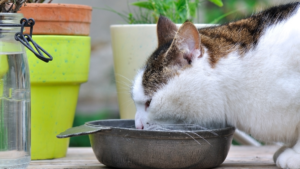
Plastic bowls can retain odors and bacteria even after washing. Metal bowls may reflect light in confusing ways. Glass bowls can break and cause injury.
Ceramic or stainless-steel bowls are usually the safest and most widely accepted choices. Wide, shallow bowls are especially helpful for cats with whisker sensitivity.
8. Cats Can Tell When Their Water Isn’t Fresh
If you’ve ever noticed dust, hair, or food particles floating in water that’s been sitting out, your cat has noticed too.
Cats may paw at water to test its freshness—or avoid drinking entirely if it seems stale. Water should be changed daily for both hygiene and hydration.
Why Cats Paw at Their Water Bowls Instead of Drinking
Sometimes pawing doesn’t lead to drinking at all.
Your cat may not trust the water source, want the bowl moved, or simply be bored. Stress can also cause both excessive pawing and water avoidance.
Ultimately, you know your cat best. Understanding this behavior takes observation and familiarity with your cat’s normal routines.
Could Your Cat’s Pawing Be a Sign of Something Serious?
Occasional pawing is normal—but excessive behavior paired with changes in drinking habits can signal a problem.
Conditions like kidney disease, diabetes, and dental pain can increase thirst. Stress and illness may also cause cats to drink less.
Contact a veterinarian if you notice:
-
Increased water pawing or “playing”
-
Significant changes in water intake
-
Weight loss or lethargy
-
Litter box changes
Behavior alone isn’t a diagnosis—but changes in behavior often signal changes in health.
How to Stop Cats From Pawing at Water Bowls (and When You Should)
If water spills are driving you crazy, there are gentle ways to reduce the behavior without suppressing instincts.
Change the Bowl
Use a wide, shallow bowl to reduce whisker discomfort.
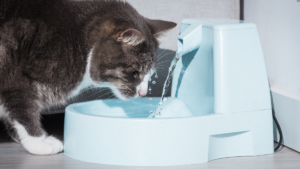
Try a Water Fountain
Many cats prefer running water and drink more from fountains.
Increase Visibility
Place bowls in well-lit areas or use brightly colored bowls.
Offer Multiple Water Stations
Cats appreciate choice and control.
Change Water Daily
Fresh, clean water encourages normal drinking.
When Pawing at Water Bowls Is Perfectly Normal
Sometimes, the best solution is acceptance.
If your cat paws once or twice, drinks normally, and seems relaxed, there’s no need to intervene. Quirky behaviors are part of being a cat.
You can train cats to stop—but that doesn’t always mean you should.
Final Thoughts
Cats experience the world differently than humans do. What looks strange to us often makes perfect sense to them.
Whether driven by instinct, sensory perception, stress, or curiosity, pawing at water bowls is usually normal—and manageable with small changes.
Every cat has odd habits. Once you understand the “why,” you can decide whether change is needed or whether it’s simply part of who your cat is.
The next time you catch your cat tip-pawing at their water bowl, you’ll know exactly why.
Save pin for later

- Dog Nutrition Guide for Better Health and Energy - May 23, 2026
- How to Keep Your Cat Healthy and Active at Home - May 17, 2026
- Dog Health Tips for Indoor and Apartment Living - May 17, 2026