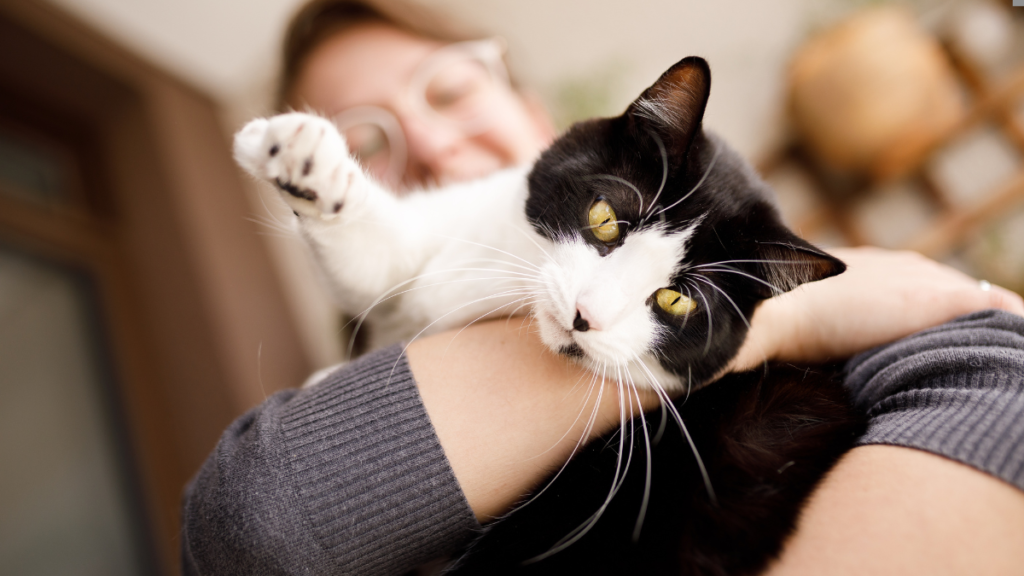
Learning how to manage high-energy cats indoors doesn’t have to send you into frustration mode. When your indoor cat runs around like a furry tornado 24/7—whether it’s zoomies at midnight or troublemaking during dinner—it can test anyone’s patience.The first thing you need to know is that your cat isn’t being bad on purpose. High-energy behavior is caused by excess energy that needs to be used up in some way.
High-energy cats are intelligent cats. They have tons of mental and physical capacity just waiting to be tapped.
Because cats don’t instinctively know how to redirect that energy indoors, they fill their time with whatever they can… like knocking your precious knickknacks off shelves and swatting your ankles until you pay attention to them.
Why Do Some Cats Have So Much Energy?
It may not seem like it when your cat is zooming around chasing toys at 3 a.m., but every cat has the same potential for energy.
Some cats simply learn how to use it more efficiently indoors.
Age
Kittens and younger cats have high energy because they’re still growing into their physical and mental prime.
Don’t be surprised if your kitten continues to show high energy levels into adulthood. Many cats reach their peak energy around two years old and maintain high levels well into maturity.
Toy breeds, or cats bred for increased athleticism, tend to have more energy than the average cat.
You might also have an indoor-outdoor–driven kitty who is motivated by the desire to hunt.
Indoor cats often appear more energetic than outdoor cats—not because they’re inherently more hyper, but because they don’t spend time roaming outside doing what cats instinctively love to do:
Catch.
Eat.
Sleep.
Playing, hunting, and exploring burn through massive amounts of energy and keep cats mentally engaged.
Indoor cats have limited opportunities to use that energy, so it builds up—eventually resulting in your living room looking like a minefield.
Under-Stimulation
Lastly, cat personality plays a role in energy levels.
Are they bored?
Do they crave constant attention?
Are they allowed to roam freely indoors, or do they feel cooped up?
While every cat has boundless energy potential, some personalities channel it differently than others.
What Does High Energy Look Like Indoors?
The antics of a high-energy cat can vary.
Your cat may suddenly sprint around the house and then leap onto you for cuddles. Or they may spend all day staring at a blank wall until they suddenly lose their mind.
Common signs of high-energy cats include:
-
Hyper nighttime activity
-
Excessive meowing
-
Knocking things off counters
-
Swatting at your feet
-
Scratching furniture
-
Shadow chasing
-
Stubbornness or refusal to follow cues
-
Difficulty relaxing after play
-
Attention-seeking behavior
Keep in mind: high energy isn’t your cat being naughty. It’s your cat being bored.

How to Manage High-Energy Cats Indoors: Establish a Routine
If there’s one thing cats love, it’s consistency.
You may not realize it when your cat is sprinting through the house sending papers flying, but cats are creatures of habit.
Providing a consistent schedule your cat can rely on every day eliminates a large portion of anxiety-driven behavior.
Daily Play Sessions Are a MUST
We covered this earlier, but playing with your cat does more than burn energy.
It teaches patience and reduces their need to constantly demand attention.
Play should mimic your cat’s natural hunting behavior.
The best way to do this? Let your cat win.
Here’s the ideal play sequence to follow:
Stalk → Chase → Capture → Eat → Rest
After playtime, offer your cat a small meal or treat. For cats, play is serious business.
The food replaces the “reward” they would naturally receive after a successful hunt.
Routine Play Sessions
Plan for two to three play sessions each day.
Don’t skimp on playtime—each session should last at least 10 minutes of high-energy engagement.
Try to play around the same times daily. Evening play sessions are especially helpful because you can burn off energy, feed your cat afterward, and help them wind down for the night.
Exercise More Than Their Body
Physical play is important, but mental stimulation matters just as much.
Food puzzles, hidden toys, and hunting games will tire your cat out nearly as effectively as climbing and running.
Rotate Toys and Update the Environment
Buying new toys occasionally helps, but you don’t need to spend a fortune.
Cardboard boxes, paper bags, and rotating toys every few days can provide hours of enrichment.

Enrich Your Cat’s Environment
It’s not just about playtime—high-energy cats need stimulating environments.
They should have places to climb, explore, and observe from safe heights.
Cat trees, wall shelves, and window seats are excellent options.
You can also create an “exploration box” filled with toys, treats, soft blankets, and catnip. Watching your cat search for hidden items provides mental stimulation and entertainment.
Cats get bored with monotony just like humans do.
How to Prevent Midnight Zoomies and Nighttime Energy
Cats are predatory hunters by nature. They’re most active at dawn and dusk.
Even indoor cats retain this instinct, which is why nighttime energy is so common.
Work With Your Cat’s Natural Schedule
If possible, schedule playtime around early morning and evening hours.
After vigorous play, feed your cat. This helps them associate play with food and naturally wind down afterward.
A key part of reinforcing routine is resisting the urge to engage during nighttime chaos.
Avoid giving attention during late-night zoomies. Wait until your cat calms down before offering interaction.
High Energy Can Indicate Anxiety or Stress
If excess energy doesn’t improve with enrichment, consider emotional factors.
Has there been a change in the household?
New pets?
New people?
Environmental stress?
Make sure your cat has quiet, safe spaces where they can retreat when overwhelmed.
Consider a Second Cat
Surprisingly, some high-energy cats benefit from having a compatible playmate.
Cats with similar energy levels can entertain each other, reducing boredom and reliance on humans for constant stimulation.
Multi-cat households often see improved behavior once cats have appropriate companionship.
Still Too Energetic?
If you’ve tried everything and your cat still seems unusually hyper, consult your veterinarian.
Medical issues can sometimes cause restlessness or hyperactivity, and it’s important to rule those out.
Long-Term: Managing High-Energy Cats as They Age
High-energy cats need exercise, play, and mental stimulation—but energy levels naturally decrease with age.
Don’t expect your kitten to maintain the same intensity forever.
As cats mature, they naturally slow down and require less stimulation.
Until then, consistent enrichment will keep your cat balanced and content.
Summary
Trying to figure out how to manage high-energy cats indoors isn’t always easy—but it doesn’t have to feel like a battle.
Think of your cat like a toddler with too much energy and not enough structure.
The key isn’t restricting activity—it’s providing healthy outlets.
Play with them.
Let them climb.
Offer hiding places.
Feed them properly.
Once you recognize that high energy comes from boredom and unmet needs, you’ll stop seeing your cat as your nemesis and start seeing them for what they truly are: a curious kitten who still thinks they rule the house.
Share your tips or experiences with high-energy indoor cats in the comments below.
Save pin for later


- Dog Nutrition Guide for Better Health and Energy - May 23, 2026
- How to Keep Your Cat Healthy and Active at Home - May 17, 2026
- Dog Health Tips for Indoor and Apartment Living - May 17, 2026