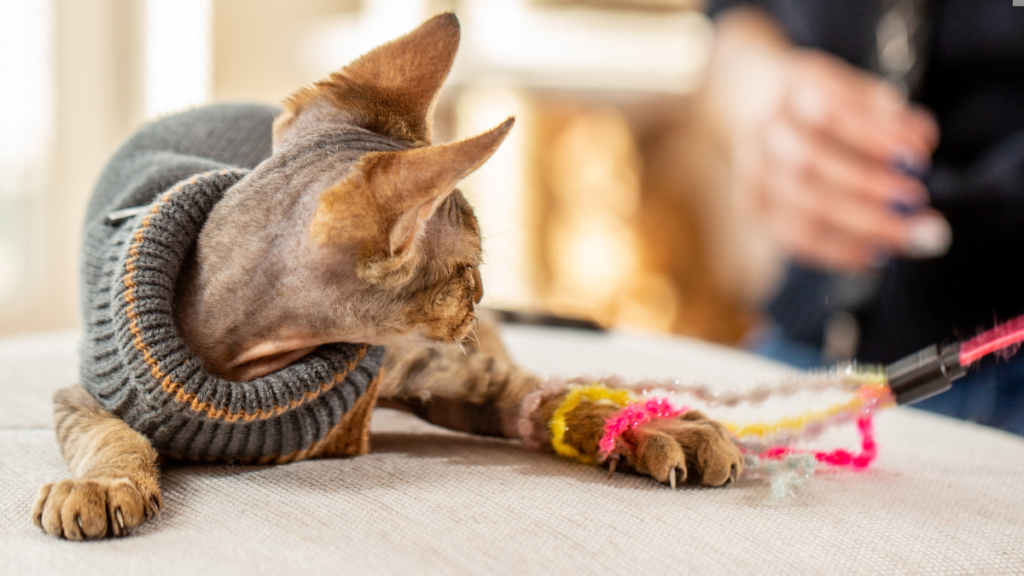
You buy your cat the latest and greatest toy. They go crazy over it for a day or two. And then… nothing.You leave it sitting there on the floor, and your cat instead watches a dust mote on the wall.If you’ve ever wondered, “Why does my cat not play with toys?” you’re not alone.
Toy boredom is one of the most common pet peeves of cat owners everywhere. It feels personal—like your cat is somehow rejecting you.
Why Your Cat Loves Toys (& Why They Suddenly Hate Them)
Playtime Is Hunting Time
Cats spend a significant part of their day hunting.
In the wild, hunting isn’t a choice—it’s how they find food and survive. So they practice by playing.
When you throw that mouse on a string across the room, your cat isn’t just playing with a toy. They’re imagining the mouse is prey.
Hunting involves stalking, chasing, pouncing, and capturing. Your cat hits repeat on these behaviors all day long.
Every toy represents an opportunity to practice.
So what does that have to do with losing interest in toys?
Your Cat Has Standards
When cats play, they expect a toy to…
-
Move erratically
-
Attempt to escape
-
React when poked or pawed
-
Feel alive
Toys rarely live up to that expectation for long.
The mouse on a string starts moving in exactly the same pattern every time. The crinkly ball doesn’t change behavior no matter what you do.
Pretty soon, your cat realizes there’s no real hunt happening. And without that hunting instinct triggered, they just stop playing.
This is the number one reason people ask, “Why does my cat not play with toys anymore?”
All Kittens Love Novelty
If you haven’t noticed, cats love new things.
Why does my cat keep playing with the same toy all day? Because everything else isn’t new.
New things are exciting. New things could be prey. New things must be explored.
At first, every toy is exciting because your cat has never seen it before.
They don’t know yet:
-
How it moves
-
How it feels
-
How it smells
-
How it slides across your floor
-
How it disappears into that dark corner
After a while, playing with toys becomes boring because there are no surprises.
Until You Can Surprise Your Cat Again, Toys Become Background
Picture this.
You’re watching TV and there’s a dumbbell lying on the floor. Every time you watch TV, that dumbbell is there.
Pretty soon, you won’t even notice it.
That’s how cats feel about toys that never move on their own.
Dormant toys may as well not exist.
When you’re playing with your cat, you can:
-
Make the toy hide
-
Make the toy run away
-
Suddenly stop it
-
Make it act like real prey
Until you do that, some toys may lose your cat’s interest forever.
Maybe Your Cat Doesn’t Feel Safe
Believe it or not, sometimes cats stop playing because they’re scared.
Stress kills cat playtime. Loud noises, new pets and people, moving furniture, and changes in your schedule can all spook your cat.
If your cat doesn’t feel safe, they don’t feel like playing.
If your cat suddenly stops playing, look around.
-
Are there new sounds?
-
New smells?
-
New stressors in your home?
Until you can calm your cat, playing may be the last thing on their mind.
Senior Cats Don’t Play the Same
Cats change as they age.
Small kittens play awkwardly with everything in sight. They don’t know any better.
As they get older, they learn what they like.
And older cats don’t play like kittens.
Age Changes Cats and Their Relationship With Toys
Kitten
-
Wild energy
-
Running and jumping
-
Playing all the time
Adult
-
Explore new toys
-
Play frequently
-
Decide quickly what they like and what they don’t
Senior
-
Slower, more gentle play
-
Lower energy overall
-
May not like fast-moving toys as much
That means your young adult cat may not care about the dangler toy your kitten went nuts for.
It doesn’t mean your cat is bored with toys. It just means they have different preferences.
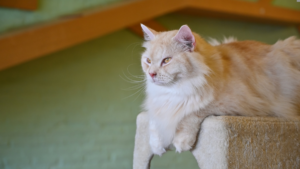
Playing With Too Many Toys Can Be Toxic
Here’s a fun fact:
Too many toys can actually decrease your cat’s interest in playing.
How can that be possible?
It’s simple. If toys are always available, they become décor.
Just like you wouldn’t care if another sock fell on the floor, your cat won’t care about another toy.
Solution: Rotate your cat’s toys.
Keep most toys put away. Only leave two or three out at a time.
Every few days, switch them up. Pull out the toys that have been “retired” and act like they’re new.
Cat Toy Tip: Rotate Your Toys
Playing with the same toys over and over can be disastrous.
Rotating toys keeps things fresh without buying more stuff.
But Wait, There’s More
Some cats love:
-
Chasing
-
Jumping
-
Big movements
Other cats prefer:
-
Stalking
-
Observing
-
Slow, sneaky movements
This is where many cat parents go wrong.
We try to play with cats how we think they should play. But we forget to play how they want to play.
Watch your cat when they play.
Do they:
-
Stalk and stare?
-
Keep low to the ground?
-
Leap into the air?
-
Sit and watch for minutes before making a move?
Once you discover your cat’s hunting style, you can tailor play to their preferences.
Not all toys need to be flung around. Wand toys you control are perfect for cats who like to stalk.
Slowly move the toy across the ground. Pause it behind objects. Let your cat hunt.
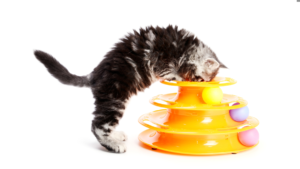
The Kill Is the Reward
Hey, we’re not animals. We don’t always let our cats capture their prey.
And most of the time, that’s okay.
But your cat loves completing that hunting action.
If your cat spends 20 minutes stalking and chasing, let them capture the toy at the end.
Let them:
-
Grab it
-
Nibble on it
-
Hold it in their mouth
You can even toss them a treat after they “kill” it.
Stalk → Chase → Catch → “Eat” = Completed Cycle
Give your cat that feeling of fulfillment, and they’ll be eager to play again.
Health Issues Can Cause Toy Apathy
One last thing.
If your cat suddenly stops playing, it could be a sign they’re not feeling well.
Dramatic changes in behavior are often linked to pain or discomfort.
Does your cat:
-
Refuse to play at all?
-
Sleep more than usual?
-
Eat less?
-
Avoid you or other pets?
These are signs it may be time to visit the vet.
Final Thoughts
When your cat ignores a toy you were excited to give them, it’s easy to feel disappointed. But remember—your cat isn’t being ungrateful or stubborn. They’re simply responding to the world the way nature designed them to.
Cats don’t play for entertainment the way humans do. They play to hunt, to explore, and to feel alive. When toys stop behaving like prey, when stress creeps in, or when their needs change with age, interest fades. That loss of interest is communication, not rejection.
The good news? You don’t need more toys—you need better play.
Save pin for later

- Dog Nutrition Guide for Better Health and Energy - May 23, 2026
- How to Keep Your Cat Healthy and Active at Home - May 17, 2026
- Dog Health Tips for Indoor and Apartment Living - May 17, 2026