
If you’ve ever been walking your dog or entertaining guests in your home and your dog suddenly starts loudly barking at someone you don’t recognize, you’ve likely wondered Why Dogs Bark at Strangers and what they could possibly be thinking.
Dog owners sometimes find barking stressful or embarrassing, but dogs don’t bark just to spite you. They bark because it is their natural form of communication.Try looking at barking less as “bad behavior” and more as a reaction your dog is trying to communicate.
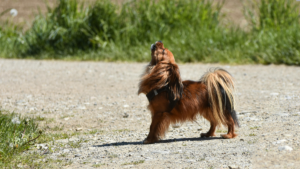
Why Does My Dog Bark at Strangers? Your Dog’s Unique Bark, Explained
Oftentimes, dogs bark for one reason—or a combination of reasons. Understanding why your dog is behaving a certain way is half the battle. Below, we cover every reason a dog might bark at someone unfamiliar.
We also provide solutions that will allow you to appropriately react to your dog’s barking in the moment. Remember, dogs don’t bark at strangers to spite you. They do it because it comes naturally to them.
Knowing how to properly react to excessive barking is part of creating an environment your pup feels comfortable in.
Why Do Dogs Bark? It’s How They Communicate
Dogs can’t talk, but they are excellent communicators. They bark, growl, whine, and use their entire bodies to express how they are feeling. They aren’t barking at strangers randomly or without reason.
Domestic dogs have worked alongside humans for thousands of years as protectors, hunters, and companions. Barking became an instinctual way to alert their human friends to danger, express excitement, or scare something off.
That instinct doesn’t go away. Regardless of how mild-mannered or well-trained your dog is, certain triggers will cause them to bark.
Learn to view barking as a form of communication before it turns into a behavioral issue that needs to be managed.
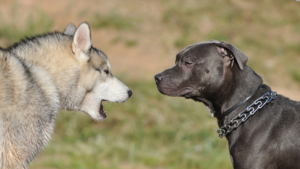
Dogs Bark at Strangers to Protect Their Territory
Territorial Behavior
Dogs view their home, yard, and sometimes even their daily walking route as “theirs.” When someone unfamiliar approaches their territory, dogs bark to say, “Hey, I see you,” or “This person is being watched.”
Territorial behavior should be taken seriously—even if your dog is small. Size doesn’t matter when it comes to a dog feeling the need to guard their space.
Territorial barking usually has a deep, ominous tone. Dogs will often stand near their threshold, street sign, or mailbox and bark repeatedly until the stranger leaves.
The sound can be frightening, but your dog is simply doing what comes naturally.
Dogs Bark at Strangers Because They Feel Afraid
Fear
Just like humans, barking isn’t always a sign of confidence. Sometimes dogs bark at strangers because they feel afraid or unsure of what’s happening.
People can look, smell, and move differently than what your dog is used to. To a sensitive dog, a new person approaching can feel scary.
Dogs who weren’t exposed to many people during puppyhood are more prone to reacting this way. Without proper early socialization, the world may feel unpredictable, causing your dog to bark when they feel uneasy.
Fearful barking is usually accompanied by body language such as:
-
Cowering or leaning away
-
Tail tucked between the legs
-
Ears pinned back
-
Backing away while continuing to bark
If your dog is barking out of fear, they are not being aggressive. They are trying to create space between themselves and something they don’t understand.

Some Dogs Bark at Strangers to Protect Their Owners
Protection
Similar to territorial barking, some dogs bark at strangers because they feel the need to protect their owner.
If your dog has a strong attachment to you, they may become noticeably protective when someone unfamiliar comes near.
Your dog may perceive anyone approaching you as a threat—even if the person is being friendly.
This behavior commonly occurs when you are sitting down, holding something valuable (such as a baby), or feeling stressed yourself.
Your pup isn’t necessarily being loyal. While it may feel that way, reinforcing a constant “protective role” can lead to behavioral issues over time.
Your dog wants everyone to feel safe, but they shouldn’t feel responsible for making that happen.
Excitement
On the opposite end of the spectrum, some dogs bark at strangers simply because they’re excited. Your dog may love people so much that they don’t know how to express it properly.
Excited barking tends to be higher-pitched and is often paired with tail wagging, jumping, spinning, or squealing with excitement.
They’re not scared, needy, or stressed—your dog just really loves meeting new people.

Dogs Bark at Strangers Because They Think It Works
Learned Behavior
Just because you don’t realize you’re teaching your dog something doesn’t mean they aren’t learning.
If your dog repeatedly barks at strangers and the stranger walks away, your dog may start to think, “My barking solved that.”
Dogs quickly learn that barking makes unfamiliar people leave. This is one reason excessive barking can be so difficult to manage.
The following actions can actually encourage more barking:
-
Yelling (dogs may think you’re joining in)
-
Petting your dog to calm them while they’re barking
-
Picking them up as soon as they start barking
Managing your reactions is essential, even though it can be difficult in the moment.
Some Dogs Bark More Due to Genetics
Breed & Genetics
It should come as no surprise that some dog breeds are naturally more vocal than others.
Certain dogs were bred to bark at strangers in order to:
-
Alert (guarding breeds)
-
Control movement (herding breeds)
-
Seek attention (companion breeds)
Knowing what your dog was bred to do can help you better understand their behavior.
This doesn’t mean barking can’t be managed—it simply means expectations should be realistic.

Past Experiences Can Influence Barking
Trauma
Just like humans, dogs can be deeply affected by negative experiences.
If your dog has had a frightening or traumatic encounter with a stranger, they may associate unfamiliar people with danger. Barking becomes a way to protect themselves and create distance.
Trauma can stay with dogs for life. If your dog shows fear toward strangers, patience and understanding are key.
Look Beyond the Bark: Body Language Matters
Dogs don’t use their voices randomly. All the reasons above can be better understood by observing your dog’s body language.
Notice their posture. Are they stiff or relaxed? Is their tail tucked or wagging? Are they shaking or standing tall?
Understanding canine body language helps determine whether your dog is barking out of fear, excitement, or instinct.
Why Does My Dog Bark at Strangers? What You Can Do to Help
Dogs bark at strangers because that’s what dogs do—it’s how they communicate.
However, constant barking can be stressful for everyone involved. Here are a few ways to help:
1. Socialization
Expose your dog to new people gradually and at a pace they’re comfortable with. Reward calm behavior.
2. Stay Calm
Dogs feed off human energy. Staying calm helps reassure them.
3. Train Alternative Behaviors
Teach your dog to sit, make eye contact, or go to their mat when someone approaches instead of barking.
4. Don’t Punish Barking
Punishment increases fear and anxiety, often making barking worse.
5. Seek Professional Help if Needed
If barking is intense or fear-based, a professional trainer can help.
When to Be Concerned
Excessive barking can also signal anxiety or boredom. Dogs need exercise, enrichment, and structure.
Mental stimulation, training, and physical activity can significantly reduce reactive barking.
Conclusion
Dogs bark at strangers because dogs bark. Period.
They bark to communicate, protect themselves, scare off threats, and express excitement. Your dog isn’t trying to be difficult or test your patience.
With patience, understanding, and consistency, you can help your dog feel more comfortable around unfamiliar people—and strengthen your bond in the process.
Save pin for later


- Dog Nutrition Guide for Better Health and Energy - May 23, 2026
- How to Keep Your Cat Healthy and Active at Home - May 17, 2026
- Dog Health Tips for Indoor and Apartment Living - May 17, 2026