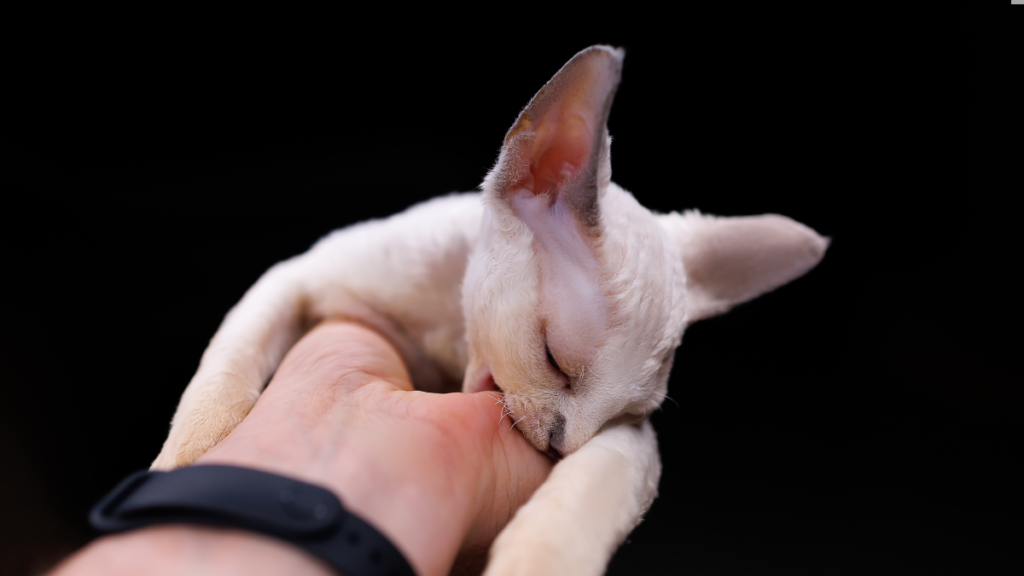
You’re relaxing with your cat. They’re purring, rubbing up against you… it’s perfect.Until suddenly, you feel teeth sink into your hand. Why Cats Bite When You Pet Them?! Wasn’t it just seconds ago that you were petting your kitty happily?
Being bitten by a cat during petting can feel hurtful and even punishing. But it’s important to know that it’s normal, and more than anything, your cat is trying to communicate.Let’s talk about why cats bite when petted and how you can build trust with your cat so you both can enjoy snuggle time worry-free.
Communication Styles Are Different for Cats
Humans communicate verbally by saying when they don’t like something or want it to stop:
“No, stop!” or “Okay, that’s enough petting, thanks.”
Cats do not communicate this way. They don’t tell you “No” or “That’s enough” with words.
Petting is normal, and your cat biting you during petting is your cat’s way of communicating. It is not out of anger or spite.
Dogs are much more tolerant of long bouts of physical contact than cats are. Be sure you’re not mistaking dog behavior for cat behavior.
Reasons Cats Bite When You Pet Them
1. Your Cat is Overstimulated
It feels good at first, but the more you pet your cat, the more their sensitive nervous system can become overwhelmed.
Cats have nerve endings all over their skin, which makes them extra sensitive to touch. Once petting stops feeling good and starts feeling irritating or uncomfortable, they will let you know.
They will bite you during petting to communicate, “That’s enough.”
This is probably the most common reason behind Why Cats Bite When You Pet Them.

2. Petting-Induced Aggression
Petting-induced aggression and overstimulation often go hand-in-hand. When a cat is being petted, they may suddenly lash out and bite or scratch you mid-snuggle.
Why the sudden change in behavior? The “sudden” part is the tricky bit—they weren’t actually upset all of a sudden.
They were giving subtle warning signs that you likely didn’t notice. It’s not that your cat is mad at you—they’re just letting you know they’ve reached their limit.
3. You’re Petting a Sensitive or Painful Spot
Certain areas of a cat’s body are more sensitive:
-
The belly
-
The base of the tail
-
The lower back
-
Paws and legs
Petting these spots can actually hurt your cat if they have an underlying health issue like arthritis, tooth pain, or irritated skin.
Think of biting as a protective measure rather than bad behavior. Always get unusual behavior checked by your veterinarian if it seems new or escalated.
4. Loss of Control or Freedom
Petting your cat forces them to do something they may not want to do. They lose control. Even if you’re gentle and loving, your cat may not perceive it that way.
If your cat can’t walk away, they may bite to regain a sense of control.
Petting should be a two-way interaction—much like a conversation. If your cat wants to walk away, they should be able to. Otherwise, biting may become their way of saying, “Enough!”
5. Play vs. Aggression
Some cats don’t know the difference between being petted and being played with, especially if they learned improper boundaries as kittens.
Your hand petting your cat may be seen as prey, leading to playful bites as part of their hunting instincts.
This is more likely if your cat:
-
Was weaned too early
-
Was played with using hands instead of toys
-
Wasn’t properly socialized as a kitten
Play aggression isn’t true aggression, but it should still be redirected toward toys.
6. Fear or Anxiety
Fearful, anxious, or poorly socialized cats may bite when they feel stressed. Gentle petting can be the last straw.
Even small changes—like a new pet, visitor, or sound in the house—can make a cat uncomfortable with touch.
7. Learned Behavior
If your cat bites and you stop petting immediately, they learn that biting works.
Repeated often enough, they’ll continue this behavior whenever they’re overstimulated. It doesn’t mean your cat is “bad”—just that they’ve learned what gets results.

Signs Your Cat Will Bite During Petting
Cats almost always give warning signs before they bite. They might be subtle at first, but once you notice them, you’ll start picking up on the cues.
Watch for:
-
Tail flicking or swishing
-
Ears rotating sideways or lying flat
-
Rippling skin along their back
-
Sudden stillness or tensing of muscles
-
Dilated pupils
-
Turning their head toward your petting hand
If you notice one or more of these signs, stop petting and give your cat space. They don’t want to bite you—but they will if they need to.
How to Avoid Getting Bit by Your Cat
How you pet your cat can make all the difference. Follow these tips to master the art of petting:
Pet Your Cat Where They Like It
Most cats enjoy being petted:
-
On the cheeks
-
Under the chin
-
On the top of the head
-
At the base of the ears
These spots also allow your cat to subtly push into your hand if they want more petting. Plus, they contain scent glands that cats love!
Keep It Short
Avoid long petting sessions. Instead, offer several short sessions throughout the day.
Short sessions prevent overstimulation and biting, while helping your cat build trust.

Let Your Cat Come to You
If your cat jumps into your lap or rubs against you, they’re inviting petting. Always let your cat initiate contact.
Never Force Your Cat to Stay
Don’t pick up your cat or force them to stay on your lap. Always allow an easy escape route.
A cornered cat is more likely to bite than one who feels free to leave.
What to Do If Your Cat Bites You
If your cat bites:
-
Stay calm—don’t scream or shout.
-
Avoid punishment, which can increase fear and aggression.
-
Remove yourself if needed.
-
Wash the bite thoroughly with soap and water, as cat bites can easily become infected.
-
Observe patterns: when and where the bites occur.
Frequent or severe bites may require a veterinarian or certified animal behaviorist.
Kittens vs. Adult Cats
Kittens often bite because they haven’t yet learned proper boundaries. Redirect play to toys instead of hands.
Adult cats may bite due to pain or learned behavior. Pay attention to when and where your cat likes to be petted and adjust accordingly.
Is Biting During Petting Normal for All Breeds?
Yes. While some breeds are more tolerant of affection, any cat can bite if they feel the need to. Early life experiences and personality have a bigger impact than breed.
Why Won’t My Dog Bite Me When I Pet Him? Cats vs. Dogs
Dogs and cats are very different in how they enjoy physical contact. Dogs generally tolerate long periods of petting, while cats have shorter tolerance spans.
Don’t interpret your cat’s limits as being “mean” or “less loving” than dogs—they just have different ways of showing affection.
When to Consult a Vet or Animal Behaviorist
Consult a veterinarian if:
-
Biting is sudden or unexplained
-
Biting is severe or frequent
-
Your cat displays abnormal behavior outside of biting
Veterinarians can check for pain or health issues, while animal behaviorists can provide a plan tailored to your cat’s needs.
Want a Better Relationship With Your Cat?
Understanding Why Cats Bite When You Pet Them is the first step. You’re not trying to stop your cat from communicating—you’re learning to listen.
Once you tune into your cat’s needs, biting will decrease naturally. Respect and observation are key to building a strong, trusting bond.
Conclusion
Cat bites during petting can be perplexing, but they’re rarely personal. Once you understand the causes and notice signs of overstimulation, you’ll become a pro at kitty cuddle time.
Pay attention, respect boundaries, and your bond will grow stronger with every gentle swat or nip your cat gives you.
Save pin for later


- Dog Nutrition Guide for Better Health and Energy - May 23, 2026
- How to Keep Your Cat Healthy and Active at Home - May 17, 2026
- Dog Health Tips for Indoor and Apartment Living - May 17, 2026