Did You Know Rabbits Need Mental Stimulation? It is a common misconception that rabbits are quiet, low-maintenance pets that are content as long as they have food, water, and a clean cage.
While those things are important, they are only the beginning of what your rabbit needs to truly thrive. Rabbits are intelligent and curious creatures that require mental stimulation in addition to food, shelter, and medical care. Without a healthy amount of mental exercise, your rabbit may become bored, stressed, or develop other health or behavioral issues.
Understanding how to keep your rabbit mentally stimulated is critical to making them happy, healthy, and well-adjusted pets.
Understanding the Rabbit Mind
Rabbits are intelligent animals that face many challenges in the wild, which keep their minds active and engaged. Wild rabbits must forage for food, avoid predators, navigate complex burrows and tunnels, and communicate with other rabbits using body language and subtle signals. This combination of mental and physical activity occupies a rabbit’s mind throughout the day.
Domestic rabbits still possess these instincts and intelligence but no longer face the same challenges in a home environment. When their minds are not adequately occupied, they can become bored or frustrated. Mental stimulation helps mimic the type of mental activity wild rabbits experience, providing positive outlets for your rabbit’s intelligence and natural behaviors.
Are Rabbits Smart?
Yes, rabbits are smart! Rabbits are capable of:
-
Learning their names
-
Responding to voice commands
-
Using a litter box
-
Solving simple puzzles
-
Recognizing routines and people
In fact, some rabbits can learn tricks such as spinning in circles, jumping through hoops, or ringing a bell. This is not uncommon behavior in domestic rabbits and is one of the reasons rabbits need challenging enrichment rather than boring, repetitive lives.
Why Is Mental Stimulation So Important for Rabbits?
Mental stimulation is not a luxury for rabbits; it is a necessity. Just as humans and other intelligent animals need mental challenges, rabbits require mental exercise to stay happy and emotionally balanced.
Mental stimulation helps prevent boredom and depression. A rabbit that is mentally engaged through games, toys, and enrichment activities is less likely to become bored. Boredom can lead to depression-like symptoms, such as lethargy, loss of appetite, reduced interest in interaction, and hiding more than usual.
Mental enrichment can also reduce destructive chewing and other unwanted behaviors. Chewing is a natural rabbit behavior and helps keep their teeth healthy, but bored rabbits often chew excessively on furniture, baseboards, carpets, and wires.
Finally, mental stimulation supports physical health and fitness. Mentally stimulated rabbits tend to be more active, moving around throughout the day, which helps support healthy digestion. Mental activity also plays a role in preventing obesity and maintaining proper gastrointestinal function.
Signs Your Rabbit Is Bored
Signs that your rabbit may need more mental stimulation include:
-
Repetitive behaviors such as pacing or bar chewing
-
Aggression or sudden mood changes
-
Excessive digging in the litter box or enclosure
-
Over-grooming or fur pulling
-
Sleeping excessively during the day
If you notice these behaviors or other unusual changes, it’s time to increase your rabbit’s mental enrichment.
Types of Mental Stimulation for Rabbits
Mental enrichment for rabbits can range from simple toys to more complex activities like training and trick learning. Any activity that challenges your rabbit’s mind provides valuable mental stimulation. Below are common and effective enrichment options.

Enrichment Toys
Toys are an easy and effective way to provide mental enrichment. Good rabbit toys encourage problem-solving, chewing, or interactive play.
Try offering:
-
Wooden chew toys
-
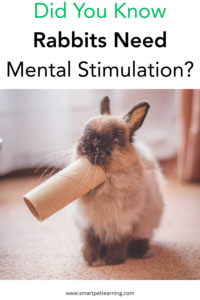
Cardboard boxes and tubes
-
Treat-dispensing balls
-
Stacking cups
-
Willow balls or baskets
Rotate toys every few days to keep them fresh and interesting. Rabbits may lose interest if the same toys are available all the time.
Foraging Activities
In the wild, rabbits spend much of their day searching for food. You can recreate this natural behavior with foraging games.
Easy foraging activities include:
-
Hiding small treats in hay
-
Scattering pellets on the floor or in a cardboard box instead of using a bowl
-
Placing herbs or hay inside cardboard boxes
-
Putting food in a paper bag with small holes cut into it
Foraging provides mental challenges and slows down eating, which supports healthy digestion.
Environmental Enrichment
A rabbit’s environment plays a major role in their mental health and overall well-being.
Rabbit-Friendly Space
Rabbits love to explore and need adequate space to do so. Rabbits that live primarily in enclosures should have daily free-roam time in a rabbit-proofed area to exercise and investigate new sights and smells.
Consider adding:
-
Tunnels and hideouts
-
Platforms or low ramps
-
Digging boxes filled with shredded paper or soil
-
Multiple hiding spots
Rearranging or rotating these items every few days helps spark curiosity and exploration.
The Importance of Novelty
Rabbits enjoy novelty and benefit from small changes in their environment. Introducing new smells, textures, or objects keeps them mentally engaged. You don’t need to change everything daily—simple, regular updates can make a big difference.
Social Interaction
Social interaction is another important form of mental enrichment. Rabbits are social animals and enjoy spending time with people and other rabbits.
Human interaction is a powerful mental stimulant. Spend quality time with your rabbit each day by talking to them, petting them, and engaging in simple games.
Try activities such as:
-
Teaching simple tricks
-
Creating gentle obstacle courses
-
Clicker training
-
Playing with interactive toys
Sessions don’t need to be long—just 5 to 10 minutes a day can be very beneficial.
Rabbit Companionship
Bonding your rabbit with a compatible partner provides constant mental and social enrichment. Rabbits groom, play, and communicate with one another, which greatly enhances their quality of life. While bonding can take time and patience, it is often well worth the effort.
Mental Stimulation and Routine
Rabbits are creatures of habit and appreciate predictable routines, but they also thrive on variety. The goal is to maintain consistency while incorporating new and stimulating activities.
Balancing Routine and Novelty
Feed your rabbit at the same times each day, but vary how and where food is presented. Offer free-roam time consistently, while introducing new objects or challenges. This balance helps rabbits feel secure while remaining mentally engaged.
The Long-Term Benefits of Mental Stimulation
Providing regular mental enrichment offers lasting benefits for your rabbit’s health and happiness.
Improved Behavior
Mentally stimulated rabbits are more likely to be:
-
Calm and relaxed
-
Less destructive
-
Confident
-
More comfortable with handling
They also tend to form stronger bonds with their owners and display more personality.
Longer, Healthier Lives
Chronic stress and boredom can weaken a rabbit’s immune system over time. Mental enrichment supports emotional well-being, which contributes to better physical health and increased longevity.
Common Myths About Rabbit Care
“Rabbits Are Low-Maintenance Pets”
This is one of the most common myths. While rabbits may not need daily walks like dogs, they do require daily care, attention, and mental stimulation to live happy, healthy lives.
“My Rabbit Seems Fine Alone”
A rabbit may appear calm or inactive, but that doesn’t always mean they are happy. Many rabbits simply shut down when bored. Enrichment can help reveal their playful, curious nature.
Practical Tips for Busy Rabbit Owners
Even with a busy schedule, you can still provide mental enrichment:
-
Prepare toys and activities in advance
-
Use household items like cardboard boxes and paper towel rolls
-
Rotate toys weekly
-
Spend a few focused minutes interacting each day
These small efforts add up and make a big difference.
Did You Know Rabbits Need Mental Stimulation? A Closer Look
The answer to the question, Did You Know Rabbits Need Mental Stimulation?, is clear: rabbits need mental enrichment just as much as food and shelter. Mental stimulation prevents boredom, reduces stress, and improves overall well-being. With toys, foraging activities, social interaction, and environmental enrichment, you can support your rabbit’s mental health with creativity and care.
A mentally stimulated rabbit is healthier, more affectionate, and more rewarding as a companion.
Final Thoughts
Rabbits are complex, intelligent, and emotional animals that rely on us for proper care. Mental stimulation is an essential part of that care and one that is often overlooked. Enrichment activities, toys, training, and social interaction help prevent boredom and stress while strengthening the bond between you and your rabbit.
The next time someone asks if you know that rabbits need mental stimulation, you’ll not only be able to say yes—you’ll know exactly how to provide it.
Save pin for later

- Dog Nutrition Guide for Better Health and Energy - May 23, 2026
- How to Keep Your Cat Healthy and Active at Home - May 17, 2026
- Dog Health Tips for Indoor and Apartment Living - May 17, 2026