Cats are playful, intelligent, and sometimes mischievous little creatures that love to keep both their minds and bodies active. For indoor cats in particular, providing an array of fun, engaging activities is essential for preventing boredom, stress, and undesirable behaviors such as scratching furniture, over-grooming, and hyperactivity.
DIY cat enrichment ideas allow you to keep your feline friends active, entertained, and mentally stimulated by creating fun and affordable toys, games, and play opportunities right in your own home.
The Importance of Cat Enrichment
Before diving into fun DIY projects, it’s important to understand why enrichment is so vital for cats. In their natural habitats, cats are instinctual hunters, climbers, and explorers. In the wild, cats spend much of their day hunting, tracking prey, and honing their skills. Indoor cats, on the other hand, often have less space and fewer opportunities for such activities.
Lack of stimulation can lead to unwanted behaviors, including:
-
Aggression or irritability
-
Obsessive grooming
-
Excessive sleeping or lethargy
-
Scratching furniture or other household items
Cat enrichment helps combat these behaviors by providing mental and physical outlets, reducing stress and anxiety, increasing confidence in shy cats, and strengthening your bond with your cat.
DIY Cat Enrichment Ideas
1. Homemade Cat Toys
Homemade toys are one of the simplest and most effective ways to keep your cat occupied and amused. You don’t need expensive or fancy equipment; in fact, many everyday household items can become cat toys with just a little creativity.
Paper Ball Surprise
Cats love chasing and batting at small, lightweight objects, which is why crumpling a small piece of paper into a ball can make such a great toy! Throw it across the floor or under furniture, and your cat will enjoy batting it around. For an added incentive, stuff a small treat inside the paper ball.
Feather Wand
Take a stick or dowel and attach feathers or ribbons to one end. Drag it along the ground or dangle it in the air to mimic the fluttering of birds or insects. This stimulates your cat’s natural hunting instincts and encourages them to jump, pounce, and run around.
Sock and Catnip Toy
A simple sock stuffed with catnip and tied with a few knots is a hit with many cats. Your feline will enjoy batting, chewing, and tossing it around.
2. Puzzle Feeders and Brain Games
Cats are intelligent and benefit greatly from mental stimulation. DIY puzzle feeders and brain games are excellent ways to keep your cat mentally engaged while making mealtime more rewarding.
Cupboard Challenge
Take an empty cardboard box and place a few small treats inside. Cut a few holes just large enough for your cat to stick their paw in and “fish” out the treats. This simple game stimulates your cat’s brain and keeps them occupied.
Muffin Tin Puzzle
Fill a muffin tin with treats in a few cups and cover all the cups with small tennis balls. Your cat must remove the balls to access the treats, providing both mental and physical exercise.
DIY Hanging Treat Dispenser
Take an empty toilet paper roll, fold in the ends, and put a few treats inside. Hang it from a door handle or a sturdy hook at a height your cat can reach. As your cat bats and rolls the tube, treats gradually fall out, rewarding their persistence.
This activity is also a great way to slow down a fast eater, preventing digestive problems.
3. Climbing and Hiding Spots
Cats love exploring vertical spaces and cozy hiding spots. You can repurpose simple household items to create enriching environments.
Cardboard Cat Castle
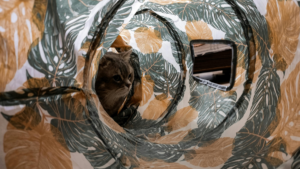
Use old cardboard boxes and cut holes in different sizes and shapes to create tunnels and entrances. Stack the boxes securely to form a multi-level cat castle. Fill the “rooms” with blankets or soft padding to create a cozy nest.
Floating Shelf Adventure
Mount a few sturdy shelves at different heights on your walls to create a climbing path. Connect shelves with ramps, ropes, or cardboard bridges. Cats love vertical exploration, and these spaces also help reduce conflicts in multi-cat households.
Window Perch
Cats are fascinated by the outdoors. A DIY window perch using a wooden board, brackets, and a soft cushion can turn any sunny windowsill into an entertainment zone. Watching birds, squirrels, and passing cars provides hours of mental stimulation.
4. Sensory Enrichment
Cats are highly sensory creatures. Engaging their senses of smell, sight, and touch can make a big difference in their happiness and overall well-being.
Herb Garden
Grow cat-safe herbs like catnip, catmint, or cat grass in small pots and place them where your cat can nibble. Fresh herbs provide taste stimulation, encourage gentle chewing, and support digestion.
Scent Trails
Create scent trails using catnip or small pieces of dried herbs. Arrange them in a pattern around the room or on a cat tower. Your cat will enjoy following the scent with their nose, which provides both mental and sensory enrichment.
Texture Exploration
Provide a sensory mat with different textures such as felt, faux fur, crinkly paper, and carpet scraps. Rotate textures every few days to keep your cat curious. Cats enjoy exploring new surfaces and resting on varied textures.
5. Interactive Play Sessions
Even with the best toys and structures, nothing replaces interactive play with their favorite human. These sessions provide exercise, mental stimulation, and strengthen your bond.
Chase and Pounce
Mimic the movements of prey by waving a ribbon, string, or laser pointer. Move it unpredictably, and always end sessions with a treat or toy reward to prevent frustration.
Hide and Seek
Hide behind furniture or around corners and call your cat. Reward them with a gentle pet or treat when they find you. This game promotes problem-solving and strengthens your connection.
Target Training
Encourage your cat to touch a target, such as a stick or colored marker, using treats. This can lead to more advanced tricks while providing excellent mental stimulation.
6. Seasonal and Holiday Fun
DIY cat enrichment doesn’t have to be static—use seasonal changes as inspiration:
-
Winter: Create cardboard tunnels or “snow forts” for indoor exploration.
-
Spring: Hide flowers or safe plants in boxes for sensory play.
-
Summer: Freeze treats in ice cubes or provide shallow water play if your cat enjoys it.
-
Holidays: Make themed toys from fabric scraps, like tiny pumpkins for Halloween or felt ornaments for Christmas.
Rotating activities with the seasons keeps your cat curious, engaged, and entertained.
7. Safety Tips for DIY Cat Enrichment
Safety should always come first:
-
Use non-toxic materials, paints, and adhesives.
-
Ensure shelves, boxes, and hanging toys are secure and stable.
-
Remove small parts that could be choking hazards.
-
Supervise activities involving strings or cords to prevent entanglement.
-
Introduce enrichment activities gradually and observe your cat’s reactions—every cat is different.
8. The Benefits of DIY Cat Enrichment
DIY cat enrichment provides benefits for both cats and their owners:
For cats:
-
Mental stimulation
-
Physical exercise
-
Stress reduction
-
Reduced risk of behavioral issues
-
Sense of adventure and play
For owners:
-
Creative outlet
-
Cost savings
-
Stronger bond with your pet
-
Satisfaction in enriching your cat’s life
Even small, consistent efforts can make a big difference in keeping your cat happy, healthy, and active.

Conclusion
Creating a stimulating and enriched environment for your cat doesn’t have to be expensive or complicated. With a little creativity, everyday household items, and some time, you can implement a range of DIY cat enrichment ideas to keep your feline friend happy, active, and mentally engaged.
From homemade toys and puzzle feeders to vertical climbing spaces and sensory activities, there are ideas for cats and owners of all skill levels. Every cat is unique, so the key is variety, rotation, and close observation of their preferences. With attention and creativity, you can turn your home into a playground and sanctuary for your furry companion.
Save pin for later

- Dog Nutrition Guide for Better Health and Energy - May 23, 2026
- How to Keep Your Cat Healthy and Active at Home - May 17, 2026
- Dog Health Tips for Indoor and Apartment Living - May 17, 2026