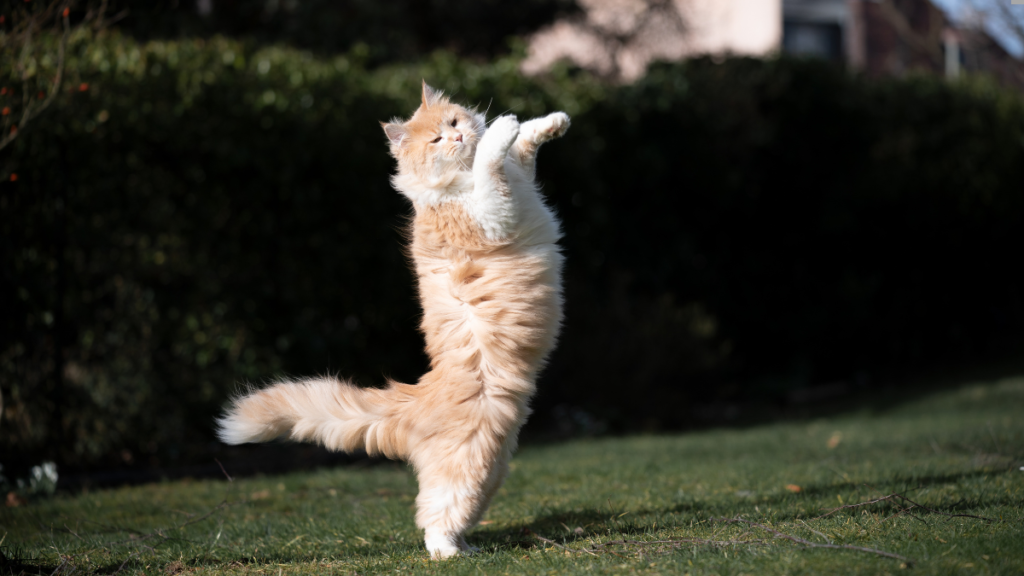
Cats are independent, mysterious, and often aloof. If you don’t have much patience with other people’s pets, your cat may seem like a distant relative who prefers doing its own thing.
Cats are often considered the toughest and laziest trick trainees—they’re certainly not as eager as dogs to perform tricks.
Many cat owners doubt that their cats can ever learn tricks. Questions like, “Will my cat be interested in doing tricks?” or “Is it possible to train a cat?” are extremely common. If you find yourself asking these questions, this ultimate guide on trick training for cats is for you.

Why Train Your Cat?
Many pet parents believe that cats cannot be trained—but this is a common misconception. Cats are intelligent creatures who are willing to learn tricks when motivated. Training can result in many positive outcomes, including:
Mental Stimulation
Cats are natural hunters, and their brains need complex mental activities. Training keeps your cat engaged and mentally sharp.
Physical Exercise
Learning tricks helps cats burn energy, maintain a healthy weight, and strengthen their muscles.
Bonding
Regular, positive interactions during training build trust and improve communication between you and your cat.
Behavioral Benefits
Unstimulated cats may scratch furniture, knock over objects, or damage shoes and curtains. Training channels their energy productively, reducing destructive behaviors.
Confidence
For shy or anxious cats, learning tricks is a rare opportunity to build confidence and feel accomplished.

How to Start Training Your Cat
Cat training is different from dog training. Cats can be stubborn, and people who have never trained cats may think the process is impossible. However, with patience and the right approach, even reluctant cats can learn tricks, often with surprising success.
Steps to Start Cat Training:
1. Choose the Right Time
Avoid training your cat too early in the morning or too late at night. The best time is when your cat is alert and active. Likewise, overexcited or tired cats are not suitable for training.
2. Keep Sessions Short
Cats have short attention spans. Aim for 2–3 short sessions per day rather than long, exhausting ones. Short, consistent practice helps achieve results faster.
3. Use Positive Reinforcement
Cats respond to rewards, not punishment. Use treats, toys, or praise to encourage desired behaviors. Clicker training is especially effective as it clearly signals success.
4. Begin with the Basics
Start with simple tricks to ensure both you and your cat are comfortable with the process before moving on to more complex behaviors.
5. Patience is Key
Cats learn more slowly than dogs. Enjoy the process and celebrate small victories rather than rushing. Patience makes training fun and stress-free.

Easy Cat Tricks to Teach
For beginners, these simple tricks are a great place to start:
Sit
Hold a treat above your cat’s head and slowly move it toward its tail. Most cats will naturally sit to follow the treat. As soon as your cat sits, reward it with the treat and praise. Repeat several times, adding the command “sit” before the action.
High Five
Hold a treat in front of your cat’s paw and wait for it to tap the treat. Immediately reward it and add the verbal cue “high five.”
Come When Called
Use your cat’s favorite treat and call its name in a cheerful voice. Reward your cat when it comes to you. Start with a short distance and gradually increase it over time.
Spin
Hold a treat near your cat’s nose and slowly move it in a circle. When your cat completes the turn, reward it and say “spin.”
Jump Through a Hoop
Use a lightweight hoop and encourage your cat to pass through it using toys or treats. Start with the hoop on the ground and gradually raise it as your cat becomes comfortable.
Fetch
Many cats enjoy fetching toys. Throw a small toy a short distance, and reward your cat when it brings it back. Gradually increase the distance, using the command “fetch” consistently.

Advanced Tricks for Cats
Once your cat masters basic tricks, you can try more advanced skills:
Roll Over
Use a treat to lure your cat onto its side, guiding it through a rolling motion. Reward every step toward completion.
Play Dead
Combine “lie down” and “stay” commands. Reward your cat for remaining still on cue.
Ring a Bell
Place a small bell in front of your cat. Reward it for pawing or nudging the bell. This can also teach your cat to signal for treats or playtime.
Open a Door or Drawer
Use a target stick or treat to teach your cat to nudge a door or drawer open with its paw.
Tips for Successful Cat Training
High-Value Treats
Find treats your cat truly loves to maximize motivation.
Consistency
Use the same verbal commands, gestures, or clicker sounds for each trick.
End on a Positive Note
Always finish training sessions with a success to reinforce positive associations.
Avoid Force
Never physically force your cat to perform tricks—it damages trust and slows progress.
Observe Behavioral Cues
Pay attention to body language. Signs of discomfort like tensed bodies, flicking tails, or flattened ears indicate your cat needs a break.

Creating a Training-Friendly Environment
To ensure effective training, consider these environmental factors:
-
Quiet Space: Minimize distractions like other pets, loud noises, or people.
-
Soft Surface: Cats often prefer performing tricks on rugs or mats.
-
Ready Treats and Toys: Keep rewards nearby to maintain momentum.
-
Interactive Tools: Clickers, target sticks, and props can make training more engaging.
Common Mistakes in Cat Training
Avoid these pitfalls:
Expecting Immediate Results
Cats learn at their own pace. Patience is essential.
Punishment
Never use punishment—it can harm your relationship and hinder learning.
Too Many Tricks at Once
Introduce tricks gradually to avoid overwhelming your cat.
Irregular Rewarding
Reward your cat consistently for learned behaviors to reinforce training effectively.
Summary
Fun trick training for cats is an enjoyable way to keep your pet happy, mentally stimulated, and physically active. Cats are intelligent and capable of learning new behaviors in exchange for treats, toys, and positive reinforcement.
Teaching your cat tricks improves its physical and mental health, strengthens your bond, and provides hours of fun and enrichment. Start with simple tricks, advance gradually, and make training a rewarding experience for both you and your feline friend.
Save pin for later


- Dog Nutrition Guide for Better Health and Energy - May 23, 2026
- How to Keep Your Cat Healthy and Active at Home - May 17, 2026
- Dog Health Tips for Indoor and Apartment Living - May 17, 2026